
The bookings need confirming, a supplier's chasing an answer, and the marketing email is still sitting in drafts. For a Brisbane small business owner, finding time to write it is hard enough. Sending it and getting little response feels even worse.
Email often gets talked up as a high-return marketing channel, but there's no guaranteed result from pressing send. Clear copy helps readers understand the offer and decide what to do next. It can't, however, fix missing consent, poor delivery or an offer that doesn't suit the audience.
Good email copy best practices don't require clever wordplay or expensive software. They require a recognisable sender, a useful message and an obvious next step. Much like a tidy shopfront, the email should make it easy for customers to understand what's available without needing someone to explain it.
For owners balancing Brisbane digital marketing with everyday operations, small improvements are a sensible starting point. A clearer subject line, a more relevant opening and a simpler booking link can all be tackled without rebuilding the entire marketing setup. The practical approach is to improve the next email, keep the useful parts as a template and judge success by genuine customer responses.
1. Write Subject Lines That Feel Like a Friendly Knock on the Door
A subject line works like the sign outside a Paddington shop. Customers shouldn't need to decipher it before deciding whether the business has something useful inside. Clarity comes before cleverness, especially when the reader's inbox is already crowded.
Say a Brisbane plumber is promoting preventative hot water servicing. A subject line such as Hot water system ready for winter? gives the reader a recognisable problem, while Plumbing services newsletter mostly describes the sender's filing system.
Make the promise match the message
A hypothetical West End café could use Rainy-day coffee and cake special when there's an actual offer inside. If the email contains only general café news, that subject line would set the wrong expectation.
The HeyNews guide to email subject lines offers examples owners can use as writing prompts rather than copy word for word. The best choice should still sound natural for that particular business.
- Draft alternatives: Compare a direct benefit, a relevant question and a practical update before choosing.
- Use preview text: Add the missing context beside the subject line rather than squeezing everything into it.
- Keep a phrase bank: Save useful customer expressions in Apple Notes or Google Keep for future inspiration.
The time-saving move is to draft the subject line after the body. Once the offer is clear, summarising it becomes easier. A final check should confirm that the opening sentence delivers what the subject line promises, without fake urgency or a misleading suggestion of a previous conversation.
2. Lead With the Reader's Problem, Not Your Business's Features
A customer walking into a Brisbane hardware store with a loose gate needs help fixing the gate, not a recital of the drill manufacturer's specifications. Email should follow the same logic. Start with the customer's situation, then explain the relevant service.
In a 2025 survey of 1,050 Australian consumers, 59% selected promotions and sales as requested email content, according to RetailBiz's coverage of the Pureprofile survey. That's a useful reason to make the practical value visible early rather than burying it beneath company news.
Turn a feature into a useful outcome
For a local bookkeeper, EOFY preparation support names the service but leaves the customer to work out the benefit. An opening about receipts scattered across inboxes and shoeboxes describes a recognisable problem, followed by an explanation of how the service helps organise the paperwork.

A reusable structure keeps drafting manageable:
- Problem: Name a specific frustration customers mention.
- Empathy: Acknowledge the inconvenience without exaggerating it.
- Solution: Explain what the business can do.
- Next step: Offer a relevant action, such as requesting a consultation.
These persuasive writing techniques help connect a service to the reader's priorities. The Genesize sales page examples can also provide inspiration for arranging a problem, benefit and offer, although an email usually needs a tighter scope.
The budget-friendly habit is to keep a running record of customer questions. Those questions provide better opening lines than another afternoon spent inventing slogans.
3. Keep the Tone Conversational, Like a Chat Over Coffee in South Bank
An email from a local business should sound like a capable person explaining something over coffee in South Bank. It shouldn't sound like a legal notice unless it is one. Conversational writing means clear and considerate, not careless.
Consider a web designer checking in after a launch. Checking how the new website is working for the team sounds more natural than Following up regarding the deployment of website infrastructure. The message can still be professional while using words customers would use themselves.
Read-aloud test: A sentence that sounds awkward in conversation probably needs another edit before it reaches a customer's inbox.
Trades and professional services don't need to adopt the same voice. An electrician can be direct and practical, while an accountant may need a calmer, more measured explanation of a sensitive issue. Neither needs unexplained acronyms.
Build a small voice guide
A short reference document can help an owner, employee or outsourced writer maintain a consistent tone.
- Preferred wording: Record familiar terms customers understand, such as website enquiries instead of conversion events.
- Natural greeting: Choose a greeting that suits the relationship, rather than forcing friendliness.
- Words to avoid: Remove corporate filler, exaggerated promises and expressions the owner would never say aloud.
A voice memo explaining a service to a regular customer can be especially useful when outsourcing copy. It captures vocabulary and rhythm without requiring a lengthy brand workshop.
Boocoo can use that local business context when discussing a broader marketing strategy. The owner should still review drafts for accuracy, because friendly copy only works when the details and promises are sound.
4. Include One Clear Call-to-Action (The 'Single Road Sign' Rule)
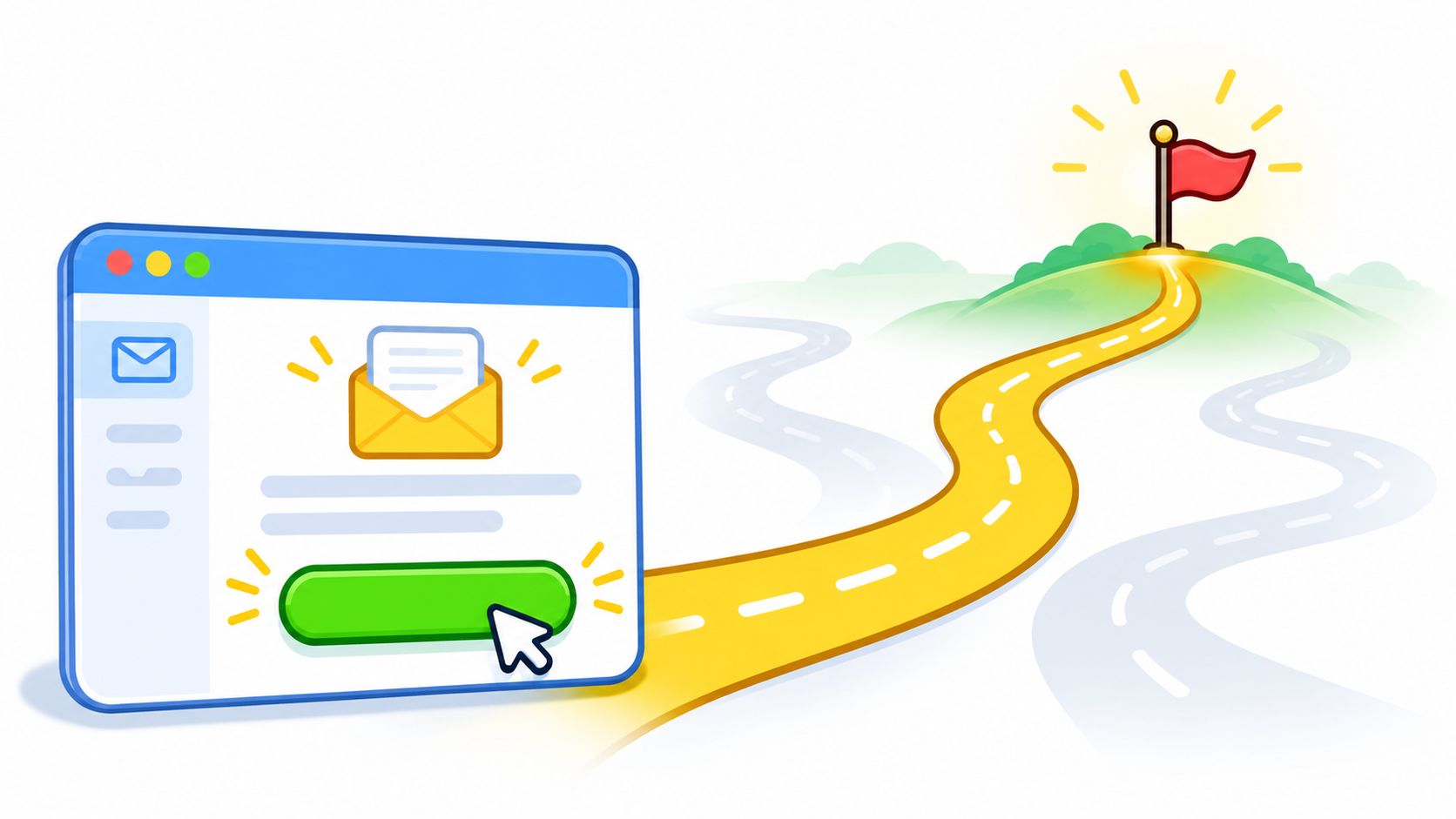
A Brisbane intersection crowded with competing signs makes a simple turn harder than it needs to be. An email can create the same confusion when it asks readers to book, shop, follow, download and reply with equal emphasis.
Each email needs one primary call-to-action, meaning the main action the reader should take. Other necessary links can remain, but they shouldn't compete with the purpose of the message.
Match the action to the offer
Say a Brisbane online shop announces that a popular product is back in stock. Shop the restock should lead directly to that product, not a homepage where customers must start searching again.
For an electrician discussing safety-switch testing, Call to arrange testing could open the phone dialler on a mobile. The surrounding copy should explain what the enquiry involves without promising availability the business can't deliver.
- Use specific wording: Name the action instead of relying on a vague button such as More.
- Make it noticeable: Give the main button sufficient contrast and clear space.
- Keep the destination consistent: The landing page should repeat the offer and make the next step straightforward.
These conversion rate optimisation principles apply to the whole journey, not just the button. A clear email won't help much if the booking page is confusing or broken.
A repeated button can be useful in a longer message, provided it points to the same action. Contact details and the unsubscribe facility should remain easy to find, even when they aren't the promotional focus.
5. Personalise Beyond the First Name Using Local Context
A familiar Brisbane barista remembers more than a customer's name. The useful detail is the usual order, not an exaggerated display of familiarity. Email personalisation should work the same way: use information that makes the message more relevant.
For a landscaping business, that might mean sending drainage advice to customers who have asked about water pooling after heavy rain. It shouldn't mean assuming every property in a suburb has flooded or using a weather event as an excuse for an unrelated sales pitch.
Useful personalisation answers a customer's likely question. Decorative personalisation merely proves that a business has stored a name.
An accountant could also separate sole traders from company clients when sending EOFY preparation reminders. The underlying service may be similar, but the wording and preparation steps should match each group's circumstances.
Start with information already available
A small business doesn't need a complex customer database to begin. Its existing email platform may support tags or groups based on information subscribers have knowingly supplied.
- Customer relationship: Separate past customers from people still considering a purchase.
- Service interest: Distinguish repair enquiries from maintenance enquiries.
- Relevant location: Mention service areas only when location changes the offer or advice.
- Local calendar: Plan around Ekka, Riverfire or school holidays when those events affect customers.
These email segmentation best practices help turn a broad mailing list into manageable groups. The time-saving approach is to keep the main email structure and adjust the opening, supporting detail and action.
Local relevance should earn its place. A suburb name added to otherwise generic copy isn't a substitute for understanding what that reader needs.
6. Format for Skimmers Using the 'Billboard Test'
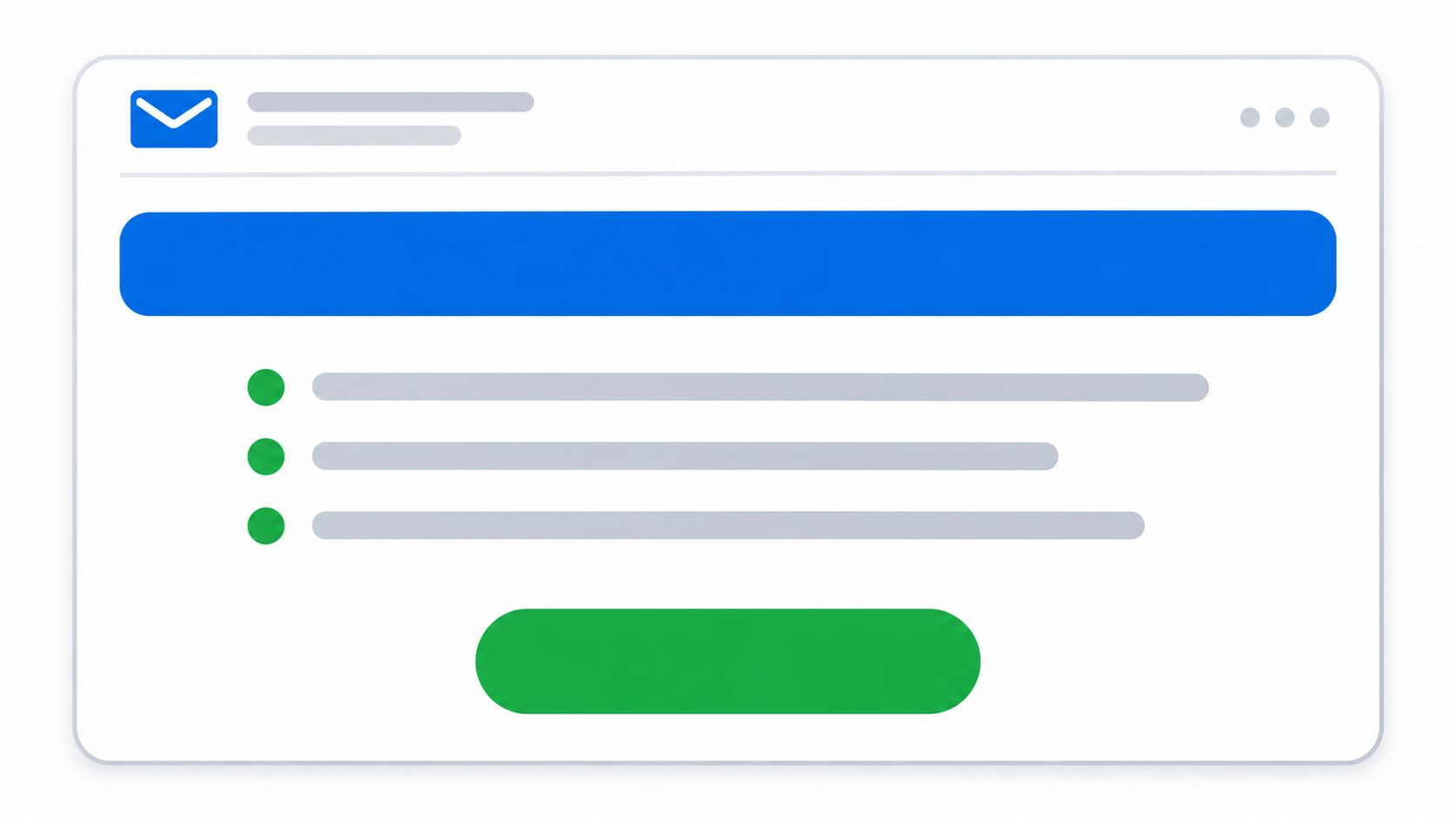
A roadside billboard along the M1 needs a clear hierarchy because there's little room for competing messages. An email benefits from the same discipline, although its reader can stop and look more closely. The main offer, supporting benefit and next step should be easy to locate.
The billboard test is a design check, not a claim about an exact attention span. An owner can zoom out from a draft and check whether its structure remains obvious before reading every sentence.
Give the eye a clear path
Say a Brisbane startup is introducing a booking service. Rather than a dense description of every feature, the email could explain that customers can choose an appointment, receive confirmation and manage their booking online, provided those features really exist.
A tradie announcing a price change needs a different approach. A clear heading, the affected service and the effective date should be easy to find, with any necessary explanation beneath them.
- Keep paragraphs short: Separate the offer, explanation and action.
- Bold selectively: Highlight the details readers need, not entire paragraphs.
- Use a consistent font: Rely on headings, spacing and sensible size changes for structure.
- Test on a phone: Check text size, button spacing, image loading and destination links.
The same principles behind effective copy for websites help keep email readable. Important information should appear as live text rather than being trapped inside an image.
A saved, uncluttered layout also reduces preparation time. Owners can replace the content without redesigning the message whenever there's something useful to send.
7. Send Consistently Without Burning Out Using Simple Templates
Email templates are the marketing equivalent of meal prep. Preparing a reliable base makes the next batch easier, while leaving room to change the ingredients. Reuse the structure, not stale offers or generic wording.
A neighbourhood bakery could keep the same weekend-specials layout and update the products, availability and collection details. A social media manager could use a recurring client-update format covering completed work, useful observations and the next priority.
Keep the repeatable parts ready
A practical template contains a greeting, relevant opening, main point, primary action and sign-off. Separate versions for an offer, an educational tip and a service update can prevent every message from sounding identical.
The footer deserves the same preparation as the promotional copy. ACMA's guidance on avoiding spam explains that commercial electronic messages generally require consent, accurate sender identification and a straightforward unsubscribe facility; unsubscribe requests must be actioned within 5 working days, and the mechanism must remain functional for at least 30 days after sending.
- Make identity clear: Use a recognisable business name and valid contact details.
- Keep opting out straightforward: The unsubscribe process mustn't charge a fee or demand an account or additional personal information.
- Review before scheduling: Confirm stock, booking capacity, links and any offer conditions.
- Maintain suppression records: Keep unsubscribed contacts out of future promotional sends.
Batching principle: Prepare messages around genuine customer needs, not an obligation to fill the calendar.
A quiet month doesn't justify an empty email. Owners can collect useful questions during normal work, then turn them into concise messages when there's enough value to share.
For broader content planning, Boocoo's social media management includes strategy, content creation and community management. Coordinating those topics with email can reduce duplicated planning while keeping each channel useful.
8. Test, Measure, and Tweak Based on Real Results (Not Vanity Metrics)
Sending emails without reviewing the response is like paying for a billboard without checking whether it helps bring customers through the door. Activity alone doesn't establish value. The useful question is whether suitable customers took a commercially meaningful next step.
Australian campaigns recorded a 2.82% click rate in MailerLite's 2025 benchmark dataset, as reported by Cresca's email marketing benchmark compilation. That's directional context, not a target every Brisbane business should expect to match.
Keep a simple measurement ladder
An owner can review results in a basic spreadsheet without buying another reporting platform.
- List health: Check delivery failures, unsubscribe activity and complaints.
- Message response: Review clicks and genuine replies, while recognising that automated systems can affect tracking.
- Business outcomes: Record qualified enquiries, booked consultations, purchases and attributable revenue.
Open rates can provide context, but privacy features make them an unreliable standalone measure of subject-line success. A subject-line test should also consider downstream responses, not which version recorded more opens.
Say a Brisbane shop compares a discount-led subject line with a savings-led alternative. Both versions should use the same offer, audience conditions and email body. A professional-services firm could similarly compare sending times across comparable campaigns, without declaring a permanent winner from a small fluctuation.
A small list produces noisy results, so test one meaningful change at a time and look for repeated patterns. These principles for measuring marketing ROI help connect activity to business value.
For businesses with physical premises, practical ways to link email campaigns to till receipts can help bridge the online-to-offline gap. A campaign-specific redemption method or a consistently recorded booking question can make that connection clearer.
8 Email Copy Best Practices at a Glance
| Practice | Main Focus | Time to Implement | Best For |
|---|---|---|---|
| Write Subject Lines That Feel Like a Friendly Knock on the Door | Clear, conversational subject lines | A few minutes per email | Improving opens on a small budget |
| Lead With the Reader's Problem, Not Your Business's Features | Customer pain points and outcomes | Brief research, then a repeatable structure | Businesses seeking more relevant emails |
| Keep the Tone Conversational, Like a Chat Over Coffee in South Bank | Natural, approachable language | Quick review and editing | Building trust and encouraging replies |
| Include One Clear Call-to-Action (The 'Single Road Sign' Rule) | One focused next step | Minimal; simplify the email layout | Driving clicks, bookings, or enquiries |
| Personalise Beyond the First Name Using Local Context | Segmentation and local relevance | Some setup and extra writing | Local businesses with distinct customer groups |
| Format for Skimmers Using the 'Billboard Test' | Scannable, mobile-friendly formatting | A short formatting and testing pass | Busy readers and mobile audiences |
| Send Consistently Without Burning Out Using Simple Templates | Reusable email frameworks and scheduling | Upfront setup, then less time per email | Time-poor businesses seeking consistency |
| Test, Measure, and Tweak Based on Real Results (Not Vanity Metrics) | Tracking meaningful results and refining emails | A brief monthly review | Businesses aiming to improve email performance over time |
Pick Two, Start This Week, and Build From There
A small business doesn't need to rebuild its email programme overnight. A more manageable starting point is a sharper subject line and a clear primary action, followed by gradual improvements to relevance, tone and layout. That approach keeps the work practical rather than creating another folder of unfinished drafts.
The next email can serve as a working example. Its writer can identify the customer problem, explain the useful offer and remove requests that distract from the main action. After checking consent, sender details, the unsubscribe facility and the mobile preview, the business has a cleaner message and the beginnings of a reusable template.
Make the improvements fit normal operations
Email should support the business's capacity, not create demand it can't handle. A sole trader with a full diary may need to promote future bookings or share preparation advice rather than push an immediate offer. A shop with limited stock should make availability clear and stop a scheduled promotion if circumstances change.
- During customer conversations: Record the questions that repeatedly come up.
- During drafting: Use those questions to choose a relevant message.
- Before sending: Check the offer, links, business details and next step.
- After sending: Record genuine responses and the resulting work or sales.
The same customer questions can also inform website FAQs, search-focused articles and social posts. That makes email part of a coordinated Brisbane digital marketing approach rather than another disconnected task. Each version should suit its channel instead of being copied everywhere unchanged.
Owners choosing outside support should have clarity about the strategy, budget and reporting before work begins. Boocoo starts with a free discovery call to understand the business, goals and current marketing, and the client approves the strategy before work starts. After approval, the agency launches campaigns, publishes content and runs the channels together, with monthly reports explaining what was done, what it cost and what it delivered, without vanity metrics.
For owners ready to take marketing off their plate, Boocoo offers a free 30-minute call with a Brisbane strategist, with no lock-in and no obligation. The team can be reached on 1300 093 797 or at hello@boocoo.au. Bringing a recent email and a clear business goal gives that conversation a practical starting point.