
A lot of Brisbane business owners hit the same wall at the same time. The workday finishes, the phone has finally gone quiet, and then the second shift starts. Reply to Facebook messages. Check if the website form still works. Boost a post. Write something for Instagram. Try to understand why a competitor shows up on Google and the business doesn't.
That's usually the moment digital marketing stops feeling like “promotion” and starts feeling like unpaid admin.
For a tradie, clinic owner, retailer, consultant, or café operator, that load adds up fast. Marketing matters, but it competes with quoting, staff issues, stock, invoices, and customers who need answers now. A good consultant doesn't add more noise. They take the scattered jobs, put them into a clear plan, and focus on the channels most likely to bring real enquiries.
Useful support can also come from outside the usual agency world. Businesses experimenting with short-form video, product demos, or social content can learn a lot from Discover AI video generation articles, especially when content creation feels like another task with no spare time.
Growing Your Business Without Burning Out
A small business owner shouldn't need to become a part-time media buyer, copywriter, web editor, and SEO technician just to keep leads moving.
Digital marketing consultants fill a critical role by bridging the gap between a business and the digital chaos. Instead of requiring an owner to master every platform, they focus efforts on the specific areas that deserve attention. For one Brisbane electrician, that might mean fixing local search visibility, tightening the website enquiry flow, and running a small Google Ads campaign around urgent jobs. For a suburban café, it might be sharper local content, better Google Business Profile management, and simple social posts tied to specific offers.
The practical value isn't “more marketing”. It's less wasted effort.
Practical rule: If marketing only gets touched when business is quiet, the system is too dependent on spare time.
Most owners don't need a giant strategy document. They need someone to answer basic but important questions. Which channel should be the priority first? What should be left alone for now? Is the website helping or getting in the way? Are ad clicks turning into calls, or just eating budget?
A consultant should make those decisions simpler, not more complicated.
For Brisbane businesses on a tight budget, that usually means resisting the temptation to do everything at once. A lean plan often works better. One solid landing page. A cleaned-up Google Business Profile. A few suburb-specific service pages. Search ads that only target relevant locations. Basic reporting that shows leads, calls, and enquiries instead of vanity numbers.
That kind of support protects time, but it also protects attention. Owners can get back to the work that pays the bills.
What a Digital Marketing Consultant Actually Does
Some businesses think consultants only give advice and leave the hard work to someone else. The useful ones don't work like that. They act more like a digital general contractor. They coordinate the moving parts, decide what gets done first, and keep each channel pulling in the same direction.
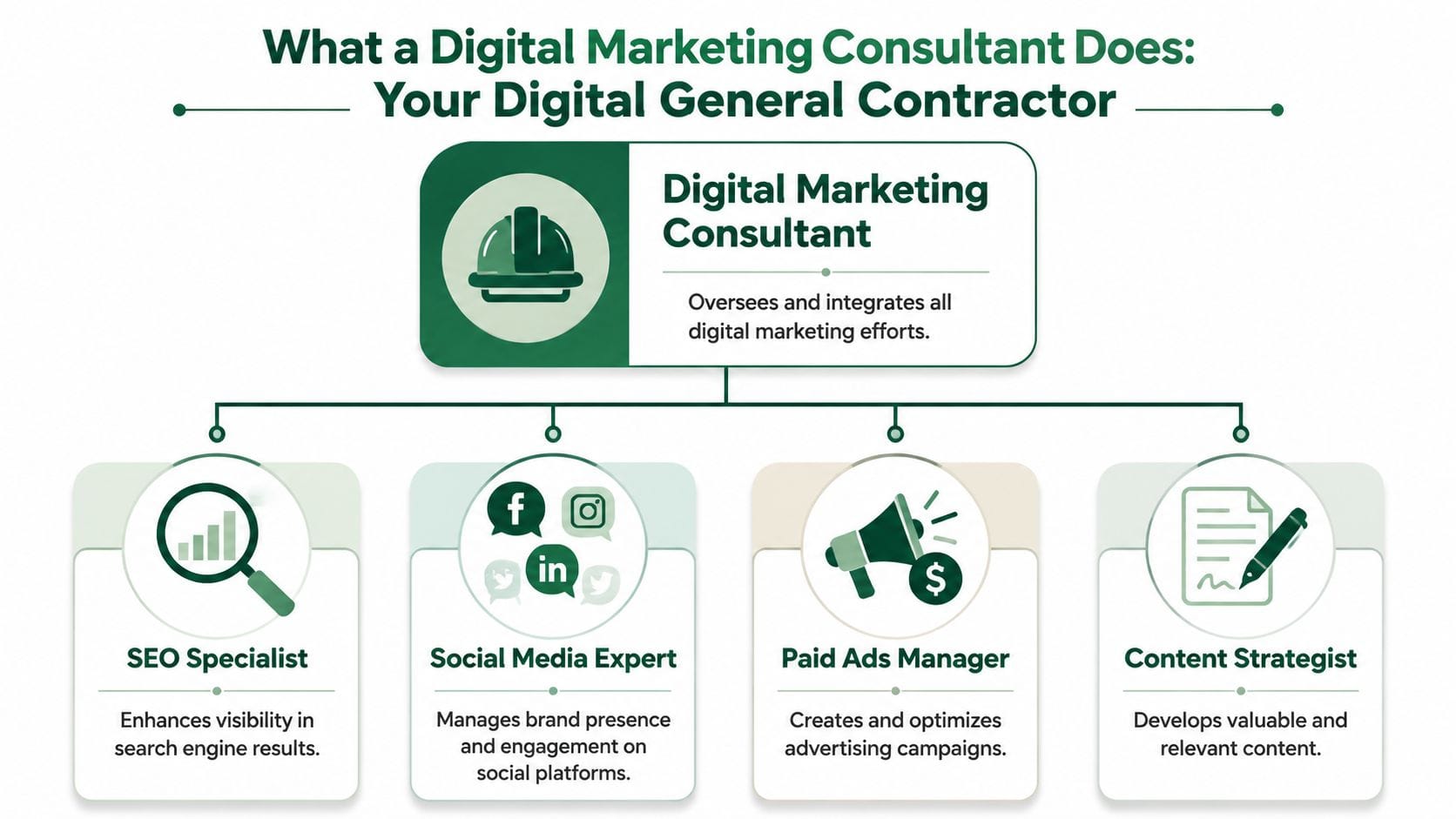
The consultant as your digital general contractor
Most small businesses don't have the luxury of separate specialists for search, social, ads, websites, email, and reporting. A consultant helps connect those pieces so the business doesn't end up with random activity and no clear result.
That role often includes:
- Setting priorities: Deciding whether the biggest issue is weak visibility, poor conversion on the website, inconsistent content, or ad spend going to the wrong audience.
- Coordinating channels: Making sure Google Ads, local SEO, landing pages, and social posts support the same offer instead of competing with each other.
- Choosing tools: Using platforms like Google Ads, Google Business Profile, Meta Ads Manager, Google Analytics, Search Console, Canva, Mailchimp, or Klaviyo where they fit.
- Keeping reporting grounded: Tracking leads and qualified enquiries, not just reach, impressions, or likes.
A straightforward framework such as Cloud Present's consulting marketing blueprint can also help owners understand how strategy, positioning, and channel selection should work together before any campaign goes live.
Four areas that usually matter most
1. Strategy and planning
This is the blueprint. A consultant looks at the current website, competitors, suburb coverage, offers, and customer journey. For a Brisbane roofing business, that might reveal that people are searching by problem and location, not by broad brand terms. So instead of generic pages, the consultant may recommend focused service pages tied to areas like Northgate or Chermside.
2. SEO and local search
This is the work that helps a business get found when someone is ready to buy. For Australian consultants, 81% invest in SEO to attract inbound clients, while content marketing generates three times more leads than traditional outbound tactics, according to consultant marketing statistics compiled by Amra and Elma. For small businesses, that usually means technical fixes, keyword mapping, local pages, and a tighter Google Business Profile. Businesses wanting a clearer view of what this work includes can compare it against a practical search engine optimisation service overview.
3. Content and social media
Content isn't just blog writing. It includes service pages, FAQs, short videos, email updates, before-and-after posts, and proof that the business knows its craft. A West End café might use simple reels, menu updates, and event posts. A professional service firm might publish explainers that answer common client questions before the first phone call.
Good content reduces friction. It answers questions before a prospect asks them.
4. Paid ads for immediate demand
SEO is slower. Ads can create demand capture faster, but only if the setup is disciplined. A consultant may build a Google Ads campaign around high-intent searches, exclude irrelevant areas, and send traffic to a landing page with one clear action. For local businesses, that's often where quick wins show up first, provided the website and targeting aren't sloppy.
Real Benefits for Brisbane Small Businesses
The task list matters, but business owners feel the results first. They notice less mess, fewer random decisions, and a stronger link between marketing spend and actual enquiries.
Time back matters more than most owners admit
The first benefit is time. Not “free time” in a dreamy sense. Useful time. Time that goes back into quoting, client work, hiring, stock control, site visits, or finishing the day without carrying marketing admin into the evening.
When digital marketing consultants step in, they usually remove a mix of repetitive and mentally draining jobs:
- Channel triage: No more guessing whether to post on Instagram, tweak a website banner, or boost a Facebook post.
- Platform management: Someone is checking Google Ads, Meta campaigns, search rankings, forms, and landing pages with a process.
- Content direction: Instead of staring at a blank screen, the business gets a defined list of topics, offers, and priorities.
That matters because most small businesses don't fail at marketing because they're lazy. They fail because they're overloaded.
Local knowledge changes the plan
The second benefit is smarter spending. Brisbane buyers don't search, click, and enquire the same way in every industry. A consultant who understands the local market will usually build tighter campaigns from the start.
A professional service firm often needs trust signals, educational content, and a clean search presence. An e-commerce store may need better product pages, paid social testing, and clearer retention activity. A tourism operator has different seasonal patterns again, which is why businesses in that space often compare approaches such as this tourism digital marketing guide when shaping local campaigns.
The third benefit is competitive visibility. 92% of Australian marketers plan to maintain or increase their SEO investment into 2026, and less than 1% of searchers go past Google's first page, based on the 2025 digital marketing statistics roundup at Insivia. For a Brisbane small business, that doesn't mean chasing every keyword under the sun. It means picking realistic local terms, improving pages that support buying intent, and making sure the site converts once people land.
A smaller budget can still work well when the target is narrow, the message is clear, and the landing page does its job.
That's why a consultant can be a practical cost-control move. They're often not adding spend. They're cutting waste.
Clear Signs It Is Time to Hire a Consultant
A common Brisbane small business pattern looks like this. You answer enquiries between jobs, post on social when you remember, boost a few ads during a quiet patch, and keep telling yourself you will sort the website out next month. The business is not failing, but it is not growing in a reliable way either.
That middle ground catches many owners. There is enough activity to stay busy, but not enough clarity to know what is driving leads, what is wasting money, and what should happen next.
The common patterns behind stalled growth
The signs are usually practical, not dramatic.
- Leads have plateaued: work is still coming in, but growth depends too heavily on referrals or repeat customers.
- Ads feel murky: money goes into Google Ads or paid social, yet nobody can say which campaigns produced calls, quote requests, or sales.
- Google visibility is weak: the business is missing local searches it should reasonably compete for.
- Marketing happens in bursts: there is a push for a week or two, then client work takes over and everything stalls.
- Stress is becoming normal: the owner knows the marketing needs attention but keeps putting it off because every platform feels like another job.
I see this most often when the business has reached the point where DIY marketing is no longer cheap. It is costing time, energy, and missed opportunities.
The cost of delaying action
For a small business on a tight budget, the decision usually comes down to one question. Is it cheaper to keep patching things together, or to get someone in who can fix the gaps faster?
Sometimes waiting is reasonable. If the pipeline is full, margins are healthy, and the current setup is producing steady enquiries, there may be no rush. But if the business is already spending on ads, software, staff time, or outsourced pieces without clear returns, delay has a cost.
That cost shows up in ordinary places. A plumber targets broad terms like "emergency plumber Brisbane" and pays for expensive clicks when suburb-level searches would bring in better leads. A clinic runs polished ads, but the booking form is clunky on mobile and people drop off. A retailer spends hours writing posts that never support a sale, email signup, or enquiry.
None of those problems require a massive marketing budget. They require tighter decisions.
The linked ReachFirst article on common mistakes without a digital marketing consultant makes a fair point here. Businesses often lose money through poor targeting, weak follow-up, and inconsistent execution, not just through low spend.
If you are already spending money and still guessing, outside help usually becomes a business decision, not a luxury.
A good consultant does not need to rebuild everything. In many Brisbane small businesses, the first wins come from simpler work. Fix the tracking. Cut the ad waste. Improve two or three service pages. Sort out the enquiry path. That is often enough to show whether more investment makes sense.
How to Choose the Right Consultant for Your Business
Not every consultant is the right fit for a small business. Some are strong on strategy but weak on follow-through. Some know paid ads but not local SEO. Some talk in polished reports and still leave the owner wondering what changed.
The safest choice usually comes from asking simple questions and listening for clear answers.
Questions worth asking before signing anything
A good first conversation shouldn't sound like a sales pitch built from generic phrases. It should sound like a working session.
Ask questions such as:
- How do you measure success? Look for answers tied to leads, bookings, calls, quote requests, or sales quality. Be careful if the answer stays focused on impressions, followers, or traffic alone.
- What would you tackle first in this business? A capable consultant should be able to identify likely priorities quickly, even if a full audit comes later.
- What does reporting look like? Monthly reporting is common, but the format matters. It should be readable and linked to decisions.
- Who does the work? Some consultants do everything directly. Others coordinate freelancers or specialist partners. Neither model is automatically wrong, but the business should know.
- How often will communication happen? Small businesses usually need concise updates, not endless meetings.
One practical option for businesses wanting support across SEO, social, web, and ads is Boocoo, a Brisbane-based agency that works with small businesses and provides digital marketing services aligned to budget and lead generation needs.
Red flags that usually lead to wasted budget
The warning signs are usually obvious once an owner knows what to watch for.
- Guaranteed rankings: Nobody can promise a number one Google position.
- One-size-fits-all packages: A local service business and an online store rarely need the same plan.
- Vanity metric obsession: If the whole pitch revolves around likes, reach, or “brand awareness” without a path to enquiries, caution is warranted.
- No discussion of the website: Many campaign problems start after the click. If conversion isn't discussed, the strategy is incomplete.
- Confusing language: If a consultant can't explain the plan in plain English, reporting later probably won't get any clearer.
A strong consultant should also be comfortable saying no. If a channel isn't right for the budget or timing, that should be stated early.
The best fit usually sounds calm, specific, and honest about trade-offs.
Common Digital Marketing Consultant Pricing Models
Pricing can look confusing because the same work is packaged in different ways. The model matters as much as the amount.
| Pricing Model | Best For | Typical Brisbane SME Cost |
|---|---|---|
| Retainer | Ongoing SEO, ads, social management, monthly optimisation | Varies by scope |
| Project-Based | Website rebuilds, audits, campaign setup, landing pages | Varies by deliverables |
| Hourly | Advice sessions, troubleshooting, short-term support | Varies by complexity |
A few practical notes help here:
- Retainers suit businesses that need ongoing attention across channels.
- Project work makes sense when there's a defined start and finish.
- Hourly support can work for owners who need direction before committing to a broader plan.
Price should never be looked at in isolation. A cheaper quote that leaves tracking broken, suburbs untargeted, and conversion issues untouched can cost more than a higher quote with a sharper plan.
Your First 90 Days with a Marketing Partner
The first few months matter because they shape trust. Business owners don't want to feel like they've handed over budget and disappeared into a black box. Good digital marketing consultants make the early phase visible and structured.
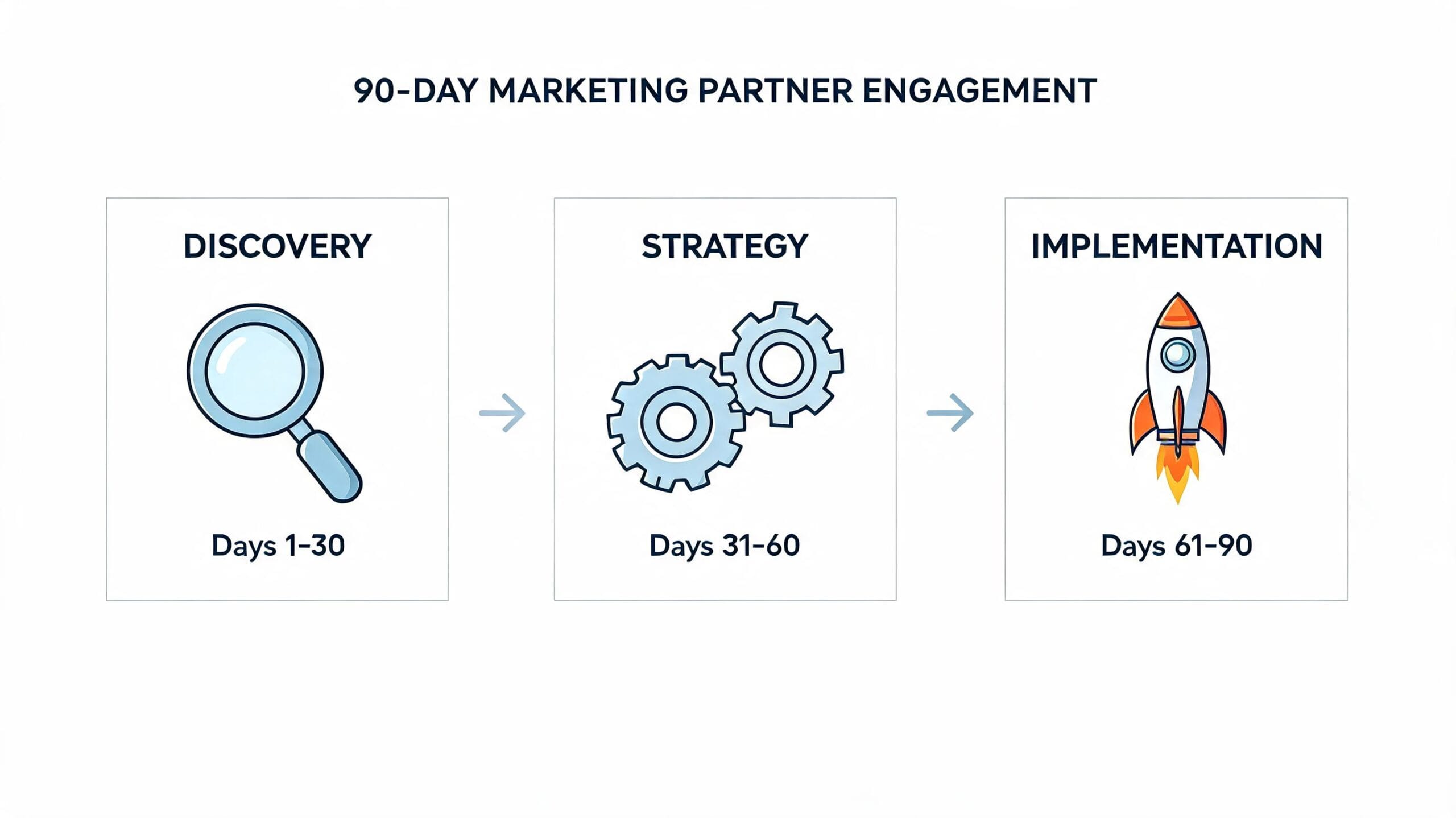
Month one discovery and direction
The first month is usually less exciting from the outside, but it's where good decisions start. The consultant reviews the website, search presence, competitors, offers, and existing campaigns. They'll often check whether forms work properly, whether the site speaks clearly to the right audience, and whether tracking is in place.
This is also when goals need to be tightened. “More exposure” is too vague. Better goals are tied to enquiry quality, service-line growth, or stronger conversion on high-intent pages.
For businesses that already get traffic but not enough action, this early stage often overlaps with conversion work. A practical reference point is a focused conversion rate optimisation approach for Australian businesses, because more traffic doesn't help much if visitors still hesitate at the contact step.
Month two getting work live
By the second month, the visible pieces usually start moving. That might include new landing pages, ad campaigns, suburb-focused service content, email automations, refreshed creative, or better offer positioning.
Many owners expect instant results, and that expectation needs managing. Some channels move faster than others. Search ads can create early data. SEO and content usually take longer. Social content often supports trust rather than immediate lead flow.
What matters here is not volume of activity. It's whether the work is connected.
- Ads should match landing pages
- Landing pages should match search intent
- Offers should reflect what customers ask for
- Tracking should show which channels are pulling weight
Month three optimisation and honest reporting
The third month is when the relationship becomes more revealing. A decent consultant won't just send a report. They'll explain what the early data means and what should change next.
Some campaigns need tighter targeting. Some pages need stronger calls to action. Some keywords attract the wrong clicks. Some social content gets attention but no enquiries and should be deprioritised.
Early months are for building signal, not pretending every channel is already mature.
This is also when owners should expect clarity. What's working? What isn't? What gets cut? What deserves more budget? If those answers aren't improving by this point, something is off.
Take Control of Your Brisbane Marketing
A lot of small business owners don't need more marketing ideas. They need fewer moving parts, better decisions, and a system that keeps working when the week gets hectic.
That's the practical role of digital marketing consultants. They help turn scattered effort into a plan. They stop good businesses from wasting money on the wrong channels. They give owners back time and a clearer view of what's driving enquiries.
For Brisbane businesses, local understanding matters. Search behaviour changes by suburb. Offers land differently in different industries. What works for a trade business won't look the same as what works for an online shop or a professional service firm. Generic advice usually breaks down at that point.
If the business is tired of guessing, tired of patching things together late at night, or tired of paying for activity that doesn't lead anywhere, a conversation is a sensible next step.
Boocoo is a Brisbane-based small business digital agency that helps local operators with SEO, web design, social media management, and paid advertising in a practical, low-pressure way. For a straightforward chat about goals, budget, and what would make sense next, business owners can call 1300 093 797 or email hello@boocoo.au.