
Monday starts with good intentions. A Brisbane business owner opens Instagram, means to post something useful, gets pulled into jobs, staff questions, supplier calls and quoting, then realises at 4:30 that another week has slipped by with no plan. Social media keeps sitting on the list as something that should be working harder, but mostly feels like one more task.
That's a common spot for small operators. Social media for small business only becomes useful when it's treated like a simple system, not a daily scramble. The aim isn't to be everywhere, follow every trend, or turn the owner into a content creator. The aim is to stay visible to local buyers, build trust, and create enough consistency that enquiries keep coming in without swallowing the week.
Your Simple Social Media Plan for Brisbane
A Brisbane owner checks their phone between jobs, sees three unread customer messages, a half-finished post draft, and another reminder to “be more consistent” on social. That is usually the point where social media starts feeling like extra admin instead of a useful sales channel.
The fix is a simple plan that suits the way local businesses run. If you are quoting jobs across the northside, managing a clinic diary in Chermside, or serving the lunch rush in South Bank, the plan needs to hold up on a busy week, not just on Monday morning when motivation is high.
Customers already use social as a trust check. They look for recent posts, signs of real work, replies to questions, and proof that you service their area. For Brisbane businesses, that often means showing local context people recognise. A plasterer posting repair work after summer storm damage in The Gap. A café in New Farm sharing weekday specials before the Riverstage crowd rolls through. A Bayside physio answering common questions from weekend runners training around Wynnum and Manly.
A solid starting plan is usually this:
- Choose one main platform your customers already use.
- Set three repeatable content themes so you are not inventing ideas from scratch every week.
- Pick one business outcome such as calls, bookings, quote requests or walk-ins.
- Book one weekly admin block to post, reply and check what is getting a response.
If the plan falls apart during a packed Wednesday, it is too big.
The local angle matters more than polish. A roofing business working around Redcliffe and North Lakes will get more value from before-and-after job photos, suburb-based service updates, and quick storm-season tips than from chasing trending audio. A family lawyer in the CBD will usually do better with clear educational posts and short video answers than with daily posting for the sake of it. Brisbane buyers respond to relevance. They want to know where you work, what you do, and whether you feel active and reliable.
Social also works better when it supports the rest of your marketing instead of sitting off on its own. For operators in hospitality, tours, and visitor-focused services, that overlap is especially strong. It is the same reason many businesses pair social with broader tourism digital marketing for Brisbane operators to stay visible where people research, compare, and book.
Keep the weekly workload realistic
For a small team, this is enough to stay present without turning social into a second job:
- One planned post: a useful tip, timely update, or offer tied to what customers are asking right now.
- One proof post: a finished job, customer result, review, or behind-the-scenes moment from the week.
- One quick story or short video: filmed on a phone and posted without heavy editing.
- One reply session: clear messages, answer comments, and note common questions for future posts.
That rhythm is not flashy.
It is what busy Brisbane businesses can keep doing month after month, which is usually what gets results.
Choosing the Right Platforms for Your Brisbane Business
Many Brisbane business owners encounter the same challenge. They establish accounts on Facebook, Instagram, LinkedIn, and TikTok over a single weekend and post for two weeks, only for the strategy to stall because the content fails to align with the way their customers choose.
Start with how Brisbane customers buy
People in Brisbane do not use every platform the same way.
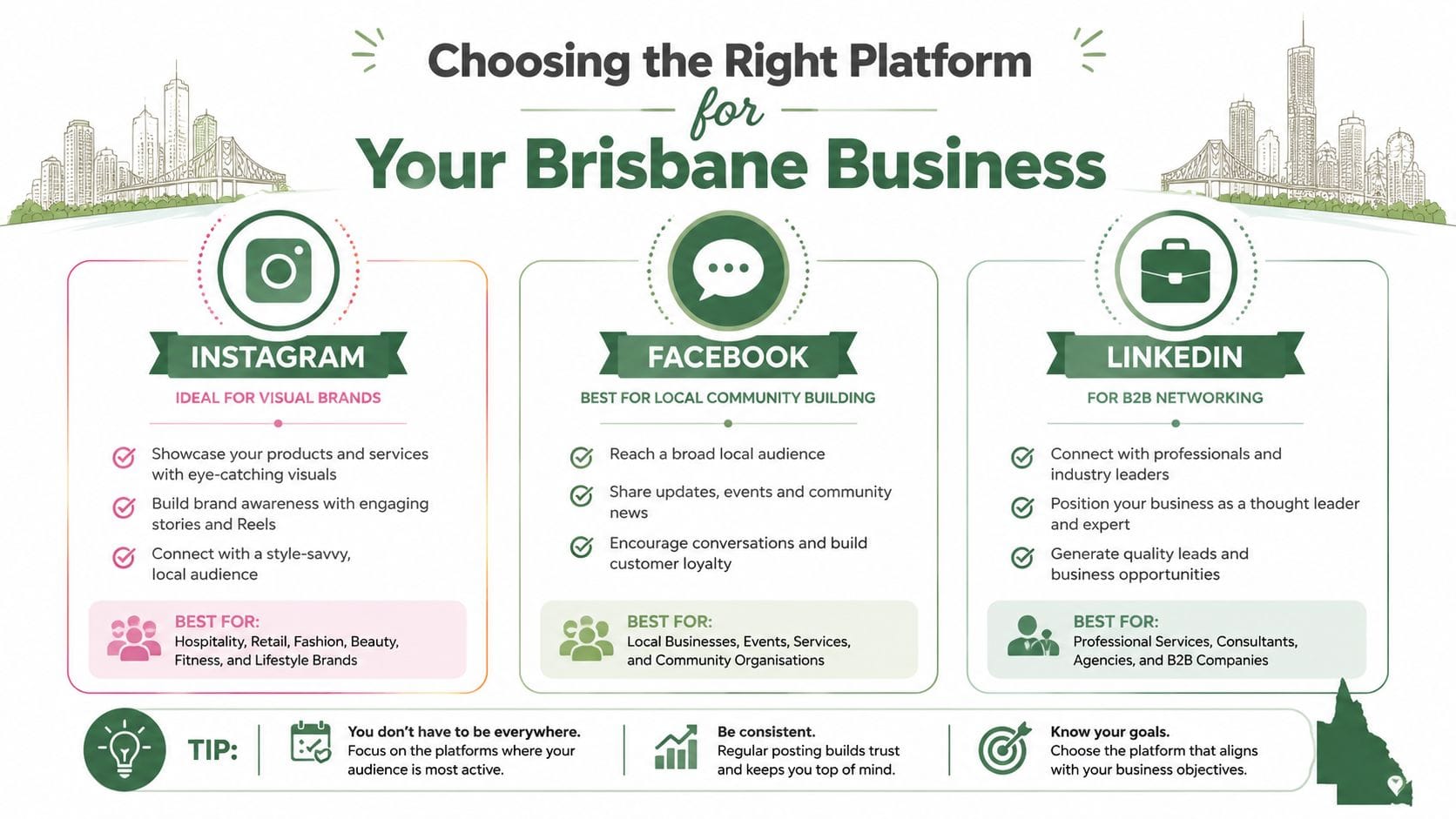
Facebook still matters for local service businesses because buyers often want reassurance before they call. They check recent posts, read comments, look for suburb mentions, and make sure the business feels active. That suits electricians in North Lakes, cleaners in Carindale, gardeners in The Gap, mortgage brokers in Chermside, and family-focused services across the suburbs. Facebook also gives you practical tools such as reviews, Messenger, local groups, and event visibility. If you want help with timing, this guide on the best times to post on Facebook for Brisbane businesses is a useful starting point.
Instagram works best where appearance, taste, and brand feel affect the sale. Bulimba is a good example. Buyers there are often choosing between well-presented cafés, beauty clinics, boutiques, interior stores, and service brands that need to look polished before anyone enquires. A clean visual feed, strong Stories, and short reels can do a lot of work in that suburb because customers are comparing style as much as price. West End is different. Instagram still works there, but content usually lands better when it feels less polished and more personal, creative, or values-led. Paddington often rewards a curated look. Bulimba usually rewards polished consistency. West End tends to reward character.
LinkedIn earns its keep when the sale involves trust, expertise, or a longer decision cycle. That is common for Brisbane accountants, recruiters, legal firms, consultants, software providers, and commercial trades chasing builders, developers, or procurement teams. A steady run of useful posts, staff insights, and short case examples usually beats trying to be entertaining.
TikTok can work, but only if the business has the right raw material and the time to post regularly. Food brands, fitness businesses, retail shops, and personality-led operators can do well there. A suburban conveyancer or a small plumbing team usually has better places to spend limited hours.
Match the platform to the proof
The right platform depends on the kind of evidence your customer needs before they act.
- Choose Facebook if people want reassurance that you are local, responsive, and active in their area.
- Choose Instagram if photos and video help customers judge quality, style, finish, or experience.
- Choose LinkedIn if buyers need confidence in your expertise before booking a meeting or sending an enquiry.
- Choose TikTok if the brand has energy on camera and enough visual moments to keep posting without forcing it.
That filter saves a lot of wasted effort.
Here is the practical version.
| Platform | Best For (Brisbane Business Type) | Key Strengths | Effort Level |
|---|---|---|---|
| Cafés, boutiques, salons, designers, renovators, food brands | Strong visuals, reels, product discovery, brand personality | Medium to high | |
| Tradies, local services, family businesses, community-based operators | Local trust, groups, events, practical updates, lead forms | Medium | |
| Accountants, consultants, B2B services, recruiters, legal and commercial firms | Authority, networking, professional credibility, referrals | Medium | |
| TikTok | Retail, fitness, food, creators, youth-oriented brands | Reach through short video, casual tone, trend participation | High |
A Chermside plumber will often get more value from Facebook posts showing completed jobs, response times, and service area reminders than from trying to film trendy short videos. A Bulimba skin clinic can justify more effort on Instagram because presentation affects trust straight away. A business coach in the CBD is usually better off putting real thought into LinkedIn posts that answer client questions than spreading weak content across four channels.
For most small businesses, one main platform and one support platform is enough.
That is also the point where the DIY versus agency question gets clearer. If your business only needs a steady Facebook presence and the occasional Instagram update, keeping it in-house is often fine. If you are running ads, serving multiple Brisbane suburbs, juggling content across channels, or need a sharper local strategy than "post and hope," that is usually when a Brisbane agency like Boocoo starts to make sense. The value is not more posts. The value is choosing the right platform early, building the right content around it, and avoiding six months of effort on the wrong channel.
Creating Content Without the Overwhelm
Tuesday, 4:45 pm. You have done a full day on the tools, returned three missed calls, and now you are meant to come up with something clever for Instagram. That is why social media feels hard for Brisbane small businesses. The problem usually is not effort. It is trying to create content from scratch instead of using the work already happening in the business.

A month of content from one ordinary week
Take a Brisbane painter working across Camp Hill, Morningside and Norman Park.
One normal week gives that business plenty to post:
Monday: a quick phone video of prep work before the heat picks up.
Tuesday: a photo showing how a weather-worn Queenslander window frame looked before and after.
Wednesday: a short answer to a client question about which finish handles Brisbane humidity better in older homes.
Thursday: a team photo outside a job, with the suburb tagged because local recognition matters.
Friday: a customer message about tidy clean-up turned into a simple Canva graphic.
Saturday: a reel of the finished result, filmed in natural light.
That is already enough for multiple weeks if the business spaces it out properly.
According to a 2025 analysis by Socialinsider on social media effectiveness, small businesses using short-form video strategically saw stronger returns, and brands posting at least three times a week tended to perform better than those posting less often. The useful takeaway is straightforward. Short, useful video is worth making part of the mix, especially when it shows real work, real people, and real local jobs.
Timing still matters, but it does not need to become a research project. Start with practical scheduling habits, use a guide such as best times to post to Facebook for Australian businesses, then adjust based on when your own Brisbane audience responds.
Twelve low effort post ideas that still feel local
Generic content gets ignored. Local content gets recognised.
These ideas work better when they sound like they came from a business that works in Brisbane, not from a content template downloaded somewhere else:
- Project showcase: before-and-after shots of a Paddington character home, a West End shop fit-out, or a fresh café repaint in Wynnum.
- Meet the team: introduce the apprentice who works the northside jobs, or the staff member locals hear first when they call.
- Local tip: share a maintenance reminder for Brisbane's summer humidity, mould risk in older homes, or storm-season prep.
- Customer question: answer something clients in your area ask all the time, like whether afternoon storms affect exterior work schedules.
- Behind the scenes: loading the ute before a run from Carindale to Cannon Hill, opening the shop before the Saturday rush, or packing local deliveries.
- Proof post: a review from a family in Ashgrove, a screenshot from a happy New Farm customer, or a repeat booking story.
- Tools of the trade: explain why one paint system holds up better in Brisbane sun, or why a certain material suits riverside conditions.
- Common mistake: show what homeowners often leave too late before storm season, or what business owners miss before a shopfront refresh.
- Day in the life: stitch together clips from jobs across the inner south, bayside, or northside so people see your service area.
- Local recommendation: mention a trusted Brisbane electrician, florist, cabinetmaker, or coffee spot you use.
- Offer reminder: keep it simple and timely, like pre-Christmas bookings, end-of-financial-year packages, or quieter winter availability.
- Mini explainer: one plain-English answer on a local issue, such as how to protect exterior surfaces during a wet Brisbane summer.
One useful post beats five filler posts.
I usually recommend batching content once a fortnight. One afternoon is enough. Take 20 to 30 phone photos during the week, save a few customer questions, build two or three Canva templates, and schedule the basics in Meta Business Suite.
That approach suits plenty of small businesses. It keeps costs down and stops social media from swallowing the whole week.
The trade-off is time and consistency. If you are flat out servicing jobs across several Brisbane suburbs, running ads, or trying to make the content look more polished without losing the local feel, that is often the point where support from a Brisbane agency like Boocoo helps. A good local agency should not turn your feed into generic marketing content. It should turn the work you are already doing into posts that look sharper, sound local, and bring in better enquiries.
Perfection is rarely the issue. A simple system is.
A Simple Guide to Your First Brisbane-Targeted Ad
Organic posts help with trust, but sometimes a business needs faster reach. That's where a small, tightly targeted ad can help.
58% of consumers discover new businesses via social media, and rising ad spend shows businesses continue to invest there, according to Dreamgrow's social media marketing statistics. For a local operator, that means even a modest budget can make a difference if the campaign is specific enough.
Keep the campaign small and specific
The first ad shouldn't try to do everything. Pick one service, one audience, one suburb cluster, and one action.
Good examples:
- A physiotherapy clinic promoting initial bookings in nearby suburbs
- A pest control business pushing seasonal call-outs in a limited service area
- A mortgage broker offering a first-home buyer consult to Brisbane northside prospects
- A café promoting catering orders within a realistic delivery radius
Poor first campaigns usually fail for obvious reasons. The service is too broad. The area is too wide. The message is vague. The landing page is weak. Or the ad asks for too much.
The ad structure that suits local services
For most Brisbane small businesses, a basic Meta ad is enough to start.
Choose one goal
Pick calls, lead form submissions, or website enquiries. Don't optimise for likes if the business needs leads.Tighten the location
Target Brisbane suburbs the team can service well. If there's a clear postcode focus, use it. Hyper-local beats broad and wasteful.Write plain copy
Say what the business does, where it works, and why someone should act now. Skip slogans.Use a real image
A genuine job photo, staff photo or clear service image usually outperforms generic stock because it feels local and credible.Match the ad to the destination
If the ad promises a fast quote, the form or landing page should make that easy.
A simple example for a northside electrician could read like this:
Fast, local electrical work across Chermside, Wavell Heights and Kedron. Need help with repairs, lighting or switchboard upgrades? Send an enquiry today.
That works because it's clear. It speaks to nearby residents. And it doesn't try to be clever.
A useful first check after launch is message quality. If the ad gets clicks but no enquiries, the problem usually sits after the click. That might be the form, the offer, the service page, or the mismatch between ad promise and landing page experience.
How to Measure What Actually Matters
A Brisbane café owner can pull in 12,000 views on a Reel and still have a quiet Saturday. A New Farm physio can get only a few dozen likes on a post and book out the next week. That's why social media reporting needs to stay tied to business results, not platform applause.
For a small business, the useful question is simple. Did this post or ad lead to a call, a quote request, a booking, a walk-in, or a message from someone in the right suburb?
The numbers worth checking every week
The best measurement setup is usually the simplest one you'll stick to. LMC Grow's guide to social media metrics for small business suggests that a step-by-step approach, built around KPIs such as click-through rate and cost per lead, can improve conversion performance compared with tracking vanity metrics alone. It also points to common practical benchmarks for Australian businesses, such as aiming for a CTR above 2.5% and a cost per lead below AU$15, depending on the offer, audience, and industry.
Use those figures as a reference point, not a rule. A Brisbane wedding venue, for example, will usually work with a very different lead cost than a local dog groomer or mobile detailer. Service value, suburb targeting, seasonality, and competition all affect the numbers.
For most Brisbane owners, these are the metrics worth checking in Meta Business Suite, Instagram Insights, Google Analytics, and whatever booking system or CRM is already in place:
- Website clicks: did social send people to a page that matters?
- Lead volume: how many calls, form fills, DMs, or bookings came in?
- Cost per lead: for paid campaigns, what did each enquiry cost?
- Top-performing content: which posts led to action, not just reactions?
- Audience quality: were the enquiries local, relevant, and likely to buy?
Useful metric: a post with average engagement and strong enquiry volume is doing better work than a popular post that leads nowhere.
That last point gets missed a lot. Social media can bring the right person in, but the page they hit still has to do its job. If the post earns clicks from Brisbane locals and the enquiry page is slow, confusing, or clunky on mobile, the problem is no longer social. That's where broader conversion rate optimisation for Australian businesses starts to matter.
A simple reporting habit for busy owners
You do not need a fancy dashboard.
A 10-minute weekly check is enough for many small businesses. Open one note, one spreadsheet, or one shared doc and record four things:
| Check | What to record |
|---|---|
| Best post | Which post drove the most useful action |
| Weak post | Which post got attention but no business result |
| Leads | Calls, forms, messages, bookings |
| Next move | What to repeat, stop, or test next week |
This is usually enough to spot patterns fast. If testimonial videos from local clients in Paddington or Carindale keep bringing in enquiries, make more of them. If polished quote tiles get reach but no leads, stop giving them prime time.
The goal is not more reporting. The goal is better decisions, made quickly, with numbers that reflect how a Brisbane small business grows.
DIY vs. Calling a Pro When Is It Time to Outsource?
Doing it in-house makes sense early on. It keeps costs down, helps the owner learn the audience, and avoids handing over the brand too soon. But there's a point where DIY social media starts costing more than it saves.
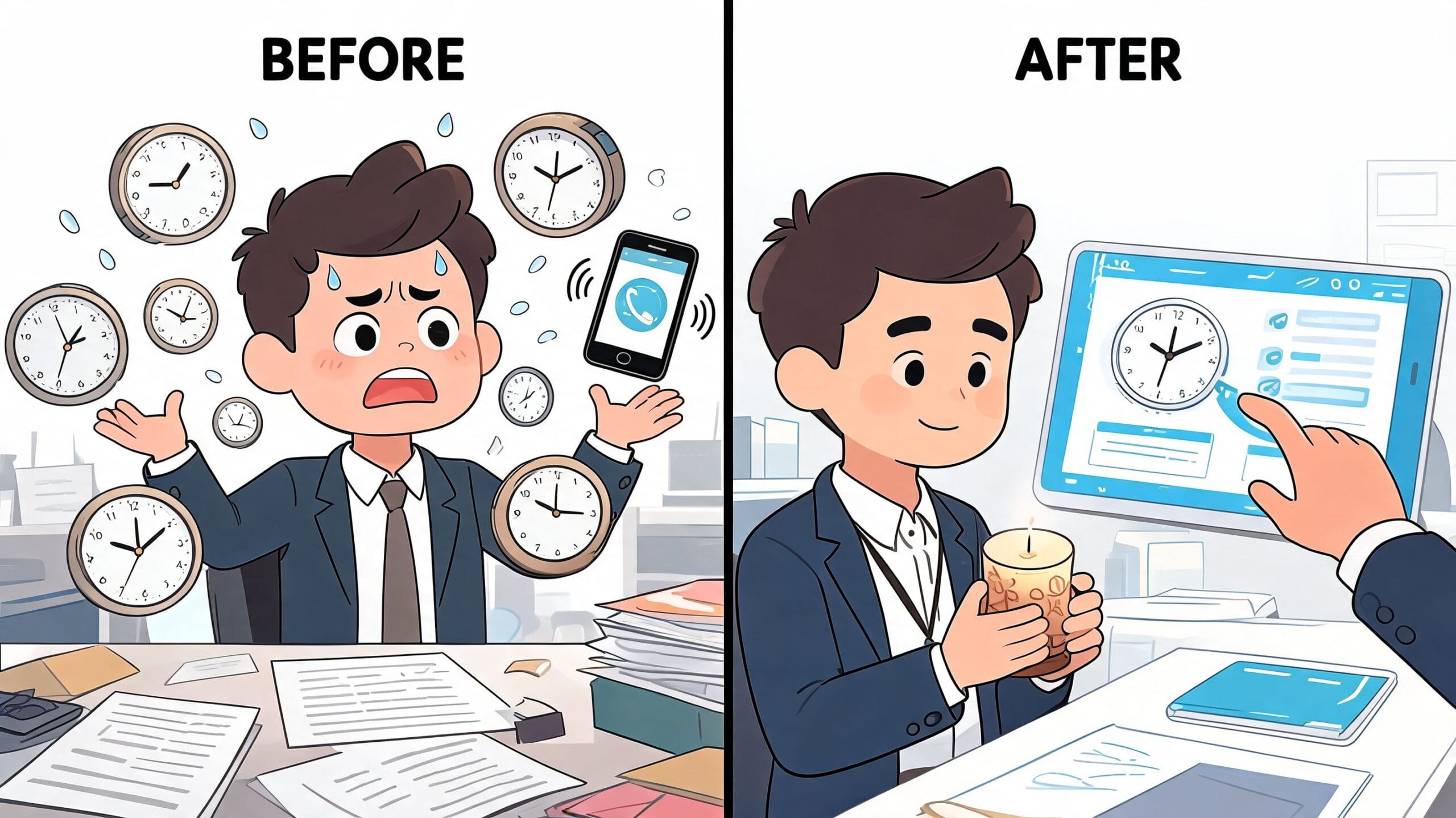
That pressure is common in Australia. Business.com's discussion of small business social media challenges notes that the primary problem for many Australian small businesses isn't a lack of tools, but a lack of time and resources. It also points to a missing but important decision point: understanding when outsourcing becomes more cost-effective than doing it alone.
The real cost of doing it yourself
A Brisbane business owner usually isn't just “posting on Instagram”. They're also stopping work to film, write captions, resize images, answer comments, check ad settings, reply to inbox messages, chase photos from staff, and wonder whether any of it is effective.
That hidden admin cost matters because the owner's best hours are often the business's revenue hours.
A useful way to assess the trade-off is to ask:
What work gets delayed?
Quotes, client calls, sales follow-up and operations often slip when social keeps interrupting the day.Is social being done properly?
Inconsistent posting, rushed replies and weak tracking usually mean the time spent isn't creating much return.Has growth plateaued?
If the business is active but results are flat, the issue might be strategy, creative quality, campaign setup or follow-through.Is the owner the bottleneck?
If every post depends on one person finding spare time, the system won't scale.
When outside help starts to make sense
Outsourcing doesn't have to mean handing over everything. Sometimes the smartest move is partial support.
One business might keep filming casual stories in-house but outsource planning, design and ad management. Another might handle day-to-day posting internally and bring in outside help for campaign setup, monthly reporting and content direction.
A good time to consider support is when:
| Sign | What it usually means |
|---|---|
| Posting keeps stopping | There's no durable process |
| Ads run but leads are patchy | Setup or targeting likely needs work |
| Enquiries come in but don't convert well | Social and landing pages aren't aligned |
| The owner resents the task | The workload is draining attention from core work |
Social media should support the business, not sit on the owner's shoulders every night.
For Brisbane operators who want a local, low-pressure option, Boocoo helps take marketing off the plate with practical support across social media, paid ads, SEO and web design. Businesses that are weighing DIY against outsourcing can contact the team on 1300 093 797 or via hello@boocoo.au to talk through goals, budget and next steps without any hard sell.