
A café owner in Paddington posts a flat white photo on a quiet Tuesday. Two customers comment. Then the lunch rush hits, a staff member calls in sick, and the feed goes silent for three weeks. The problem isn't effort or care. Nobody owns the job, so social media lands with whoever has a spare half hour.
That pattern is common across Brisbane digital marketing for small teams. Social media management roles aren't one job. They're several jobs with different skills, hours, and results. A business with 1 to 50 staff rarely needs all eight people. It needs the right first role, then the next one only when the first is working.
Think of a café. One person plans the menu. Another cooks. Another greets regulars, keeps tables moving, and watches the till. Social media works the same way. The guide below sets out what each role does, roughly how many hours a month it takes, the one KPI that shows it's working, and which roles a small team can safely combine. KPI means the main number worth watching.
Australia treats this as proper marketing work, not casual posting. The Australian Bureau of Statistics 2021 ANZSCO classification places "Content Creator (Marketing)" in Unit Group 2251, Advertising and Marketing Professionals, with "Social Media Specialist (Marketing)" as an alternative title. That recognition matters. It frames the work as planning, publishing, and supporting sales, not filling gaps between real jobs. Owners can read the list below as a hiring ladder, starting with the most useful general role and moving toward specialists.
1. Social Media Manager
The Social Media Manager owns the accounts day to day. This person plans the calendar, writes and schedules posts, replies to comments and messages, checks results, and keeps Facebook, Instagram, LinkedIn, TikTok, and Google Business Profile consistent. In café terms, the manager is the general manager who opens on time, keeps the menu fresh, and looks after regulars. For most small businesses, this is the best first hire because one person covers the whole presence.
What the Week Looks Like in Practice
Say a Sunnybank plumbing business runs a monthly calendar with three job photos, two tip videos, and one customer review post each week. The manager collects photos from the team, writes plain captions, and schedules everything in one sitting. A Paddington florist uses the same system before Mother's Day, with wedding season content ready two weeks ahead. Nothing depends on inspiration at 9pm.
Plan on 15 to 30 hours a month for two platforms, including replies and a short report. The KPI is enquiries attributed to social, counted through calls, forms, and messages that mention a post. Consistency matters, but enquiries pay wages.
Practical rule: Batch content once a fortnight, set owner sign-off within 48 hours, and posts stop sitting in limbo.
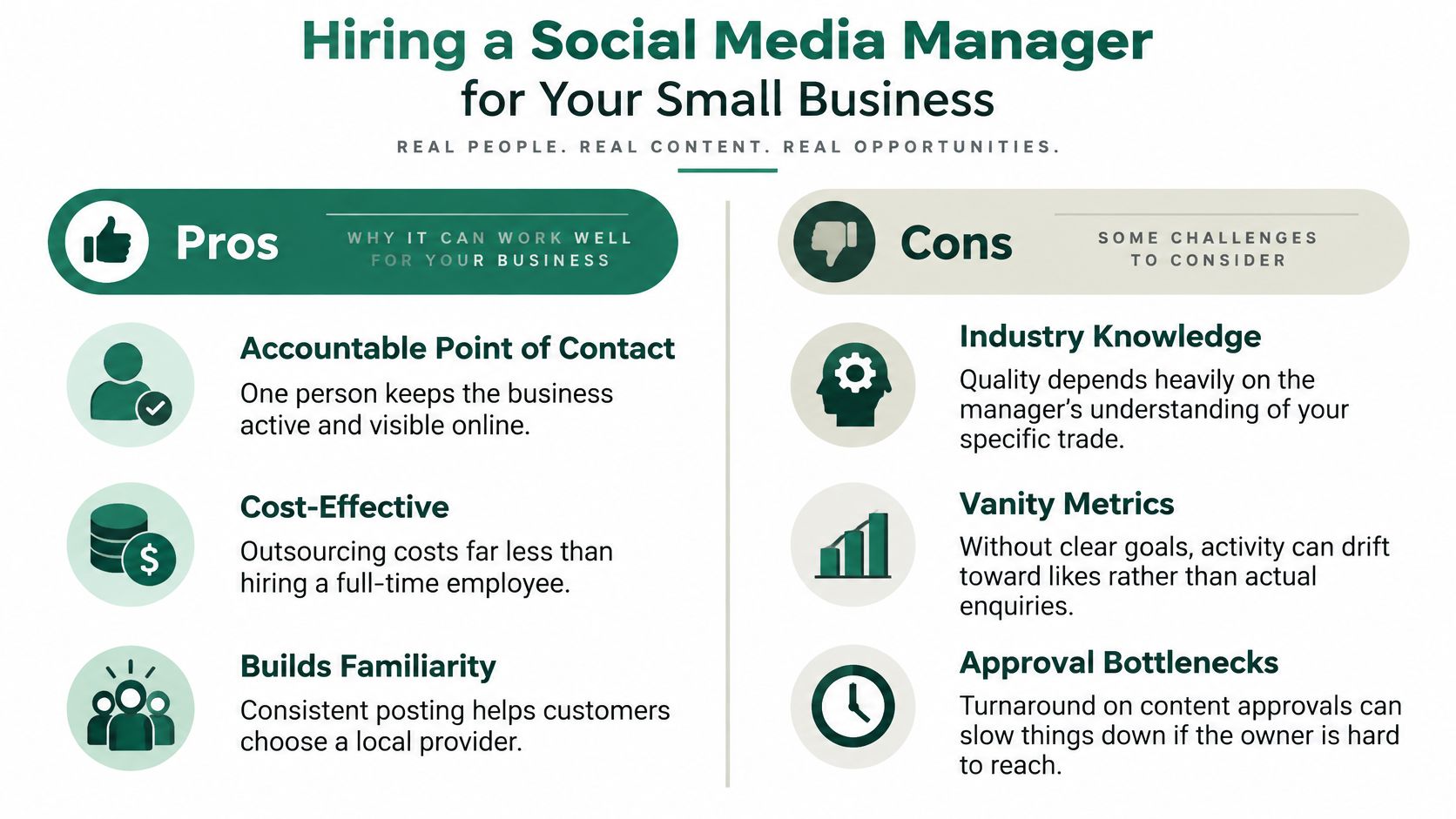
Part-time and fractional arrangements suit plenty of small operators, where social sits with someone who has part of a week to give it. A fractional manager covers the calendar, the replies, and the short report across those hours. In a team of one to 50 staff, this role often pairs with the content creator, and one person can carry both until posting volume grows.
Boocoo's social media management covers strategy, content creation and community management, so the work described above can arrive as one arrangement rather than three separate hires. Owners wanting the detail can review the core social media management responsibilities before writing a brief. A free tool such as Meta Business Suite keeps Facebook and Instagram in one place.
2. Social Media Strategist
Busy posting that leads nowhere usually signals a missing strategist. The Social Media Strategist decides who the business is trying to reach, which platforms deserve time, what success means, and how social supports SEO and paid ads. SEO means showing up in Google searches without paying for each click. If the manager drives the bus each day, the strategist plans the route and chooses which stops matter.

A Brisbane accountant might find LinkedIn drives referrals while Instagram mostly reaches peers. The strategist shifts effort to LinkedIn and short client education posts. A Fortitude Valley bakery might find Reels earn more saves, meaning people bookmark them for later, than static photos. The plan then centres on short recipe videos instead of daily product shots.
Keeping Strategy Small Enough to Use
- One page only: A short plan beats a long report nobody opens again.
- Three goals only: An example is five enquiries a month from social.
- One clear customer: A busy homeowner in Chermside who needs a reliable electrician is specific enough to guide posts.
- Quarterly reviews: Weekly changes create noise and waste the manager's time.
Expect 4 to 8 hours to set up, then 2 to 4 hours a month for review. The KPI is progress against those three goals, especially qualified enquiries, meaning enquiries from people who fit the service and area. CPA Australia reports only 68% of Australian small businesses use social media for business purposes, compared with an 88% Asia-Pacific average, according to CPA Australia. A simple plan helps close that gap without adding platforms. Startups can adapt the approach in this guide to social media strategy for new businesses.
3. Community Manager
Comments pile up. A question about opening hours sits unanswered beside a glowing review and one unhappy customer. The Community Manager handles those conversations. This role replies to comments, answers messages, manages reviews, removes spam, and turns happy customers into advocates. The analogy is a friendly restaurant host who greets regulars by name and directs newcomers calmly.

An Ipswich dog groomer can reply to every Google review within a day, then post a thank-you photo with the owner's permission. Repeat bookings become easier because future customers see a business that listens. A West End café can prepare short replies for opening hours and gluten-free options, then personalise each one. Staff save time during the morning rush and customers still feel heard.
Simple Habits That Protect Trust
Set aside 15 minutes in the morning and 15 minutes in the afternoon instead of checking phones all day. Keep five to ten reply templates, plus one escalation rule. Complaints go to the owner within the hour. Standard questions stay with the community manager.
Plan on 8 to 15 hours a month for a local business with steady reviews and messages. The KPI is response time and response coverage, meaning how fast replies happen and whether any message gets missed. Review handling also carries legal weight. The ACCC guidance on online reviews states businesses must not create fake or misleading reviews or arrange for others to do so. The safe habit is asking every eligible customer for honest feedback with the same message. No five-star requests. No rewards for praise only.
4. Social Media Content Creator
A good feed needs raw material. The Social Media Content Creator makes the photos, short videos, graphics, and captions. This person turns finished jobs, products on shelves, and staff know-how into content people stop for. Think of a photographer and storyteller who can make a plain renovation look like a magazine feature, without faking the result.

Say a Brisbane gardener films a 30-second before-and-after clip in a backyard at Capalaba. One shoot becomes a Reel, a Facebook video, and a Google Business post. A Newstead interior design studio can film a "one room, one hour" styling series on an iPhone during one shoot day. Real premises, real staff, and natural light usually feel more believable than stock photos.
A Low Cost Shoot System
- Film monthly in batches: Plan five to ten pieces before pressing record.
- Use simple gear: A phone, tripod, and window light cover most jobs.
- Start with the result: The finished haircut, deck, or cake earns attention faster than a logo.
- Keep brand files together: Logos, fonts, and colours belong in one shared folder.
Plan on 10 to 20 hours a month, depending on video volume. The KPI is saves and shares per post, because those actions show the content helped enough to keep or pass on. AI can draft captions, but a human still checks facts and tone. A 2025 survey of Australian SMBs reported via ChannelLife found 44% considered it difficult to stand out amid widespread AI-generated content. Local footage solves much of that. Staff can also help, as shown in this practical look at employee-generated content.
5. Social Media Coordinator or Assistant
Some businesses already know what to post. The work still slips because nobody uploads the files, updates holiday hours, or checks that scheduled posts went live. The Social Media Coordinator or Assistant handles those repeat tasks. In café terms, this is the reliable shift lead who restocks shelves, checks the roster, and keeps the day on track. It's often the cheapest useful role.
A Carindale physiotherapy clinic might use a part-time assistant for weekly exercise tips and school holiday hours. A Logan Village hardware store might have an assistant schedule weekend specials from photos the owner approves in a spreadsheet. The owner keeps control of offers and prices. The assistant keeps the system moving.
Making Delegation Safe and Cheap
A shared spreadsheet with date, caption, image, and approval status prevents most mix-ups. A one-page brand guide should cover tone, banned phrases, and sign-off rules. A 15-minute weekly check-in clears blockers before they become missed posts. Built-in scheduling tools remove the need for extra software on day one.
A coordinator doesn't need to invent the strategy. The value is follow-through, neat files, and nothing quietly expiring in drafts.
Plan on 6 to 12 hours a month for two platforms. The KPI is publishing consistency, meaning planned posts that went live on time with correct details. This role also suits owners starting from messy profiles. The CPA Australia 2025-26 Australia market summary reports non-use of social media reaches 48% among owners aged 60 and over. Profile clean-up, password records, and basic training can matter more than clever content at that stage. Some businesses use remote support and hire latin american virtual assistants for these routine tasks.
6. Paid Social Advertising Specialist
Organic posting reaches people who already know the business or stumble across it. Paid social buys placement in front of a chosen audience on Facebook, Instagram, LinkedIn, or TikTok. The Paid Social Advertising Specialist sets budgets, picks audiences, writes ad copy, tests images, and watches cost per enquiry. Organic posting is handing flyers to people walking past the shop. Paid social is placing a sign on a busy road used by likely customers.
Say a Morningside pet groomer targets pet owners within a 10-kilometre radius with a simple booking offer. A Brisbane candle maker can use retargeting, meaning ads shown to people who already visited the website, to remind shoppers about an abandoned cart. Both examples work because the audience is narrow and the next step is clear.
Controls That Stop Wasted Spend
Start with a small daily budget and raise it only after real enquiries appear. Set a cost-per-enquiry target before launch, which is ad spend divided by enquiries received. Refresh images every two to three weeks so the same people don't tune out. Use one call to action, such as "Call now" or "Get a free quote", rather than three competing requests.
Plan on 6 to 12 hours a month once campaigns are running, plus set-up time. The KPI is cost per qualified enquiry, not clicks. Owners comparing budgets can read this breakdown of Facebook advertising costs before approving spend. Claims in ads need proof too. The ACCC guidance on social media promotions says claims must be truthful, accurate, and able to be proven. Creator partnerships may also involve paid usage rights, covered in whitelisting costs explained by Social Cloud.
7. Social Media Analyst
Likes feel good. They don't always pay rent. The Social Media Analyst checks which posts drive website visits, calls, bookings, and sales, then turns those findings into plain decisions. The analogy is a bookkeeper for social media. The analyst doesn't choose the menu, but shows which dishes earn money and which ones waste ingredients.
A Taringa family dentist might learn patient testimonial videos send far more visitors to the booking page than promotional posts. The content mix changes. A Brisbane real estate agent might find Friday morning posts bring the most open-home enquiries, so listing videos move to Friday. Small shifts like these beat posting more of everything.
A Monthly Report Owners Can Read in Ten Minutes
- Pick three outcome metrics: Enquiries, calls, and bookings are enough for many local businesses.
- Add UTM tags: These are small labels on links that show which post sent a visitor.
- Ask for three actions: A one-page summary should say what to do more of, less of, and next.
- Check on the same date: Monthly patterns beat reactions to one odd post.
Plan on 3 to 6 hours a month for a simple set-up. The KPI is tracked enquiries or assisted conversions, meaning social helped before a call, form, or purchase happened through another channel. Tool use supports that discipline. A 2025 APAC Sprout Social study found 71% of teams used social media management tools, compared with 55% globally. Owners wanting a plain framework can also review social media ROI insights from Quikly.
8. Influencer Relations Manager
A trusted local recommendation can travel faster than an ad. The Influencer Relations Manager finds and checks local creators, arranges product gifting or service trials, agrees deliverables, and tracks results. Deliverables means what the creator must post and by when. In community terms, this person arranges an introduction to the well-liked neighbour everyone trusts.
Say a Brisbane skincare brand gifts products to five local beauty creators with 2,000 to 8,000 followers each, using a unique discount code for each creator. Sales become easy to trace. A Coorparoo cycle shop might partner with a cycling club member who posts a monthly route review featuring the shop's gear. The audience lives close enough to visit, which matters more than national fame.
Choosing Creators Without Blowing the Budget
Check audience location and comments, not follower count alone. A small account full of Brisbane parents can suit a family service better than a huge interstate audience. Product or service swaps can work for smaller creators, provided expectations are written down. Start with one or two trials before offering ongoing work.
Plan on 4 to 10 hours a month, with more time during outreach and set-up. The KPI is code-redemption sales or bookings per creator, supported by enquiry mentions. Paid partnerships and gifted products need clear disclosure, and any performance claim needs evidence behind it. Follow-up emails or texts to leads also need consent records and opt-outs. The OAIC direct marketing guidance sets out consent, clear sender identification, and a functional unsubscribe mechanism. Local examples and vetting steps appear in this guide to influencer marketing in Brisbane.
How the eight social media management roles compare at a glance
| Item | Best for | Typical time commitment | Main KPI to track | Usual hiring model |
|---|---|---|---|---|
| Social Media Manager | Managing a business's overall social presence | Ongoing, with monthly planning and reporting | Enquiries from social channels | Part-time or project-based monthly package |
| Social Media Strategist | Setting goals, audience, platform focus, and direction | One-off or quarterly engagement | Enquiries, bookings, or website visits | One-time strategy session or quarterly contract |
| Community Manager | Responding to customers and building trust | Daily monitoring and replies | Response time and customer enquiries | Bundled into a monthly package |
| Social Media Content Creator | Producing photos, videos, graphics, and captions | Batch-based, typically planned monthly | Reach and engagement on created content | Monthly content batch or project-based |
| Social Media Coordinator or Assistant | Scheduling approved content and handling routine tasks | A few hours per week | Publishing consistency and task completion | Part-time assistant or virtual assistant |
| Paid Social Advertising Specialist | Running targeted campaigns to generate leads or sales | Ongoing campaign monitoring and testing | Cost per lead or enquiry | Specialist hired for campaign management |
| Social Media Analyst | Measuring performance and recommending improvements | Monthly reporting cadence | Enquiries, calls, or bookings attributed to social | Monthly reporting add-on or project-based |
| Influencer Relations Manager | Finding and coordinating relevant creator partnerships | Ongoing relationship and campaign management | Tracked enquiries or discount code redemptions | Project-based or ongoing partnership management |
Start With One Role, Then Build the Team You Need
The smart hiring ladder starts with the job currently going undone. A business with no owner for posting needs a Social Media Manager first. A business posting at random needs a short strategy before more content. A business with unanswered reviews needs community cover before ads. Adding roles in the wrong order creates polished activity without enquiries.
Time is usually the main constraint. Owners don't need eight hires. They need one named person, one monthly rhythm, and one number that shows whether the effort leads to calls, bookings, or sales. Once that first role produces enquiries, the next gap becomes obvious. Content may look tired, reporting may be unclear, or ads may deserve a careful test.
Two Combinations That Suit Small Teams
A Manager plus Community Manager suits service businesses that live on reviews and repeat bookings, such as dentists, groomers, cafés, and tradies. One side keeps content moving. The other protects replies, reviews, and trust. A small business can also combine those duties in one experienced hire at first, provided response times stay realistic during busy weeks.
A Coordinator plus Analyst suits a shop or clinic that already has a clear plan and plenty of photos. The coordinator publishes on schedule. The analyst spends a few hours each month showing which posts brought visits and enquiries. That pairing costs less than a full manager, but it only works when the owner can still approve content and make decisions quickly. A Strategist plus Content Creator is another useful pairing for a launch. The strategist sets direction for a quarter, while the creator builds a bank of local photos and videos the owner can reuse.
Outsourcing makes sense when the owner becomes the bottleneck. Posts wait for approval, messages sit overnight, and reporting never happens because customers come first. A Brisbane-based team can take planning, content, scheduling, and replies off the plate, leaving the owner to approve the plan and serve customers. Boocoo is one relevant option for owners who want that support handled locally. Boocoo's social media management includes strategy, content creation, and community management, and its model is built around businesses with 1 to 50 staff.
The first step with Boocoo is a free discovery call where the team learns about the business, goals, and current marketing. Each client gets one dedicated strategist who knows the business, goals, and competitors. That strategist maps a 90-day plan customized to industry, location, and budget. The client approves the strategy before any work starts, so there are no surprises about direction or priorities.
Owners who already know which role is missing can keep the next step simple. Write down the task nobody owns, the hours available each month, and the enquiry number worth aiming for. Bring those three points to a conversation and the right role usually becomes clear within minutes. Trial periods work well too. One quarter is long enough to test consistency, response times, and enquiry quality without locking a small business into the wrong structure.