
A Brisbane plumber can be flat out all week, miss three Instagram messages, and still wonder why the phone's quiet. The same thing happens with physios, accountants, gardening specialists, and café owners. The business is busy, the work is good, but the social media presence has gone stale because nobody has time to keep feeding it.
That's exactly why social media managers Brisbane owners hire need to be judged on more than pretty posts. Good social media management takes pressure off the owner, keeps the brand consistent, and turns social into something useful for a local business, not just something that looks active. For Brisbane service businesses, that usually means better enquiry flow, better trust, and less time wasted trying to post between jobs.
Why Brisbane Small Businesses Need Social Media Managers
A lot of Brisbane owners treat social media like the spare room in the office, useful, but always the last thing sorted. Then a new customer checks the Instagram grid, sees the last post from months ago, and chooses a competitor who looks more switched on. That's the core issue. Social media isn't just decoration anymore, it's part of the trust check.
A decent social media manager doesn't just post. They build content strategy, handle community engagement, keep the brand consistent, and watch what people do with the posts. The role has grown into something more operational and more commercial, with skills spanning writing, analytics, customer service, SEO, and lead generation, not just design and captions, as outlined in the broader social media manager skills overview from the Digital Marketing Institute.
Practical rule: if social media is stealing owner time and still not producing enquiries, the problem is usually process, not effort.
Why local service businesses feel the pain first
Brisbane trades, health practices, consultants, and micro-businesses rely on local credibility. A prospective customer often checks Google, then Instagram or Facebook, then decides whether the business looks active enough to call. If the profile is outdated, the content is random, and replies are slow, that buyer moves on.
This is why outsourcing makes sense. A strong manager takes over the jobs that are hard to keep up with in-house, like planning posts, staying active in comments and messages, and keeping the feed aligned with current offers and service priorities. For a lot of owners, that frees up mental space as much as calendar space.
The best version of this arrangement is practical. Social doesn't need to chase trends for the sake of it. It needs to support phone calls, quote requests, bookings, and repeat business. That's the standard Brisbane owners should use when they compare providers. For a broader local content angle, Boocoo also covers the relationship between social and small business marketing in its social media marketing for small business guide.
What the right manager actually removes from the plate
A good manager takes ownership of the messy bits. They stop the content from drifting, keep the posting rhythm steady, and make sure the business isn't relying on whatever the owner remembers at 9pm. Tools can help with this too, especially when teams use AI and scheduling support to speed up planning and production, as discussed in WaveGen.ai's guide to the best AI tools for social media in.
For Brisbane businesses, that matters because consistency beats bursts of effort. A campaign that runs for two weeks and then disappears doesn't build much trust. An active, relevant profile does.
Audit Your Needs Before You Start Hiring
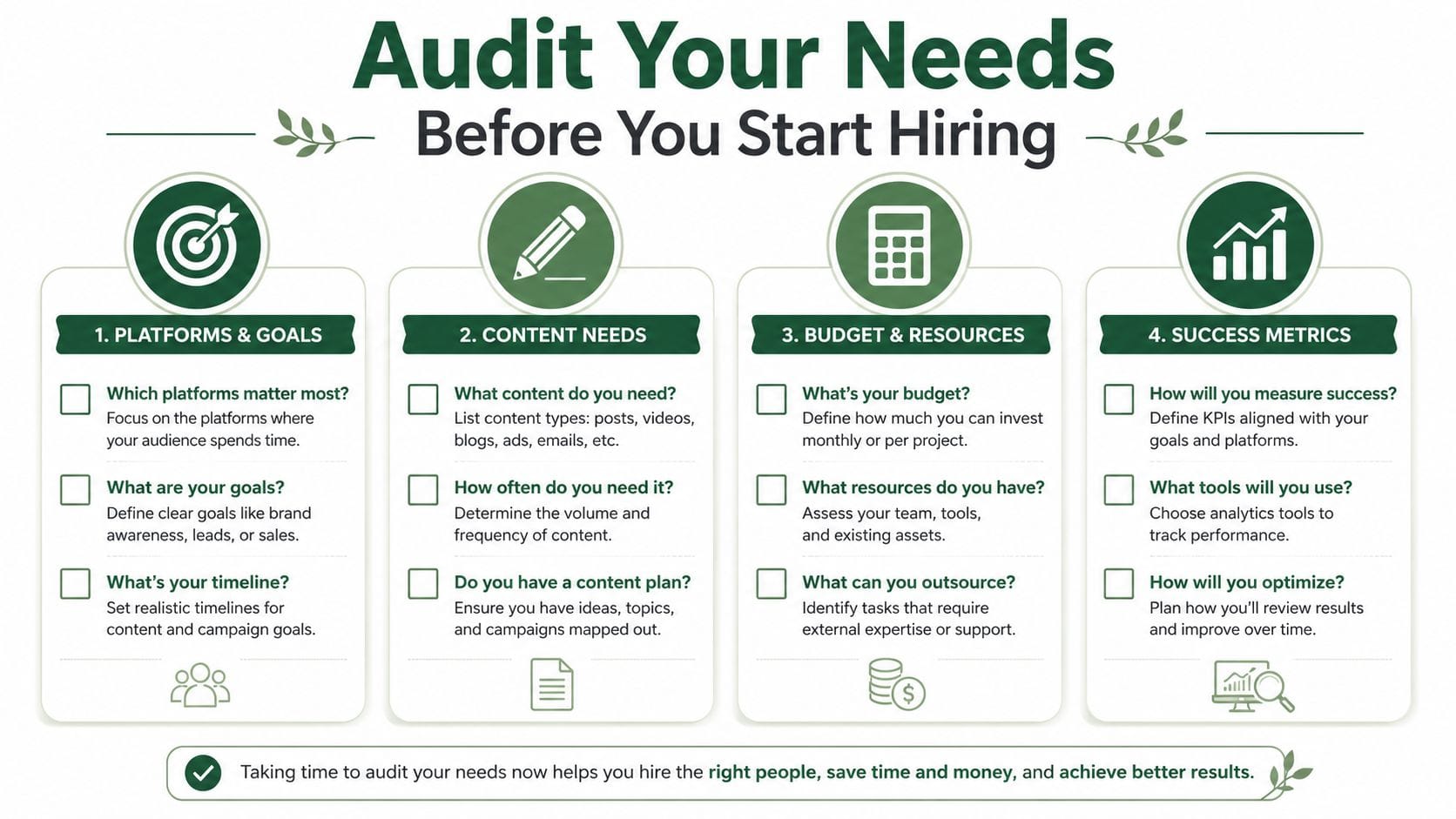
Before anyone hires a manager, the business needs a basic audit. Otherwise, the first meeting turns into a guessing game and the quote comes back shaped around the provider's preferences, not the business's actual needs. That's how owners end up paying for work they don't use.
Start with platforms and business outcomes
The first question is simple. Where do customers pay attention? Not every business needs every platform, and local guidance from Brisbane marketers recommends focusing on one to three social platforms rather than trying to post everywhere. That approach saves time and keeps the messaging relevant. It also matches the practical workflow advice from Boocoo's beginner-friendly user persona guide, because the audience should shape the platform choice, not the other way around.
A useful self-check looks like this:
- Platforms used today: list the channels already active, even if they're neglected.
- Time lost each week: estimate how long social work steals from quotes, sales, or client delivery.
- Current content assets: note what's already available, such as photos, testimonials, or service descriptions.
- Lead source reality: identify where enquiries come from now, not where the business hopes they'll come from later.
Once that's clear, set 1 to 3 business outcomes that social must support. For most Brisbane service businesses, that means calls, quote requests, walk-ins, or bookings. Anything else is secondary.
A social media brief should read like a job ticket, not a wish list.
Build the one-page brief before the first call
The best briefs are short. They tell a manager who the business serves, what services matter most, what already exists, and what success looks like. That makes quotes faster and more accurate because the provider can size the work properly.
The business should also prepare a few core assets before hiring. Logo files, brand colours, service descriptions, and customer photos are enough to get started. If those assets don't exist yet, that's a signal to slow down and fix the foundation first.
A Brisbane owner who can answer those basics will get better proposals and better alignment. A vague brief usually produces vague content, and vague content rarely brings in bookings.
Brisbane Pricing and What Different Budgets Buy
Brisbane social media management pricing varies widely, and that is exactly why owners get tripped up. A low quote can look sensible until you see it only covers posting, while strategy, engagement, and reporting sit outside the scope. The local market shows how wide the spread is. Indeed reports an average Brisbane social media manager salary of AU$61,487 per year based on 4 salaries, updated on 30 January 2026, while Payscale reports an average hourly pay of AU$25.70 in 2025 with experience-based variation from AU$20.35 to AU$40 per hour for Brisbane roles. Those figures show the work is structured, commercial, and priced by scope and seniority, not by how many posts get published (Indeed Brisbane salary data).
Compare the main buying options
Brisbane agencies commonly price retainers from AUD $3,000 to $10,000 per month, with strategy-only, content-plus-community, and full-service tiers sitting in different bands (Clutch Brisbane agency pricing). That lines up with the difference between a freelancer, a boutique operator, and a full-service team. It also matches the way Facebook advertising costs work, because media spend, ad management, and organic management are separate line items, not one blob of “social media”.
| Brisbane Social Media Management Pricing Tiers | Monthly Cost (AUD) | What is Included | What is Usually Excluded |
|---|---|---|---|
| Strategy-only | $3,000–$5,000 | Planning, channel direction, content themes, and campaign thinking | Daily posting, community replies, photography, paid ads management |
| Content plus community management | $5,000–$8,000 | Ongoing posts, comment and message handling, scheduling, and basic reporting | Deep paid media, major video production, advanced attribution work |
| Full-service management | $7,000–$10,000+ | Strategy, content creation, posting, engagement, reporting, and paid amplification | Large-scale production shoots, complex web work, major brand repositioning |
The point is not that one tier is better. Each tier solves a different problem. Strategy-only works when the owner already has someone posting in-house. Content plus community management suits businesses that need consistency and response handling. Full-service management fits when the business wants one team to own the whole social channel.
When in-house hiring makes sense
A full-time hire only makes sense when the workload is constant and broad enough to fill the role properly. That means content planning, engagement, analytics, and coordination with other marketing work every week. If the need is lighter, outsourcing is cleaner and safer for cash flow.
Brisbane owners often underestimate how fast a social role grows once it is done properly. Once content, messages, reporting, and changing priorities land on the same desk, the job stops looking like posting and starts looking like a marketing function. That is why so many small businesses get more value from an external team than from hiring too early.
Where to Find Social Media Managers in Brisbane
A Brisbane plumber, clinic, café, or tradie crew does not need a generic marketer with a pretty feed. They need someone who can bring in enquiries, keep response times tight, and understand how local customers decide who to trust. Start your search there, then check where the work is being sourced.
Look in Brisbane business directories, LinkedIn, Google results with Brisbane-specific searches, agency listings, and referrals from owners who already pay for the service. A direct discovery call will tell you more than a polished proposal. If you want local strategic support beyond social media alone, a Brisbane marketing consultant can also help you sort the difference between a hands-on operator and someone who only talks a good game.
Shortlist by local fit, not polish
A tidy portfolio is not enough. The manager should show Brisbane-relevant work, explain what changed for the client, and talk about bookings, calls, or leads rather than just colourful graphics. That matters because local provider directories can look crowded while still hiding whether the people behind them understand service businesses, local competition, or enquiry flow. A useful local perspective on this gap is covered in Jayne Media's discussion of the best social media manager, especially where the market is full of broad claims but light on outcomes.
Use three filters when you review a shortlist:
- Local relevance: posts, offers, and examples that make sense for Brisbane buyers.
- Proof of process: clear planning, approvals, reporting, and response handling.
- Commercial language: talk of enquiries, bookings, or leads, not just follower growth.
If the portfolio is all aesthetics and no outcomes, the business is buying decoration, not management.
Watch for the wrong signals
Weak candidates usually lean on vague case studies, copy-and-paste templates, or follower counts. They may say they “handle everything” but avoid explaining what that covers. That is a problem. Brisbane businesses need someone who understands what local customers ask, how fast they expect replies, and what kind of content makes them trust a service provider.
Check their LinkedIn profile, then look past the headline. Search for Brisbane, filter by current location, review recent posts, and see whether they show any real involvement with local businesses rather than just broad marketing commentary. Google searches can help too, especially if you combine the service with Brisbane suburbs or business types. The goal is simple. Find someone who has done the work in a local setting, not someone who just presents well online.
Use local networks as a filter
Referrals from accountants, web designers, coworking communities, and other Brisbane operators often surface better matches than broad online searches. Those people can usually tell the difference between a provider who talks well and one who keeps a business visible. That matters for owners who do not want to spend weeks comparing endless portfolios.
Local directories are useful as a starting point, but only if you use them properly. Shortlist businesses that show a real Brisbane base, then check their recent client work, review history, and response style. If they serve trades, professional services, or small retail, you will usually see it in the examples straight away. That is the kind of evidence that matters for service businesses that need enquiries, not vanity metrics.
Questions to Ask Before You Sign Anything
A good social media manager should be able to answer plain business questions without hiding behind jargon. If they can't explain the work clearly, they probably don't understand the work clearly. That's the test.
Ask about the first 30 days
The first question should be simple. What happens in the first month? A serious provider will talk about auditing the current accounts, reviewing recent performance, setting a content plan, and clarifying approval steps. If the answer is just “we'll start posting”, that's not a plan.
A Brisbane café, a plumber, and a physiotherapist should all evaluate the same manager differently. The café needs local foot traffic and repeat visits, the plumber needs fast enquiry handling, and the physio needs trust and suitability. Same provider, different business goals, different proof required.
Ask the scope questions that expose cheap quotes
The cheapest quote is often the most incomplete one. The business should ask what's included, what's not included, who creates the content, and who replies to comments and messages. That matters because a low price can hide missing pieces like photography, paid ad work, or community management.
Useful questions include:
- What would you do in the first 30 days? Good answers mention audit, goals, content planning, and account cleanup.
- Who creates the visuals and captions? Strong answers define responsibilities instead of assuming the owner will fill the gaps.
- How are approvals handled? Good managers describe a simple workflow that avoids delays.
- What reporting do you provide? They should explain what gets reported and how often.
- What is excluded from the fee? This is where hidden costs usually show up.
The contract matters too. Account access should stay under the business's control, content ownership needs to be clear, and notice periods shouldn't trap the owner in a bad fit. If the manager dodges those basics, the business should keep looking.
Strong answer: direct, specific, and tied to the business type.
Weak answer: broad promises with no operational detail.
Separate confidence from competence
Some candidates sound impressive because they speak in campaign language. That does not mean they can manage a small local business. The better test is whether they can explain how they'd adapt for a tradie versus a professional service, how they'd handle slow periods, and what they'd stop doing if the content isn't producing enquiries.
A solid provider should make the owner feel clearer after the call, not more confused.
Measuring Results That Actually Matter
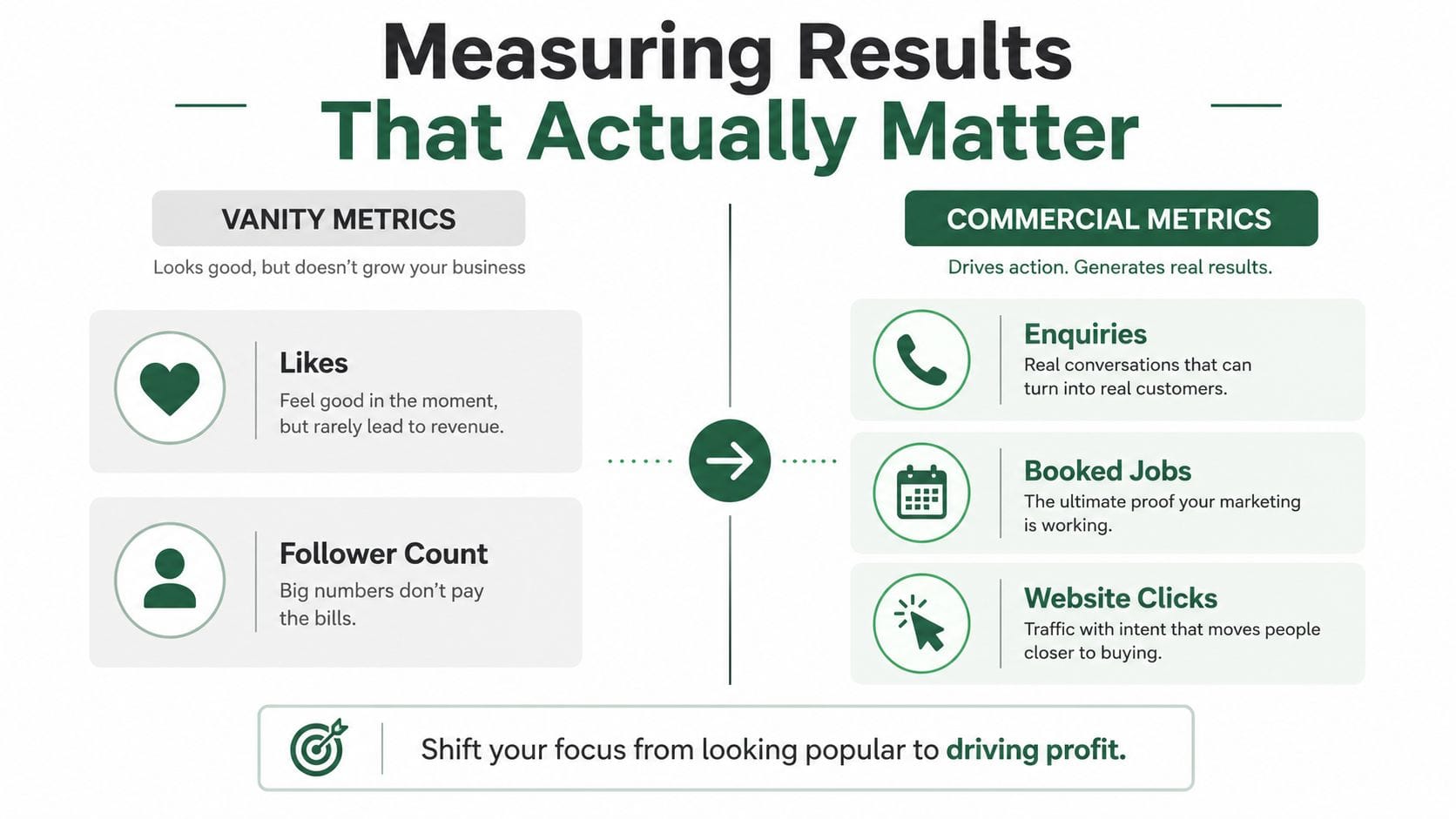
Brisbane service businesses do not need social media to feel popular. They need it to generate enquiries and support bookings. That means the wrong scorecard can waste months. A profile with more likes can still lose money if it doesn't convert.
Use commercial metrics, not vanity metrics
Followers, likes, and reach are easy to show and easy to misread. They tell the business that content is being seen, not that it is producing work. For service businesses, the better metrics are enquiry volume, lead quality, booked consultations, and repeat customer referrals.
A monthly review should focus on a few basic questions. Which posts brought in direct messages or calls? Which platform delivered the best leads? Which content created the most useful conversations? Those questions expose what's working.
The broader social role also connects to attribution and lead generation, not just engagement, as outlined in the conversion rate optimisation guide for Australia. That matters because a post can assist a booking even when the final conversion happens elsewhere.
Keep the review simple and consistent
The owner and manager should review performance every month, not only when something feels off. The meeting should look at what was posted, what got a response, what led to enquiries, and what should be cut. If a platform isn't contributing, reduce the effort there and shift attention to the channel that is.
A useful rule is to treat social like a stock take, not a trophy cabinet. The question is never “did this get attention?” The question is “did this help the business grow in a way that matters?”
Tie content back to the local market
Brisbane businesses often serve a very specific audience. That audience wants proof, fast replies, and a clear reason to trust the business over the next one in the feed. Social metrics should reflect that reality. If the content is generating the right kind of enquiry, the numbers are doing their job. If not, the channel needs adjusting.
Onboarding Checklist for the First 30 Days
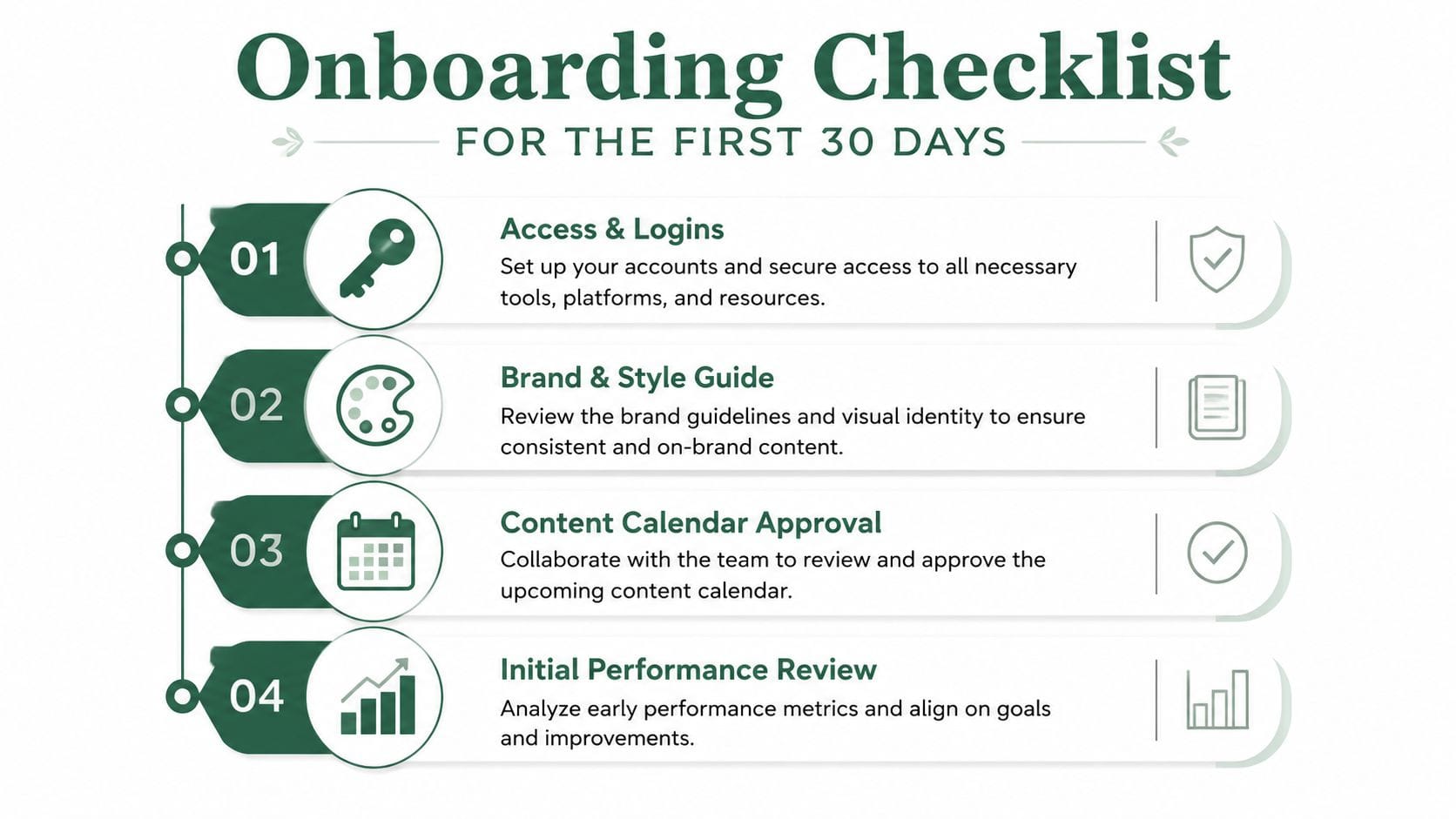
The first month should be calm, organised, and boring in the best way. Everyone knows what's being posted, who's approving it, and where the assets live. That's how outsourcing reduces stress instead of creating a new mess.
Get the access and assets sorted first
The manager needs access to the right accounts, the brand files, the photo library, service descriptions, and any testimonials that can be repurposed. Without that material, the work slows down and the content ends up generic. A Brisbane business should treat the handover like opening day, not a loose handoff.
Lock the workflow before content goes live
Approval flow should be simple enough that the owner can keep up with it. If every post gets stuck waiting for feedback, consistency disappears. If nothing gets approved at all, quality drops. The middle ground is a clear calendar, a fixed review step, and response times that both sides can live with.
Book the first reporting review early
A first-month review should happen after the initial content run, while the work is still fresh. That meeting should check whether the tone feels right, whether the content matches the business, and whether the results are moving in the right direction. If the manager can explain what happened and what changes next, the relationship is on solid ground.
Boocoo works through this kind of setup for Brisbane small businesses, from scoping the package to setting up the workflow and reporting rhythm. That matters because a social media manager should lower the owner's workload, not add another admin lane to manage.
If onboarding feels chaotic, the monthly retainer usually will too.