

Let's get straight to the point: digital marketing isn't just a part of real estate anymore. It is real estate. When you consider that a staggering 96% of property buyers now begin their journey online, it's clear that your digital footprint isn't just a nice-to-have; it's your new shopfront, open 24/7.
Why Your Real Estate Agency Needs a Digital Game Plan
Think back to the old days of window displays and flyers. They had their place, but today's property market lives and breathes online. For real estate agents, especially small businesses and independent operators, failing to have a solid digital strategy is like trying to sell a home without a front door.
This isn't something to be scared of. In fact, it’s the biggest opportunity your agency has had in decades. Clever, targeted digital marketing means a local agency can punch well above its weight, connecting directly with motivated buyers and sellers without a massive budget. What you need is a smart, time-efficient plan that turns your website and social media into a reliable source of leads.
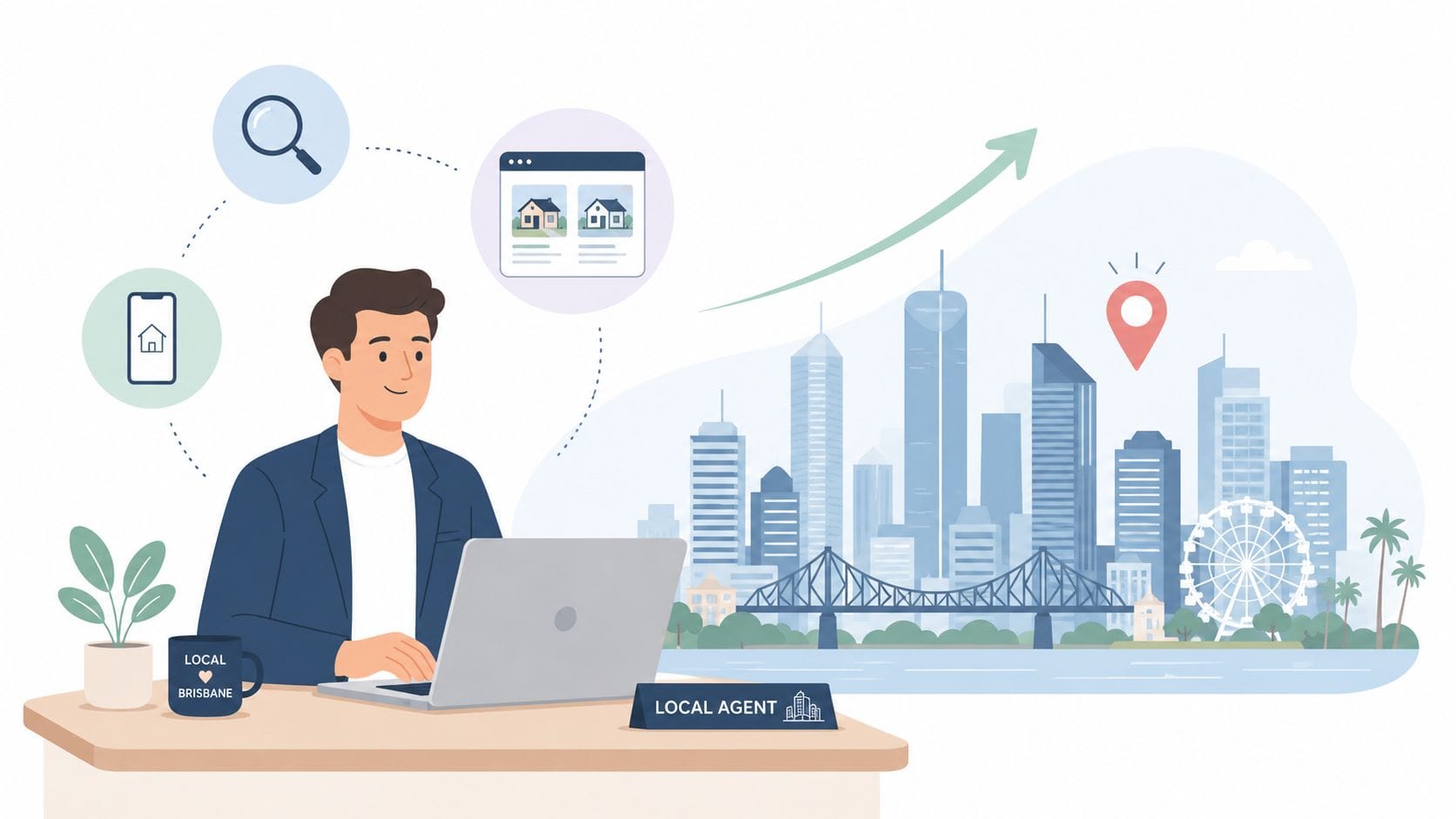
Making the Digital Shift Work for You
Traditional advertising just can't compete with the precision and reach of digital. When you get your online strategy right, you start to see real, tangible results. It helps you:
- Become the Local Authority: When someone in your area searches for "best schools in [suburb]" or "current property values," they should find your blog post answering that exact question. This builds incredible trust.
- Attract High-Quality Leads: You'll stop chasing cold leads and start attracting clients who are actively searching online to buy or sell in your specific market.
- Get More from Your Budget: Digital allows you to focus a small ad spend laser-tight on the right people, in the right postcodes, at the exact moment they're ready to act. For example, a $100 Facebook ad campaign can be targeted specifically to people in your core suburbs who have shown interest in real estate websites.
A great digital strategy also uses smart tools to work more efficiently. For instance, using automated tools to qualify leads 24/7 is a game-changer for time-poor agents. We've seen great results with different strategies for real estate chatbots that handle initial enquiries, freeing up agents to do what they do best: build relationships and close deals.
It’s no longer about just being online. It's about being found. A proper digital plan ensures your agency shows up exactly when and where your future clients are looking.
Ultimately, this turns your marketing from a business expense into a measurable investment that grows your agency. For a deeper look at the costs and returns, our guide to real estate advertising in Australia breaks it down further.
Build a Website That Converts Visitors into Leads
Let's be honest, your website is your hardest-working employee. It's your digital front door, open 24/7, and it’s often the very first place a potential client will check you out. A great website doesn't just look pretty—it turns curious browsers into actual, tangible leads.
For a small agency, you don't need a monster budget to build a site that works. The trick is to focus squarely on the features that convince a visitor to pick up the phone or fill out a form. It all starts with a clean, mobile-first design. Why? Because most of your local traffic will find you on their phone, probably while scrolling during their lunch break or after putting the kids to bed.
If they can't easily search for properties and find your contact details, they're gone. It’s that simple. Your site has to be dead simple to navigate, with an intuitive property search and crystal-clear calls-to-action (CTAs).
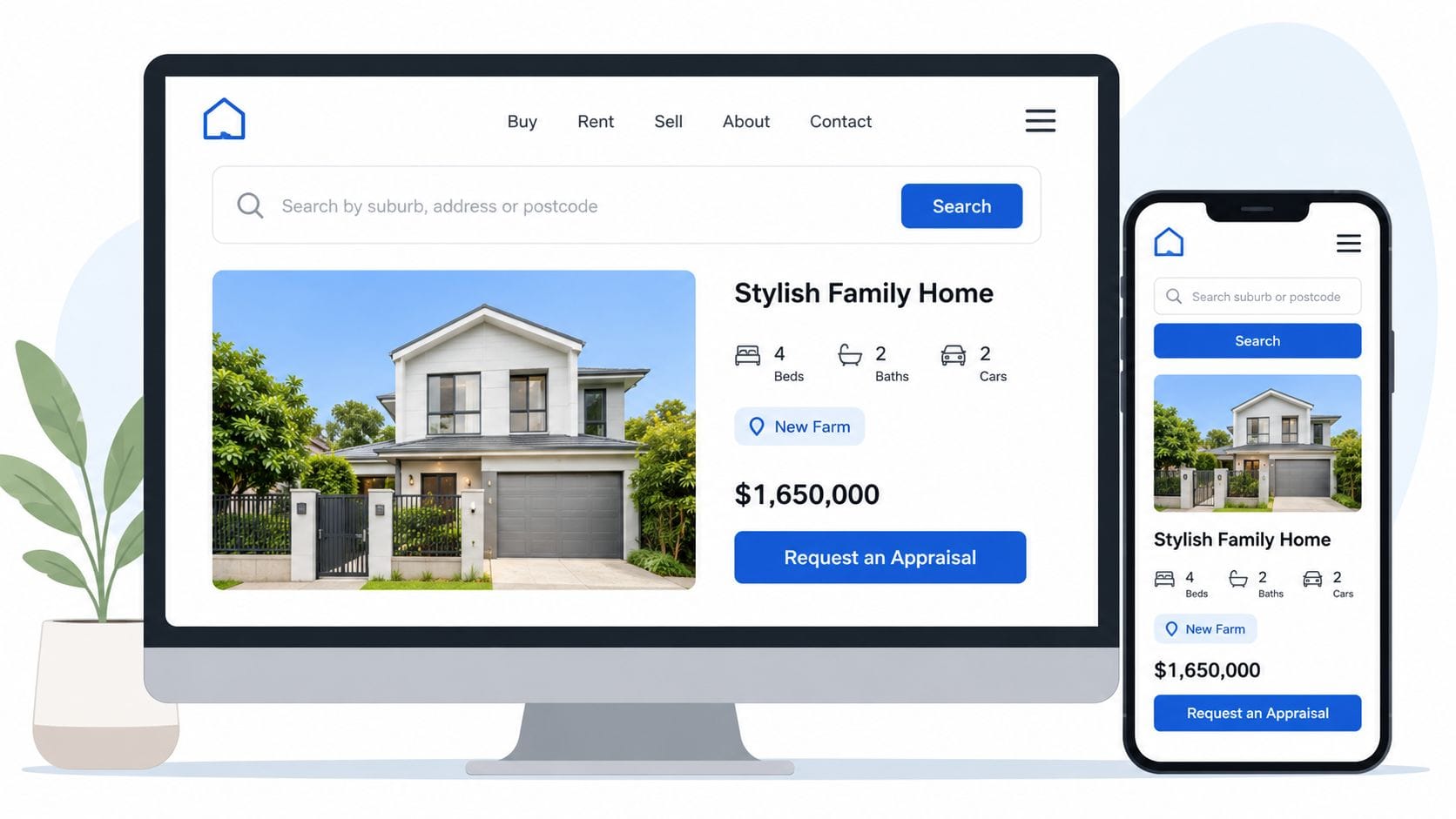
Key Features for a High-Converting Website
So, how do we get your website to do the heavy lifting? There are a few features I’ve seen make all the difference for small businesses. These aren’t just bells and whistles; they’re strategic tools that guide visitors towards that next step.
- Compelling Calls-to-Action: “Contact Us” is boring. Get specific and offer real value. Think "Request a Free Property Appraisal" or "Download Our [Suburb] Market Report." These give people a clear reason to hand over their details.
- Simple Lead Capture Forms: I can't stress this enough: keep your forms short. No one wants to fill out a 10-field questionnaire on their phone. All you need to start a conversation is a name, email, and maybe a phone number.
- Neighbourhood-Specific Content: Show you own your patch. Create dedicated pages for the suburbs you specialise in. Pack them with market stats, school catchment info, lifestyle tidbits, and great local photos. This is fantastic for local SEO and positions you as the expert.
The goal is to make your website the single most helpful local property resource someone can find. When you give value away freely, you earn trust. And in real estate, trust is everything.
Building a solid Formzz lead capture system is a great starting point for turning those visitors into qualified appointments. You can even use simple WordPress plugins to automate scheduling, which is a massive time-saver.
For a deeper dive into refining your site's performance, our article on Conversion Rate Optimisation in Australia has more advanced strategies you can implement right away.
Attract Local Buyers with Smart Real Estate SEO
Search Engine Optimisation (SEO) can sound technical, but for a local real estate agent, it's one of the most powerful and budget-friendly tools you have. Think of it this way: SEO is how you make sure that when a motivated buyer or seller in your suburb searches on Google, they find you and not your competitor down the road.
Your most important first move is to claim and perfect your Google Business Profile (GBP). This is that free listing that pops up in Google Maps and the local search results. For a small business, this is your most powerful free marketing tool.
Get the basics right first—double-check all your contact details and business hours. Then, go further. Upload at least 10 high-quality photos. Most importantly, make it a habit to ask every single happy client for a review. Those five-star ratings are gold; they send a huge signal to Google that you're a trusted local expert.
Target Keywords That Bring in Ready-to-Act Clients
Once your GBP is sorted, it's time to think about the keywords on your website. Forget about broad, generic terms like "real estate." You need to get specific and target the long-tail keywords that actual people are typing into their phones.
Here are a few practical examples:
- 'Best real estate agent for units in [Your Suburb]'
- 'Family homes for sale in [Your Suburb]'
- 'Property appraisal [Your Suburb]'
- 'Real estate agent with low commission rates [Your City]'
See the difference? These searchers have clear intent. Your job is to create content—like a blog post or a suburb page—that answers these specific questions. For a deeper dive into this, our guide to Brisbane local SEO is a great starting point for more advanced strategies.
To help you prioritise, here's a quick look at where to focus your efforts for the biggest impact on a smaller budget.
Budget-Friendly Digital Marketing Focus Areas
| Channel | Primary Goal | Practical, Actionable Tactic |
|---|---|---|
| Google Business Profile | Local Visibility | Get 10+ new 5-star reviews by sending a direct link to past clients. |
| On-Page SEO | Attract Search Traffic | Write a blog post titled "5 Things to Know Before Buying in [Your Suburb]." |
| Content Marketing | Build Authority | Create a downloadable PDF guide to the best primary schools in your area. |
| Email Marketing | Nurture Leads | Send a monthly email with new listings and market updates to your database. |
These channels deliver a fantastic return because they target people who are actively looking for your services, helping you get the most out of every dollar and every minute you invest.
Make Your Property Listings Work Harder
Don't just copy and paste the same bland property description everywhere. Every single listing on your website is a fresh opportunity for SEO. Take the time to write a unique, compelling description that sells a lifestyle. Practical tip: Instead of "3 bed, 2 bath," write "Perfect for a growing family, this home is just a short walk from [Local Park] and within the popular [School Name] catchment."
A quick but crucial point: a fast-loading website is essential. If your site is slow, visitors will leave, and Google will notice. Keeping an eye on technical performance by managing site Core Web Vitals is vital to ensure your site is fast, responsive, and keeps both users and search engines happy.
With Australia's residential real estate advertising industry projected to hit $2.0 billion by 2026, the game is almost entirely digital now. Buyers expect interactive tools and instant information at their fingertips. According to these industry findings from IBISWorld, this digital shift means that smart, consistent SEO is no longer optional—it's the key for smaller, independent agencies to stand out and bring a steady stream of qualified buyers and sellers right to their door.
Use Content and Social Media to Build Trust
Good content does more than just sell a house; it sells you. As a local real estate agent, your content is your single best tool for building trust and getting enquiries without breaking the bank on ads. And right now, nothing works better than video.
The proof is in the numbers. Listings with a video pull in a massive 403% more inquiries than those without one. This makes perfect sense when you realise homebuyers spend about 60% of their time just looking at listing photos, barely skimming the property description. You can see more stats on how agents are using digital marketing from Digital Agency Network.
A Simple, Time-Saving Social Media Plan
My best advice? Keep it simple. Consistency will always beat complexity. Instead of trying to master every platform, pick one or two and do them really well. This approach saves a ton of time and focuses your effort where it counts.
- Instagram: It's all about visuals. Use Reels for quick 30-second property walk-throughs or "day in the life" videos. Stories are fantastic for behind-the-scenes content, like you setting up for an open home.
- Facebook: This is still the go-to for reaching a local audience. It’s perfect for creating event pages for your open homes and sharing community news that positions you as the neighbourhood expert.
- LinkedIn: Think of this as your professional hub. It’s the place to share market updates, celebrate successful sales (with client permission!), and connect with mortgage brokers and conveyancers.
The infographic below shows exactly how this works—turning great content into genuine trust, and that trust into actual leads.
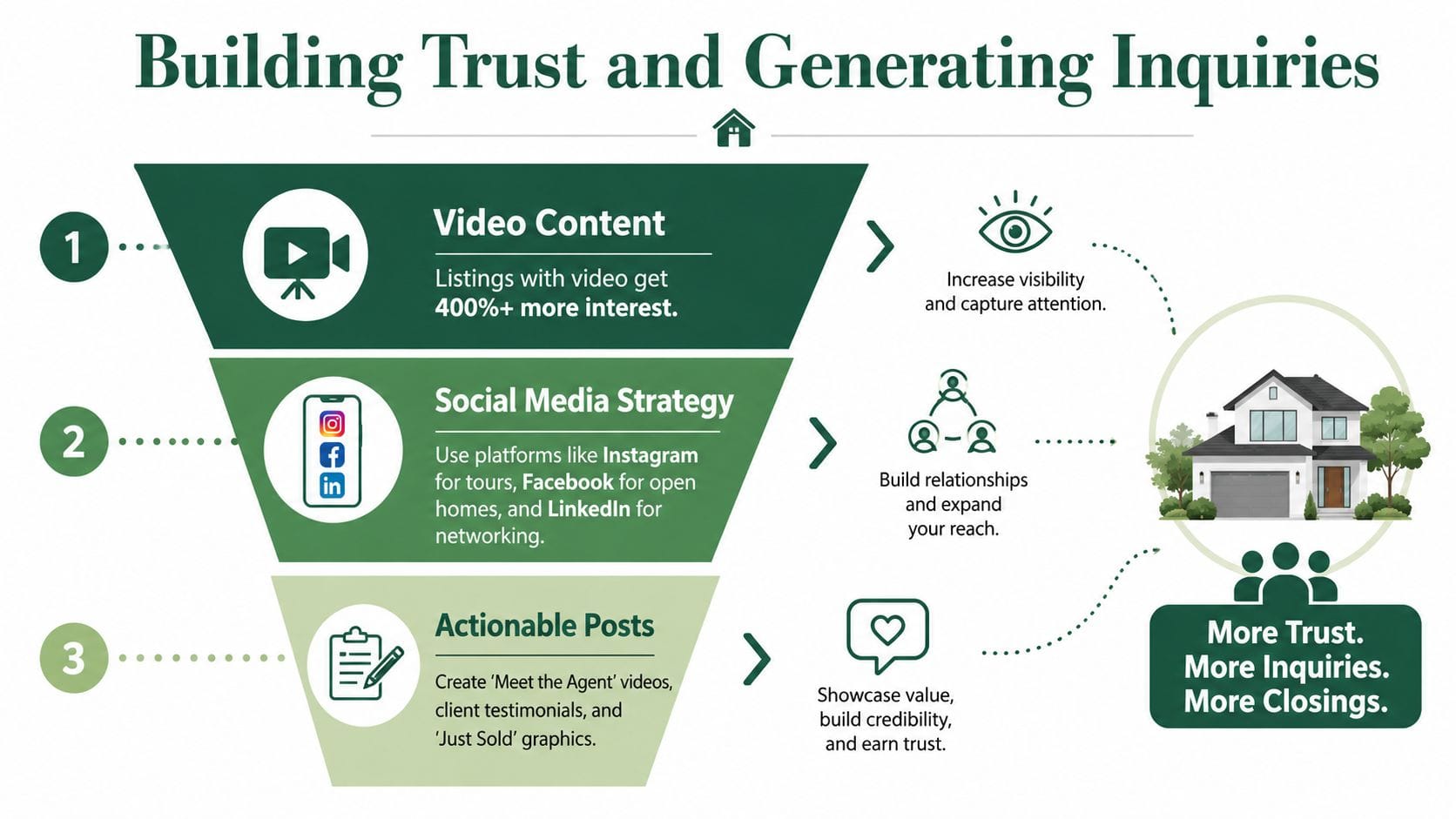
It’s a clear path: grab attention with engaging content, nurture that interest on social media, and guide potential clients toward taking that next step.
Actionable Content Ideas You Can Use Tomorrow
You don't need a film crew or a marketing degree. Some of the most effective content is authentic and helpful, shot right on your smartphone.
Here are a few high-impact, low-effort ideas.
A good rule of thumb is to follow the 80/20 rule. Make sure 80% of your content provides value—local tips, market news, answers to common questions. Only the remaining 20% should be a direct sales pitch for a listing.
- ‘Meet the Agent’ Videos: Film a quick, friendly introduction on your phone. Talk about why you love real estate and what makes your local area special. It’s a simple way to build a personal connection.
- Client Testimonial Graphics: Hop on a free tool like Canva and pop a great client quote onto a branded template. Post it with a thank you note. Social proof is incredibly powerful.
- The Perfect ‘Just Sold’ Post: Don't just announce the price. Tell a quick story. Example: "Thrilled for my clients who just sold their first home! We had multiple offers and secured a price that lets them make their dream move up north. A fantastic result in a changing market."
Manage Your Leads and Measure What Matters
Getting leads from your website and social media is a great feeling, but it’s only half the battle. The real work—and where the commissions are made—is turning those digital hand-raises into actual clients. The secret isn't a complex, expensive system; it's a simple, repeatable process for every single enquiry.
For a small business, a Customer Relationship Management (CRM) system can sound intimidating. Honestly, a well-managed spreadsheet can work when you're starting out. Free tools like the HubSpot CRM are also a fantastic, no-cost starting point. The goal is simple: know who each lead is, where they came from, and the last time you spoke.
Set Up Simple, Automated Workflows
Automation is your best friend when you're short on time. A few simple workflows can ensure no lead ever falls through the cracks, making you look professional and organised from the very first touchpoint.
- The Instant "Got It" Email: Set up an automatic reply for anyone who fills out a website form. A simple message like, "Thanks for your enquiry! I've received your message and will be in touch personally within 24 hours," builds immediate trust.
- The Seller Nurture Path: Let's say someone downloads your "Suburb Market Report." Set up a simple automated email sequence. A few days later, send a link to a relevant blog post like "5 Low-Cost Ways to Boost Your Home's Value." A week after that, send an email offering a no-obligation appraisal.
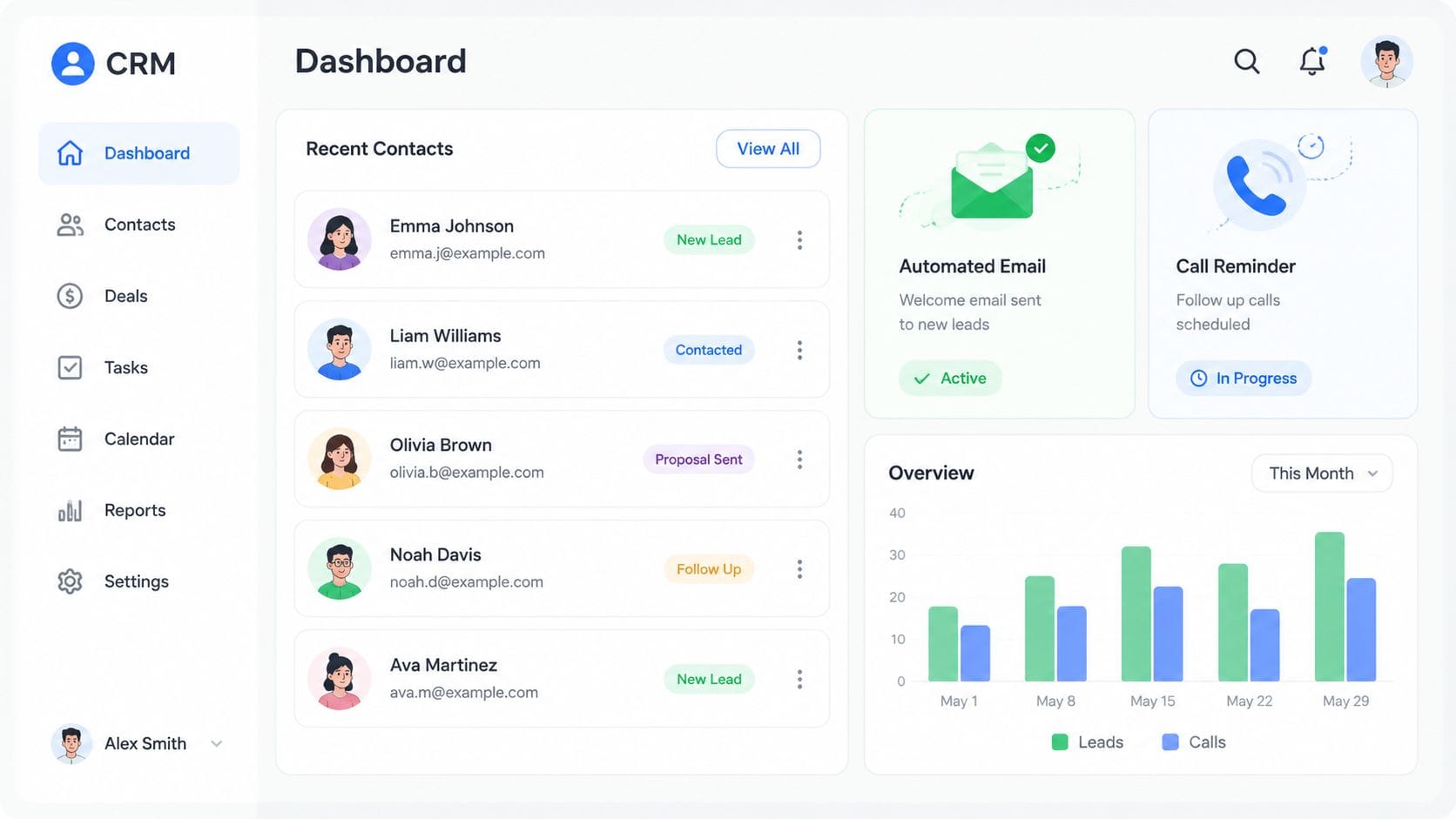
Measure What Actually Moves the Needle
It's easy to get bogged down in data. Forget vanity metrics (like social media 'likes') and focus on the numbers that directly impact your bottom line. You don't need a fancy dashboard; all the crucial information is waiting for you in free tools like Google Analytics and your Google Business Profile Insights.
Your marketing isn't an expense; it's an investment. By focusing on the right data, you can see a direct line from your online activity to your bottom line, helping you make smarter decisions about where to spend your time and money.
To know if your marketing is working, track these three core metrics:
- Website Traffic from Local Search: Are local buyers and sellers in your target suburbs actually finding you on Google?
- Form Submissions ("Conversions"): How many genuine appraisal requests or enquiries are coming through your website each month?
- Calls from Your Google Profile: Track how many people click the "call" button on your Google Business Profile. These are often your hottest leads.
Common Questions from Time-Poor Real Estate Agents
Working with agents, I hear the same practical questions all the time. Everyone's keen to grow their business online, but it’s tough to know where to start on a limited budget and schedule.
Here are the straightforward answers.
How Much Should a Small Real Estate Agent Budget for Digital Marketing?
A good rule of thumb for a small business is to set aside 5-10% of your projected gross commission income. If you're just starting, that might look like a focused budget of around $500 to $1,000 a month for some targeted Facebook ads and local Google Ads campaigns.
The trick is to start small and track every dollar. Pay close attention to your cost per lead. If a campaign is bringing in quality appraisal requests for a good price, you’ll have the confidence to scale up your investment. Just don't forget foundational costs like professional website hosting.
Can I Do All My Digital Marketing Myself?
You can do a lot of it yourself, especially posting on social media or writing a blog post about a suburb you know inside and out. But the real question is, should you? Your time is your most valuable asset.
Areas like technical SEO and paid advertising have a steep learning curve, and mistakes get expensive fast.
Practical approach: Handle the content and social media yourself—that's where your local expertise shines. Partner with a freelancer or small agency for the technical side (like Google Ads setup) to get results faster and avoid wasting money, freeing you up to do what you do best: list and sell property.
What’s More Important: A Good Website or Social Media?
They’re both essential, but your website is your number one priority.
Think of your website as your digital shopfront—it’s the one piece of online real estate you actually own and control. It's where you build authority, showcase your listings, and capture leads.
Social media is more like a rented billboard. It's fantastic for building brand awareness and driving traffic to your shopfront, but you don't own it. The best strategy is to build a high-performing, SEO-optimised website first, then use social media to pull people in.
What Is the Fastest, Most Budget-Friendly Way to Get Leads?
For immediate enquiries, nothing beats well-targeted paid advertising on a small scale. A Google Ads campaign targeting phrases like "property appraisal [your suburb]" or a Facebook ad campaign aimed at users showing signs they're looking to move can start generating leads very quickly.
While SEO is the most powerful strategy for generating free, long-term leads, it takes time. The smartest approach is to do both. Use a small paid ads budget for quick wins to get the phone ringing now, while you build your SEO foundation for sustainable, cost-effective growth.