

A lot of small firms are in the same spot right now. The website exists, the practice is solid, referrals still come in, but online enquiries feel inconsistent. Some weeks the phone is quiet. Other weeks the wrong matters come through. Marketing gets pushed to late nights, then dropped again because client work comes first.
That's why effective marketing for attorneys has to be practical. It has to fit around billable work, respect professional obligations, and focus on one outcome: more qualified matters, not more busywork. For a small firm, that usually means tightening the basics first, then adding only the channels that can be measured and maintained.
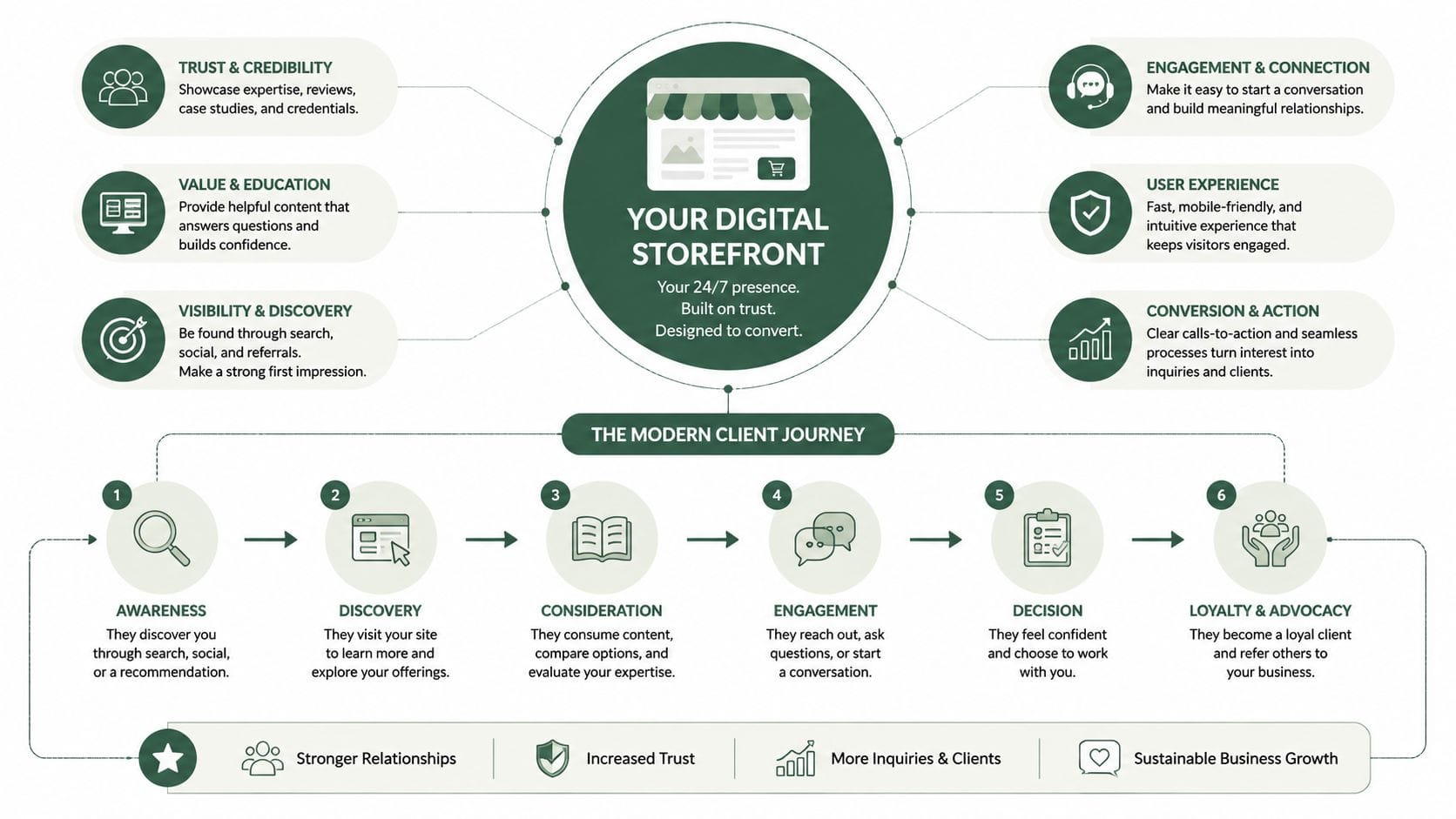
Your Digital Storefront and the Modern Client Journey
Potential clients often decide whether a firm feels credible before they ever call. That shift matters because more than one-third of potential clients start their attorney search online, and 57% of people searched on their own rather than relying only on referrals, with the main independent research channels being law firm websites (17%), search engines (17%), and online reviews (9%) according to Clio's legal marketing statistics.
For a small firm, that means the digital storefront is doing part of the intake job. If the website is unclear, slow, thin on detail, or hard to contact, people keep searching. If the Google Business Profile looks neglected, trust drops fast.
Start with the places people actually check
Small firms don't need a complicated digital stack to compete. They need two assets working properly.
The first is the website. The second is the Google Business Profile. Those two properties shape most first impressions, especially for local matters where the client wants a nearby solicitor and wants a response quickly.
A firm that wants stronger local visibility should also have a clear plan for search engine optimisation services in Australia, because rankings don't improve from design alone. They improve when location signals, service pages, technical basics, and trust elements all line up.
Practical rule: If a visitor can't tell what the firm does, where it works, and how to make contact within a few seconds, the page is underperforming.
What a small firm homepage needs
Most law firm homepages try to say too much. Better homepages remove friction.
A strong homepage usually includes these five elements:
- A plain-English headline: “Family lawyers helping Brisbane parents with parenting, property, and divorce matters” works better than a slogan that could belong to any firm.
- One clear primary action: Use one main button or action across the page, such as call now, book a consultation, or send an enquiry.
- Visible trust signals: Professional staff photos, admitted jurisdictions, practice areas, and review snippets can all help if presented carefully and accurately.
- Fast contact paths: Put the phone number, contact form link, and office suburb where people can see them without hunting.
- A short explanation of the next step: Tell people what happens after they enquire. That reduces hesitation.
Many firms also lose leads after hours. If phone coverage is inconsistent, tools built around how AI transforms legal call management can help firms handle missed calls and basic intake without forcing staff to monitor the phone constantly.
Google Business Profile needs active management
A claimed profile isn't enough. An effective one is complete, current, and maintained.
This is the checklist that matters most:
| Area | What to do |
|---|---|
| Primary category | Choose the most relevant legal service category for the core practice area |
| Services | Add specific services instead of leaving the profile generic |
| Business description | State the location, practice focus, and who the firm helps |
| Photos | Upload recent office, team, and exterior photos |
| Q&A | Add common questions and answer them clearly |
| Reviews | Request them consistently and respond professionally |
| Contact details | Keep phone, address, and hours aligned with the website |
A neglected profile sends the wrong message. Sparse photos, old hours, and unanswered reviews suggest the same thing clients fear in legal work: poor follow-up.
Create Content That Builds Trust and Attracts Cases
Most firms don't need more content. They need better content.
A short run of generic blog posts like “What is family law?” or “Why you need a lawyer” rarely drives useful enquiries. The firms that get traction usually answer specific client questions in a format that is easy to scan, easy to trust, and easy to repurpose.
Answer the questions clients already ask
The best content topics often come from places the firm already controls. Reception notes. Consultation questions. Email enquiries. The same objections that come up on calls.
Useful examples for a small practice look like this:
- A probate firm: “What happens after a death if there is a will in Queensland?”
- A family practice: “What should parents prepare before a mediation session?”
- A criminal firm: “What happens after a first court mention?”
- An employment lawyer: “Can an employee record a workplace meeting?”
These topics work because they match actual intent. They also help staff answer enquiries faster, since the article or video can be sent to prospects before a consult.
Structure content for human readers and AI search
Legal content now has to do two jobs. It has to reassure a person, and it has to be easy for search engines and answer engines to interpret.
According to Clio's law firm marketing strategy guidance, legal content should be structured with FAQs, definitions, concise explanations, and clear authority signals for the AI-search era. The same source notes that keyword-gap and content-gap analysis remain the most practical ways to find unanswered questions that can produce qualified leads.
That changes how a page should be written. A strong page usually includes:
- A direct opening answer: Start with the plain answer, then explain nuance.
- Definitions in simple language: Don't assume the reader understands legal terms.
- Short FAQ blocks: These help with scanability and can support answer-style search results.
- Authority signals: List the responsible lawyer, office location, and relevant service page context.
- A clear next step: Invite the reader to call or enquire if their facts need advice.
A useful legal page should sound like a calm first consultation, not a university lecture.
Repurpose one strong piece into several assets
Time is the primary constraint in marketing for attorneys. Repurposing fixes that.
One substantial guide can become several lighter assets without rewriting from scratch. A detailed page on parenting arrangements, for example, can turn into a short FAQ page, a two-minute video, a LinkedIn post, an email update, and a consultation follow-up resource.
A simple weekly workflow can look like this:
- Write one core page on a recurring client question.
- Extract three FAQs from that page and add them to the service page.
- Record one short video answering the top question in plain English.
- Send one email to referral partners or past contacts linking to the guide.
This approach is cheaper than trying to maintain daily social posting. It also creates assets the firm can keep using during intake, follow-up, and search campaigns.
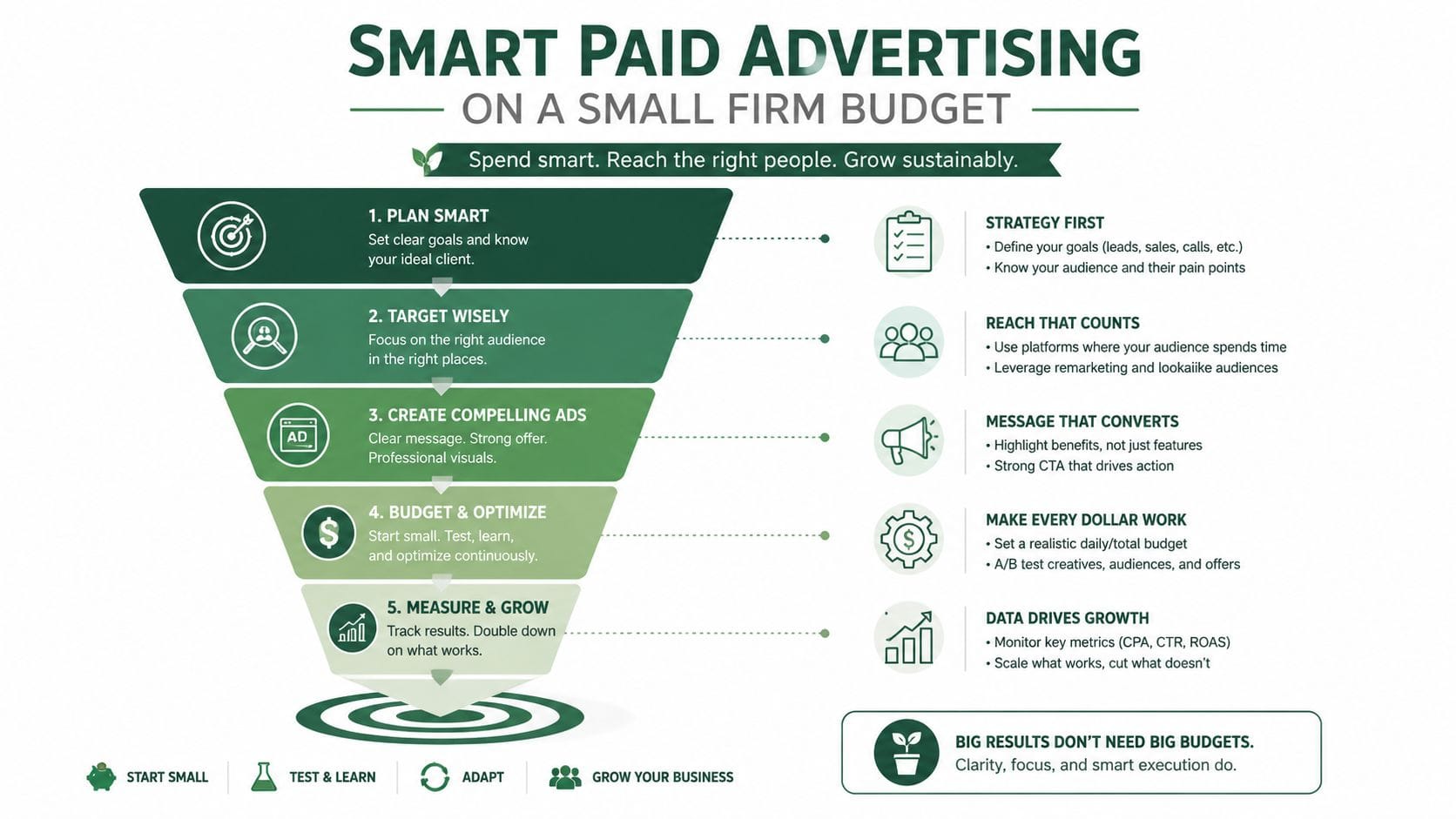
Smart Paid Advertising on a Small Firm Budget
Paid search can work for small firms. It can also waste money faster than almost any other channel.
The problem isn't just competition. It's poor setup. Many firms target broad terms, send traffic to a weak homepage, and judge success by clicks or raw lead count. That approach gets expensive quickly.
Why broad campaigns burn money
Legal PPC is one of the few channels where mistakes become costly immediately. Attorney at Law Magazine's analytics piece notes that US legal PPC costs can reach $70–$250 per click, which is a useful benchmark for budget planning in competitive practice areas.
That doesn't mean small firms should avoid ads. It means they should avoid lazy targeting.
A search like “lawyer” is broad, expensive, and often low quality. A search like “property settlement lawyer Brisbane northside” is narrower, closer to intent, and easier to match with a relevant landing page.
A lean campaign structure that small firms can manage
A manageable starter campaign is usually built around one practice area, one service area, and one conversion path.
For example, a small family law firm might structure campaigns like this:
- Campaign theme: Family law
- Ad group one: Divorce-related searches
- Ad group two: Parenting matter searches
- Ad group three: Property settlement searches
Each ad group should send traffic to a page that matches the search. Not the homepage. Not a generic contact page. A focused landing page.
That page should include:
| Page element | Why it matters |
|---|---|
| Specific headline | Confirms the visitor is in the right place |
| Suburb or city references | Reinforces local relevance |
| Simple enquiry form | Reduces friction |
| Click-to-call option | Captures urgent enquiries |
| Clear service scope | Helps filter poor-fit leads |
Firms producing ad creative in-house can also test tools like ShortGenius automated ad generation to turn service angles into simple ad variants and video assets more quickly. That can help when the internal team has more legal knowledge than spare production time.
Track revenue signals, not just lead volume
Most campaigns fail. They generate enquiries, but nobody can say which enquiries turned into signed matters.
The same Attorney at Law Magazine source says firms should instrument every channel with separate tracking numbers or source-tagged forms, then log form fills, click-to-call events, live chats, and signed matters in GA4 or a CRM so cost per acquisition can be compared against case value. That matters because firms often optimise for leads instead of revenue.
If paid search is running, every lead source should be visible from click to signed matter.
For firms that want outside help with setup, landing pages, and campaign management, paid advertising support for Australian businesses is one practical option among broader digital services. The important part isn't who manages the ads. It's whether the tracking ties spend to actual matters.
Building Authority with Reviews and Referrals
Reviews and referrals are often treated like luck. They're not. They're systems.
A small firm that waits passively for testimonials or word of mouth usually gets an uneven trickle. A firm that builds simple habits around asking, following up, and staying visible to referral partners tends to create a steadier pipeline.
Reviews need a process
Clients rarely leave a review because they remember to. They leave one because the firm asks at the right moment and makes it easy.
The best time is usually after a clear positive outcome or a smooth matter conclusion, when gratitude is high and the work is still fresh. Don't bury the request inside a long closing email. Send a short, separate message with one direct link and a polite note.
A clean process looks like this:
- Choose the trigger: Matter concluded, invoice finalised, or file closed.
- Assign responsibility: One staff member sends the request every time.
- Use one channel first: Usually email, then SMS only if appropriate for the practice.
- Keep the ask brief: Don't over-explain.
- Log the request: That stops duplicate follow-ups.
A simple review request that feels natural
This wording is usually enough:
Thank you for trusting the firm with your matter. If the service was helpful, a short review would be appreciated. It helps other people who are looking for legal help decide whether to make contact.
If the firm receives a positive review, reply with appreciation but avoid discussing confidential details. If the review is negative, don't argue facts in public. A brief, professional response that invites offline contact is usually safer than a detailed defence.
A useful internal rule is simple. Every review response should sound as measured as a letter a regulator could read.
Referral relationships grow when they are specific
Referrals from accountants, brokers, psychologists, migration agents, financial advisers, and real estate professionals can be strong because the trust transfer is already there. But general networking rarely produces much on its own.
The firms that do this well are specific about three things:
- What matters are a good fit
- What signs suggest the client needs legal help
- How the handoff should happen
That means a family lawyer might tell a psychologist, “The firm is usually a good fit for parenting disputes where communication has broken down and the client needs practical next steps.” An estate planning solicitor might tell an accountant, “The firm can help when a client's family structure has changed and their documents no longer reflect current wishes.”
A small referral plan can stay simple:
| Relationship type | Helpful next step |
|---|---|
| Accountants | Share one useful guide they can forward to clients |
| Mortgage brokers | Offer a short call on when clients should seek advice |
| Psychologists | Clarify when legal support and emotional support overlap |
| Real estate agents | Explain common property-related legal trigger points |
Good referral marketing feels less like networking and more like making another professional's job easier.
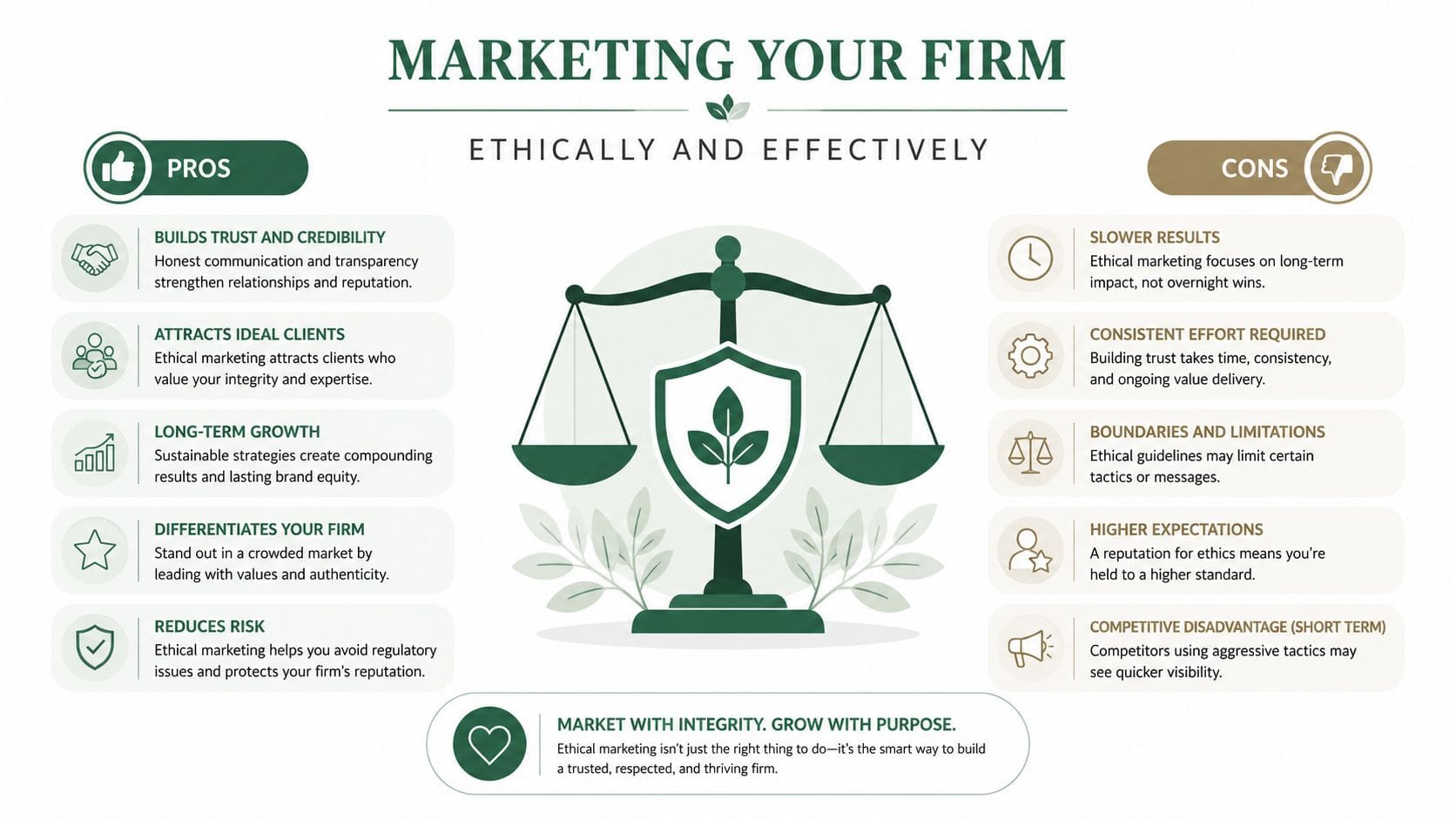
Marketing Your Firm Ethically and Effectively
Many lawyers don't avoid marketing because they doubt its value. They avoid it because they don't want to say the wrong thing.
That caution is reasonable. A major gap in legal marketing guidance is how to market ethically without being generic or risky, especially around what claims are allowed, how testimonials should be framed, and how to balance credibility with professional conduct rules, as noted in LawPay's law firm marketing guide.
The real problem is not ethics, it is vagueness
Most firms don't need to be less persuasive. They need to be more precise.
Risky legal marketing often uses inflated language because it sounds strong. In practice, it sounds generic and can create compliance problems. “Best lawyers.” “Guaranteed outcome.” “Win your case.” None of that builds the right kind of trust.
Safer marketing usually describes the service, the process, and the firm's approach without promising a result.
Careful marketing is often better marketing. Clear language sounds more credible than hype.
Better wording for common marketing claims
Small changes matter.
| Risky wording | Safer alternative |
|---|---|
| We guarantee the best outcome | The firm works to achieve a favourable resolution based on the facts of the matter |
| The top family lawyers in Brisbane | A Brisbane family law firm focused on parenting, divorce, and property matters |
| You will win | Clients receive practical advice on options, risks, and likely next steps |
| The leading expert | The firm advises clients in this practice area and explains the process clearly |
This style is still persuasive because it reduces uncertainty. Clients want clarity, responsiveness, and confidence. They don't need inflated claims to make contact.
Testimonials need restraint and context
Testimonials can help, but they need careful handling. The main risk is not the review itself. It's the way the firm frames it.
A safer approach usually includes these habits:
- Get clear consent: Don't assume a positive email can be published.
- Avoid editing in a way that changes meaning: Clean up spelling if needed, but don't rewrite praise into stronger claims.
- Don't position one client story as a likely outcome for others: Keep it as feedback on service, communication, or professionalism.
- Review local rules before launching campaigns: Especially if testimonials are used in ads or landing pages.
A practical test works well here. If a statement could make a stressed client expect a certain result, the wording probably needs to be softened.
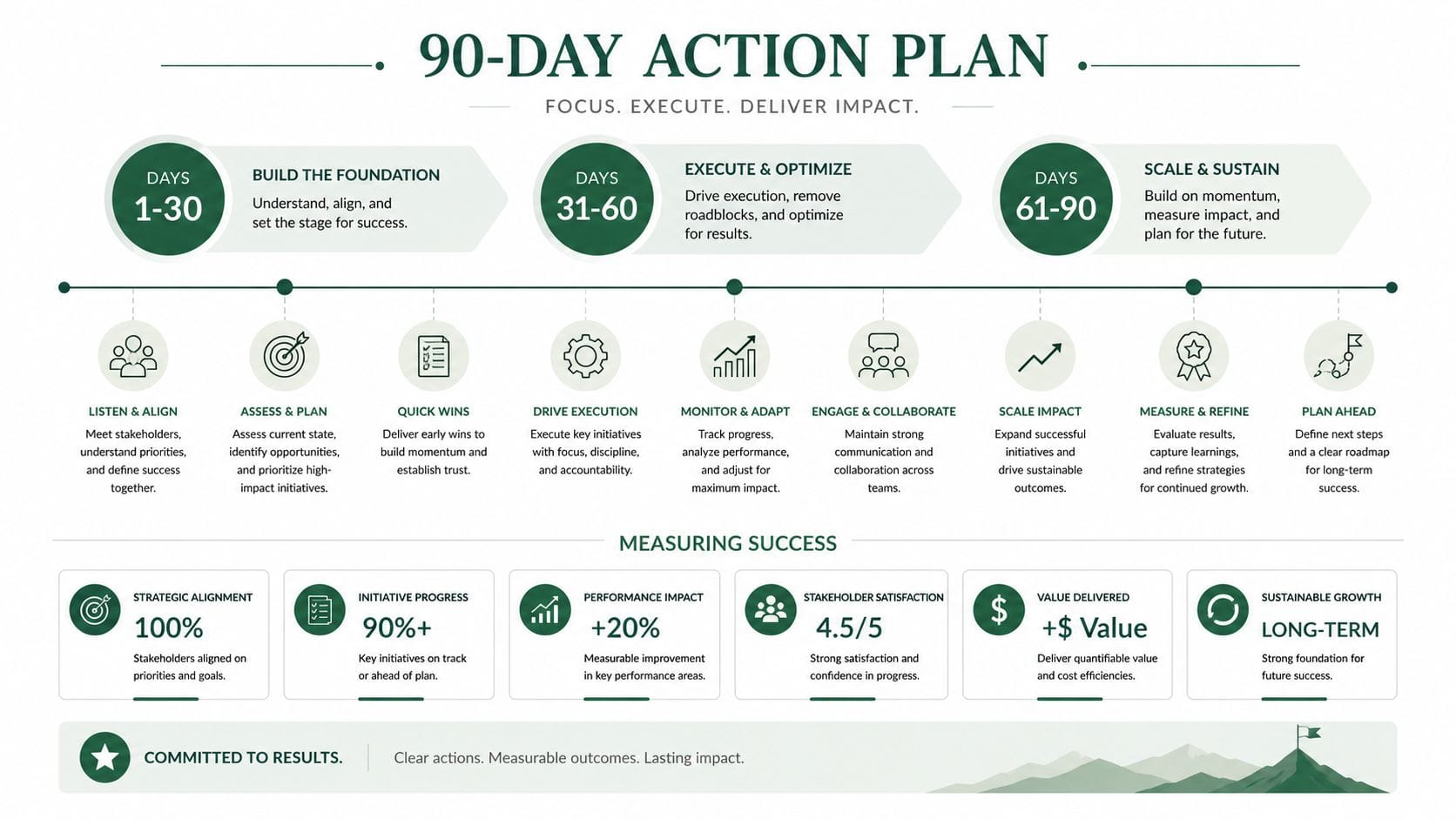
Your 90-Day Action Plan and Measuring Success
Most firms don't need a larger plan. They need a shorter one they'll consistently follow.
A workable 90-day plan keeps effort focused and prevents the common pattern of redesigning everything at once, publishing nothing consistently, and then concluding that marketing for attorneys doesn't work. Better results usually come from fixing one layer at a time, then measuring what happens.
Days 1 to 30 fix the foundation
The first month is not for chasing every channel. It's for making sure the existing assets can convert attention into enquiries.
Focus on these jobs first:
- Tighten the homepage: Clarify services, locations, and the primary contact action.
- Clean up contact paths: Test forms, click-to-call buttons, and after-hours handling.
- Complete the Google Business Profile: Add services, photos, Q&A entries, and current business details.
- Set up tracking: Make sure form submissions, calls, and chats can be attributed to a source.
This is also the right stage to tighten conversion paths on key pages. If a firm wants a practical reference point for improving enquiry flow, a guide to conversion rate optimisation in Australia can help frame what to test first on legal service pages.
Days 31 to 60 publish useful assets
Once the basic conversion infrastructure is in place, the next month should produce assets that support both search visibility and intake quality.
A strong month-two checklist looks like this:
| Priority | Action |
|---|---|
| Service pages | Rewrite or expand the core practice area pages |
| One guide | Publish one detailed article based on a frequent client question |
| FAQ blocks | Add concise answers to common objections and process questions |
| Review process | Start a standard post-matter review request workflow |
This is also where many firms benefit from an external planning template. A resource like this modern law firm marketing blueprint can be useful for turning broad goals into a more structured operating plan, especially when the internal team has limited time to design the workflow from scratch.
Days 61 to 90 optimise what is already working
The final month is for adjustment, not reinvention.
By this point, the firm should have enough signal to spot patterns. Which practice area page gets the most useful enquiries. Which search terms generate poor-fit leads. Whether calls convert better than forms. Whether one suburb or service niche deserves its own landing page.
Use the third month to do four things:
- Review lead quality by source
- Pause weak campaigns or pages
- Expand what is producing qualified matters
- Shorten intake delays
A common example is a family firm discovering that parenting matter enquiries are strong but generic divorce queries are weak. That insight should change the next month's content, ad copy, and intake script. Many firms never reach that point because they stop at traffic reports.
The point of measurement is to make better decisions, not to produce prettier reports.
The metrics that actually matter
Small firms get distracted when they track what is easy instead of what is useful. Page views, impressions, and social likes can be helpful diagnostics, but they are not the main scorecard.
The metrics that matter most are closer to the file opening process:
- Qualified phone enquiries: Calls from people with a matter the firm wants
- Contact form submissions: Especially when tagged by service area or source
- Consultations booked: A stronger indicator than raw leads
- Signed matters: The clearest measure of channel quality
- Time to first response: Slow follow-up kills otherwise good marketing
- Cost per acquisition against case value: Essential for any paid channel
Discipline matters. Every marketing channel should feed into one reporting rhythm, even if the system is basic. A spreadsheet is fine. A CRM is better. What matters is consistency.
A practical monthly review can stay short:
| Question | What to check |
|---|---|
| Which channel generated enquiries? | Calls, forms, chat, referrals, reviews, ads |
| Which enquiries were qualified? | Fit by practice area, location, and matter type |
| Which leads became signed matters? | Track through intake, not just first contact |
| What should change next month? | One page, one campaign, or one process improvement |
That cadence is enough to keep marketing grounded in commercial reality. It also reduces the stress around decision-making, because the firm no longer has to guess which activity is worth keeping.
Small firms don't need a sprawling strategy to compete. They need a credible digital storefront, useful content, measured promotion, a review and referral system, and marketing language that respects professional obligations. Done consistently, that's often enough to build reliable growth without turning the practice into a full-time marketing operation.