
A lot of Brisbane business owners are in the same spot right now. They're good at the actual work, whether that's plumbing, bookkeeping, landscaping, legal support, physio, or ecommerce fulfilment, but Google makes them look invisible. The website exists, the service is solid, and the team is flat out, yet the calls often go to the competitor whose pages are easier to find.
That's usually where SEO content writing services come in. Not as a fancy marketing extra, but as a practical way to get found by the right people without spending every night trying to write service pages, blog posts, FAQs, and suburb content from scratch. For small businesses, its value is simple. Better content saves time, reduces wasted effort, and helps turn a website into something that works while the owner is busy running the business.
Why Your Brisbane Business Feels Invisible Online
Most small business websites don't struggle because the owner doesn't care. They struggle because there's no time to keep improving pages, no clear keyword plan, and no one shaping the site around what local customers type into Google.
That creates a common pattern. A business might have one homepage, one services page, and a contact form. Meanwhile, a competitor has separate pages for each service, each suburb, common customer questions, and helpful articles that answer problems before someone picks up the phone.
That gap matters because search visibility isn't accidental. Australian businesses are projected to spend $1.5 billion on SEO services in 2026, and small businesses are allocating an average of $1,200 per month for SEO and content, which shows how seriously the market treats search as a growth channel, according to Local Digital's Australian SEO and content marketing statistics.
For a Brisbane owner trying to make sense of all this, a practical starting point is learning the difference between random posting and a repeatable search plan. A resource on SMB SEO strategies can help clarify the basics before any money gets spent.
A local search presence also needs more than broad national targeting. Businesses that want a clearer picture of how local visibility works can look at this guide to Brisbane search engine optimization.
Practical rule: If a website only talks about the business, but never answers the exact questions customers search, it won't do much heavy lifting.
A simple example makes this obvious. A Brisbane electrician won't get much value from a vague page called “Our Services” with a few generic paragraphs. A page about switchboard upgrades in Brisbane, another about emergency electrical help, and another answering common safety questions gives Google and customers something far more useful to work with.
What Exactly Are SEO Content Writing Services
SEO content writing services are the combination of search strategy, writing, structure, and on-page optimisation that helps a website get found and convert visitors into enquiries. The shortest useful way to describe them is this. They create the words on a website so those words can do a job.
A simple way to think about it
A good service page or article works like a digital salesperson who never clocks off. It helps a potential customer understand what the business offers, whether it suits their problem, and what to do next.
That's why SEO content isn't just “writing blogs”. It usually covers service pages, location pages, FAQs, product descriptions, landing pages, category copy, and blog articles. Each one serves a different purpose.
A service page targets buying intent. A suburb page helps with local relevance. A blog post can bring in someone at the research stage. A well-written FAQ can remove doubts that stop people from calling.
For Brisbane businesses that want a clearer sense of how website copy shapes enquiries, this article on content writing on website pages is a useful reference point.
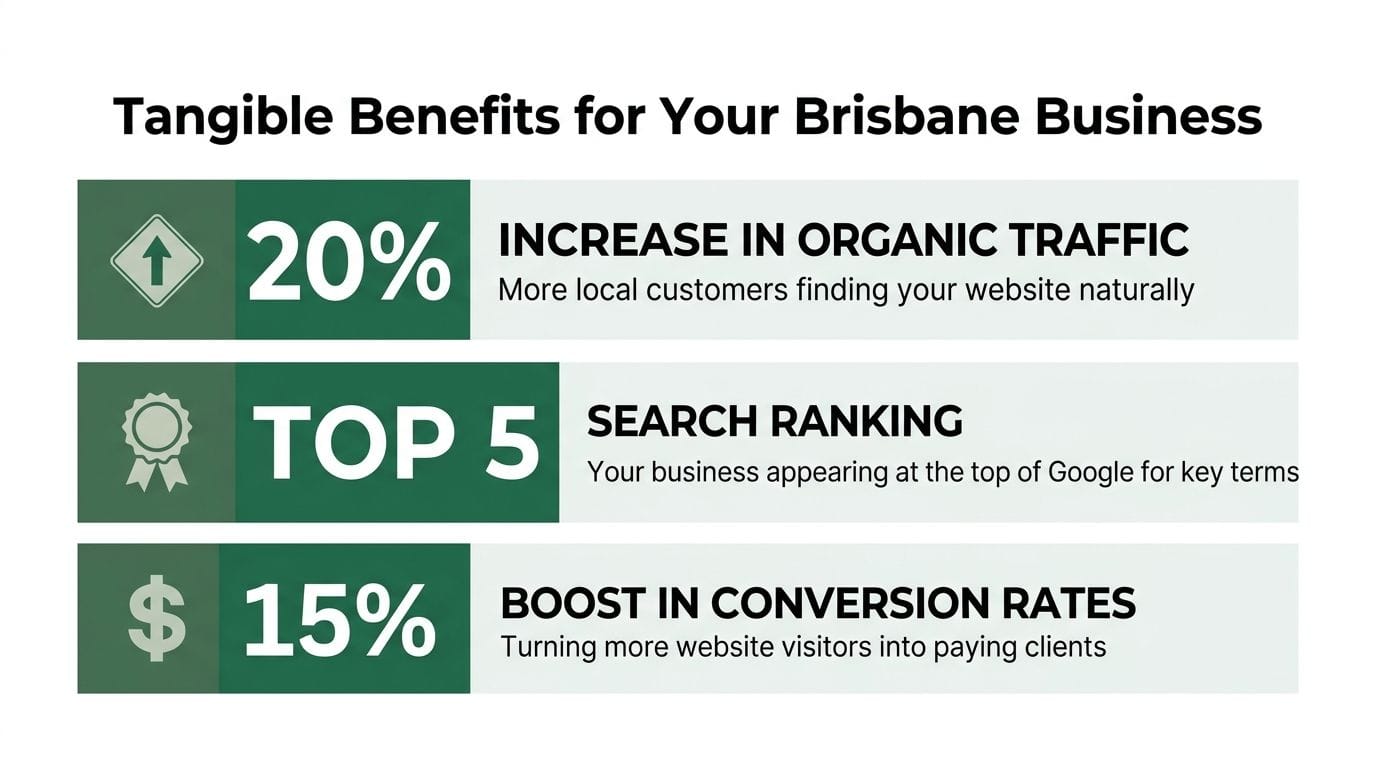
To make that easier to visualise, this infographic sums up the kind of business outcomes owners usually hope to get from the work.
What the service usually includes
A decent provider won't just ask for a keyword and hand back 800 words. There's usually a chain of work behind every page.
- Keyword research helps decide what customers search for and which terms are realistic to target.
- Search intent mapping checks whether the page should educate, compare options, or drive an enquiry.
- Content briefs shape headings, talking points, questions, and internal links before writing starts.
- Writing and editing turn that plan into readable copy that sounds human and fits the brand.
- On-page optimisation covers title tags, headings, internal links, metadata, and page structure.
- Publication support makes sure the finished content doesn't just sit in a document.
What doesn't work is treating SEO content like a school assignment. Long pages packed with awkward keywords, generic intros, and filler won't help much. Brisbane searchers can spot fluff quickly, and Google usually can too.
A business also needs a plan for why each page exists. This guide on how to develop an effective content strategy is helpful because it frames content as part of a system, not a pile of disconnected articles.
Good SEO content should answer a real question, match a real search, and lead to a real next step.
Real Benefits for a Time-Poor Brisbane Business
The biggest win from SEO content writing services isn't that the website looks busier. It's that the owner doesn't have to keep carrying the whole marketing load alone.
Time back where it matters
Writing strong pages takes longer than most owners expect. It's not just drafting words. Someone has to choose keywords, review competitors, organise headings, write copy, edit it, source internal links, upload it, and check whether it performs.
For sole traders and lean teams, that work usually slips behind quoting, invoicing, scheduling, stock, client service, and staff management. Outsourcing can remove that bottleneck. Brisbane businesses comparing options for outsource SEO services often aren't trying to hand off control. They're trying to get useful work done without burning weekends.
Better leads, not just more clicks
The strongest content doesn't chase everyone. It filters for the right people.
A local plumber is a good example. A page built around “blocked drains Brisbane” or a suburb-specific service page can speak directly to urgent search intent. That visitor is far more valuable than someone casually reading a broad article about home maintenance.
There's data behind the efficiency angle too. In Queensland, small businesses that outsourced SEO content writing saw a 34% increase in qualified leads within 6 months, with an average cost per lead of $28, compared with the $45 median for in-house efforts, according to BSB Marketing's website content writer page.
That matters for businesses where every marketing dollar has to justify itself.
| Focus | What tends to happen |
|---|---|
| Generic content | Brings broad traffic, weak fit, and low enquiry quality |
| Local service content | Attracts people looking for help in Brisbane right now |
| Clear FAQs and trust content | Reduces hesitation before someone gets in touch |
Content keeps working after it's published
Paid ads can be useful, but they stop the moment the spend stops. A well-built service page or article can keep attracting visits and enquiries long after the first draft is done.
That's why content should be treated like an asset. One useful article can answer a common question for months. One well-structured service page can support quotes, calls, and contact forms every week. One local landing page can help a business show up in the suburb it wants more work from.
The best pages don't just “rank”. They save admin time because customers arrive better informed.
That's especially valuable for time-poor owners. Fewer tyre-kicker enquiries. Fewer repetitive questions. Better-fit leads.
What to Expect from a Content Service Provider
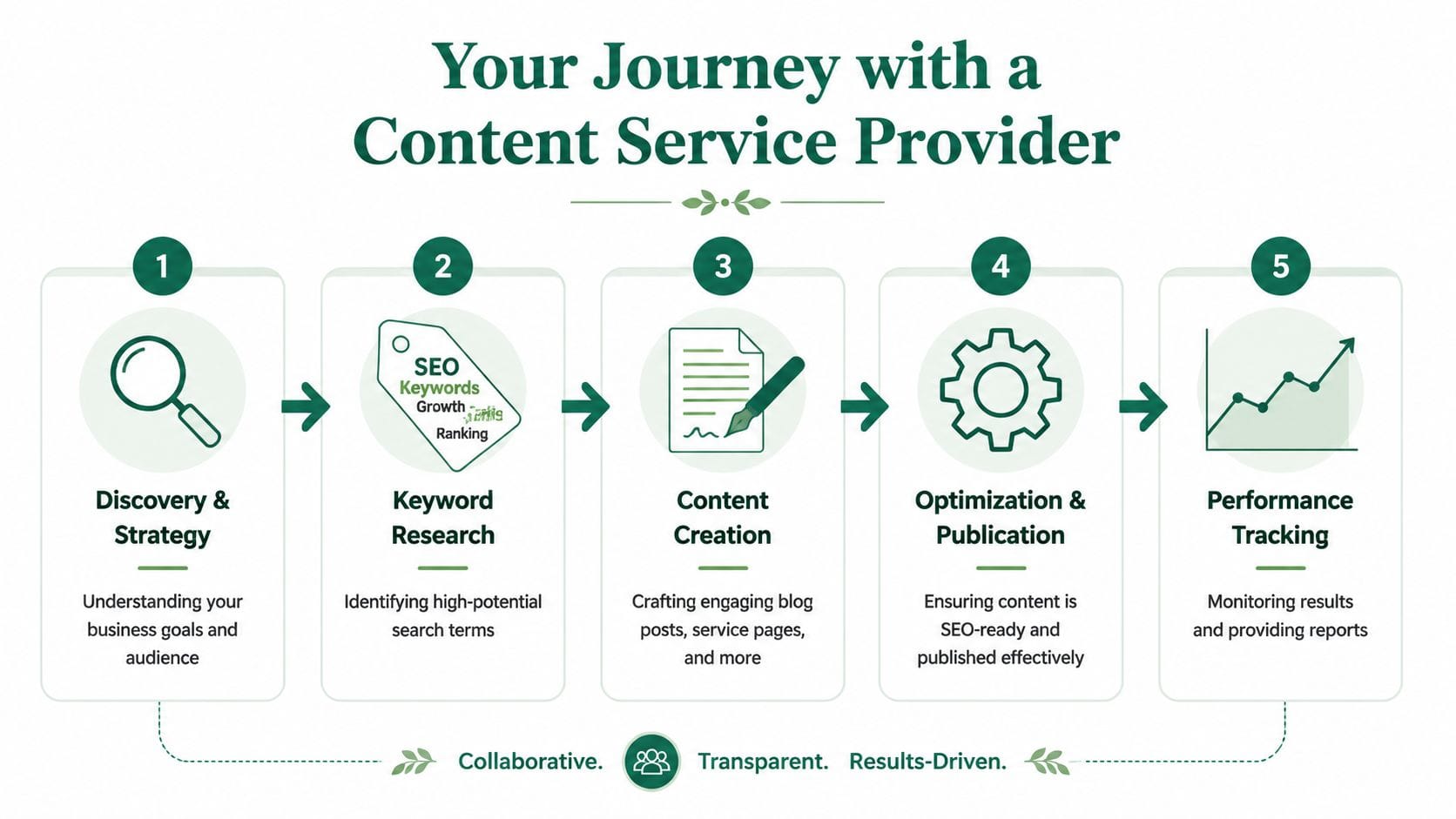
A lot of frustration with agencies comes from not knowing what happens after the first call. Good providers remove that uncertainty by showing the workflow clearly and keeping the process organised.
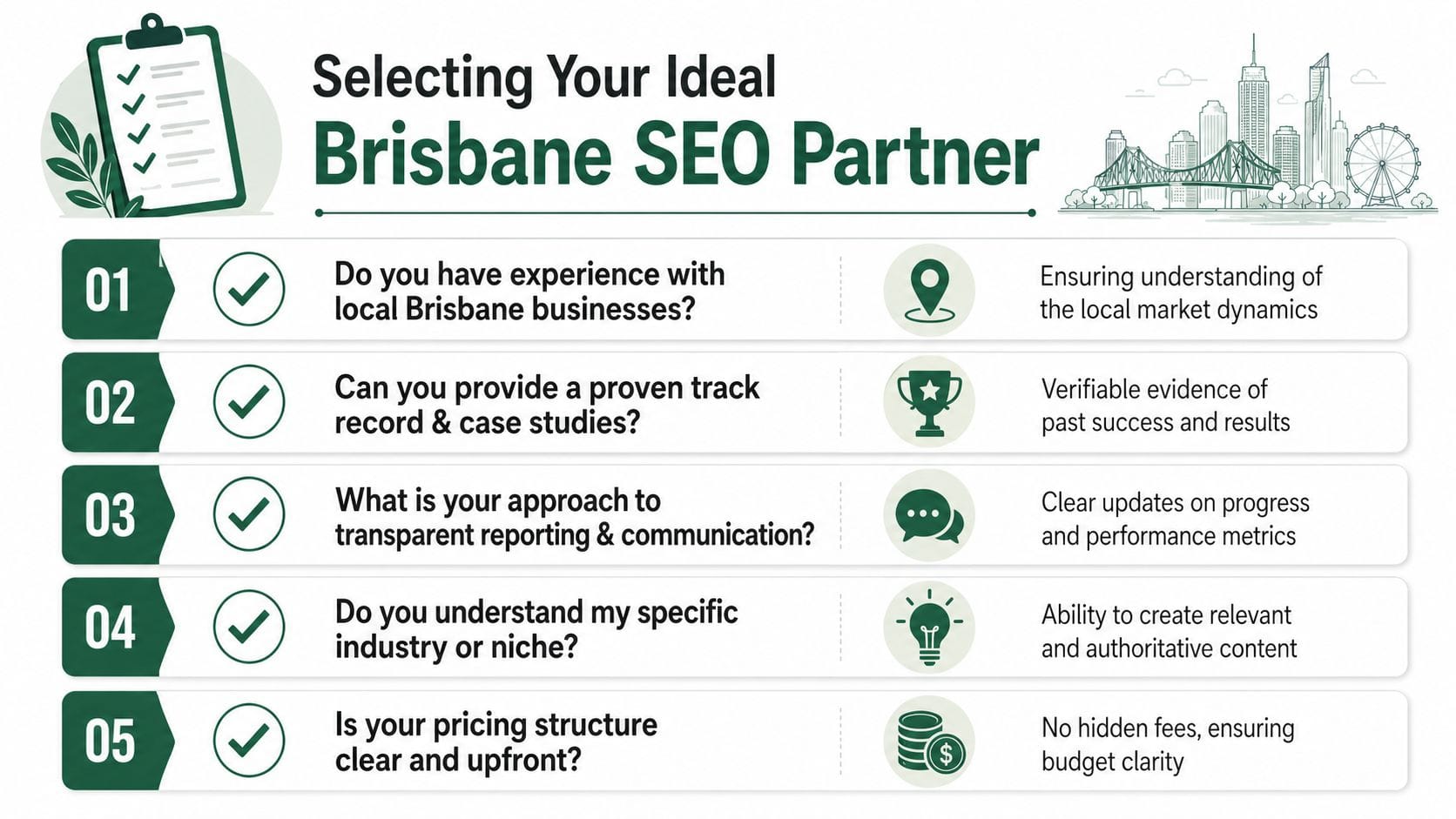
Here's a visual snapshot of the sort of checklist a business owner should keep in mind while evaluating providers.
The usual workflow
A proper engagement normally starts with discovery. The provider asks about services, margins, target suburbs, competition, seasonality, and what counts as a good lead. If that conversation never happens, the content will usually sound generic.
After that comes research. The team should identify realistic target terms, page priorities, and gaps on the current website. Then they move into briefs, drafting, review, and publication support.
A simple version of the process usually looks like this:
- Kickoff and goal setting so the work aligns with actual business priorities
- Keyword and intent research to decide what pages deserve attention first
- Brief creation covering headings, topics, internal links, and calls to action
- Draft writing and editing so the content is readable and useful
- Review and refinement based on owner feedback, tone, and technical accuracy
- Publishing and tracking to measure whether the pages are doing their job
What good deliverables look like
Not every business needs the same mix. A local trade business may need service pages, suburb pages, and FAQs. A professional service might need trust-focused landing pages and articles that answer common pre-sale questions. An ecommerce shop may need category copy and product-support content.
The provider should be able to explain why each piece exists. That part matters as much as the writing itself.
There's also a practical business case for this work being systematic. SEO content strategies that included keyword research for Brisbane service businesses achieved 41% higher organic traffic growth over 12 months, with an average monthly investment of $450 delivering $2,100 in attributed revenue, according to Digital Nomads HQ's SEO content writing page.
A provider should be able to say, in plain language, why this page matters, who it targets, and what action it should drive.
What usually disappoints small businesses is the opposite. Vague monthly deliverables. No content calendar. No reason for page order. No review process. No explanation of what success looks like.
How to Choose the Right SEO Partner in Brisbane
Choosing a provider gets easier when the decision is based on fit, not hype. Small businesses don't need the biggest agency. They need one that understands the local market, communicates plainly, and can produce content that sounds like the business rather than a template.
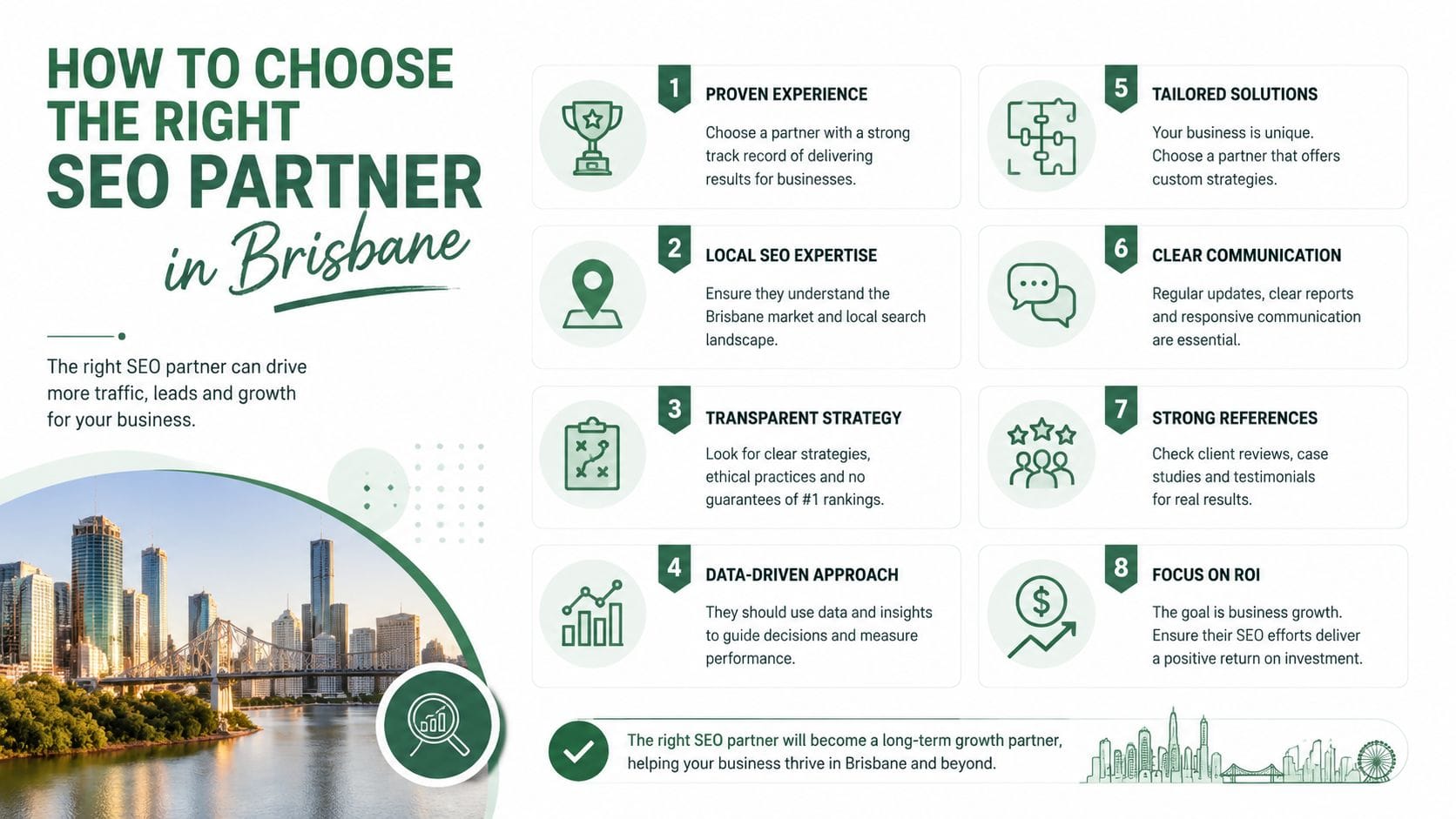
Questions worth asking before signing anything
A short conversation can reveal a lot. These questions tend to separate useful partners from the ones selling cookie-cutter packages.
Have they worked with Brisbane businesses before
A local provider should understand suburb targeting, service-area pages, and the difference between broad Queensland terms and suburb-level searches.How do they avoid generic copy
This matters because data shows 68% of Queensland small business owners report outsourced content is too generic and ignores local nuances, while content optimised for local Brisbane intent achieves 3.4x higher conversion rates.What does the first 90 days look like
The answer should include research, priorities, deliverables, and how feedback will be handled.Who writes and edits the content
Businesses need to know whether the work is handled by a strategist, a writer, an editor, or passed through layers of outsourcing.How do they capture the business voice
Good providers ask for examples, review existing copy, and learn how customers speak.
A quick test also helps. Ask how they'd handle a page for a “Brisbane family lawyer”, “commercial electrician Northside”, or “West End cafe catering”. If the answer sounds national and vague, the fit probably isn't right.
Red flags that waste time and budget
Some signs are easy to spot once they're named.
| Red flag | Why it matters |
|---|---|
| Guaranteed rankings | No provider controls Google |
| One-size-fits-all packages | Different businesses need different page types and pacing |
| No local angle | Brisbane businesses need suburb, service-area, and intent awareness |
| Reporting on vanity metrics only | Traffic alone doesn't pay wages |
| Thin briefing process | Weak inputs usually create weak content |
Another common issue is overproduction. More pages don't automatically mean better results. A small business is often better served by fewer pages with clearer intent, stronger internal linking, better service detail, and stronger calls to action.
If a provider talks more about volume than relevance, that's usually a warning sign.
The best Brisbane partner is usually the one that can explain trade-offs clearly. Maybe the website needs core service pages before a blog. Maybe the owner's budget suits one strong page per month instead of a rushed content bundle. Maybe local landing pages should come before thought-leadership articles. Those are useful conversations because they save money.
Your Next Step to Getting Found in Brisbane
Good SEO content isn't about tricking Google. It's about making it easier for Brisbane customers to find a business, understand what it offers, and feel confident enough to get in touch.
That usually means clearer service pages, stronger local signals, more useful supporting content, and a provider who can explain priorities without jargon. It also means accepting a simple truth. Generic national copy rarely works as well for a local operator as content built around real Brisbane search behaviour.
For business owners who are tired of guessing, the next step doesn't need to be complicated. A practical conversation about goals, services, target suburbs, and available budget is often enough to identify what should be fixed first.
For Brisbane businesses that want a low-pressure local partner, Boocoo helps take marketing off the plate with practical support across SEO, websites, social media, and paid ads. The team can be reached on 1300 093 797 or at hello@boocoo.au, and more information is available at Boocoo. A simple chat can help clarify what's worth doing now, what can wait, and how to avoid wasting budget.
Frequently Asked Questions for Brisbane Business Owners
How much should a small business budget for SEO content
A realistic budget depends on the type of business, the site's current condition, and how competitive the search space is. For Brisbane trades, the available benchmark is useful. The average break-even period for Brisbane trades investing in SEO content is 4.2 months, with a minimum recommended spend of $1,200 per month, and 74% of sole traders are unsure if their budget is sufficient because providers often aren't transparent about pricing.
That uncertainty is common because many agencies talk in packages, not outcomes. A better approach is to ask what the monthly spend covers. For example, does it include keyword research, briefs, service pages, review rounds, uploads, and reporting, or just words in a document?
A small business usually gets better value when the provider starts with priority pages instead of trying to produce everything at once.
How long does it take to see results
SEO content is usually slower than paid ads, but stronger over time when it's done properly. A business shouldn't expect instant rankings from a few new pages.
What matters most is whether the early work focuses on the right pages. For many local businesses, the first gains come from tightening existing service pages, adding missing location relevance, improving FAQs, and publishing content around common pre-enquiry questions. That approach tends to be more useful than publishing broad blog topics with no clear buying intent.
Patience matters, but so does page selection.
Can AI tools replace SEO content writing services
AI tools can help with outlines, idea generation, rough drafts, and editing support. They can save time. What they usually can't do well on their own is produce local, accurate, persuasive content that reflects how a Brisbane business talks and sells.
That's where many businesses get caught. AI can generate a page that sounds acceptable at a glance, but still misses suburb nuance, service detail, customer objections, and brand voice. It can also produce copy that feels repetitive or too broad.
For a small business, the sensible use of AI is support, not autopilot.
- Use AI for rough structure when the team needs a faster starting point.
- Use a human for strategy so the content targets the right services and local intent.
- Use real business input for examples, process details, and trust signals.
- Use editing and review before anything goes live.
The strongest result usually comes from combining tools with real local knowledge, not replacing one with the other.