
Most Brisbane owners do not have an SEO problem, they have a sequencing problem. The plumber, physio, café, or local agency owner who spends a few hours a week on socials, tweaks a homepage once in a while, and still gets weak organic leads is usually doing the right tasks in the wrong order.
That matters because seo for small business Australia is not a national branding game for most local operators, it's a local discovery game. Australia's business mix is heavily dominated by small businesses, with 97.3% of all Australian businesses classified as small businesses in June 2025, rising to 98% under the ATO definition of turnover under $10 million Australian Small Business and Family Enterprise Ombudsman. In a market like that, the business that wins usually isn't the one with the loudest marketing, it's the one Google can understand, trust, and match to local intent.
The mistake most owners make is treating SEO like a checklist. It works more like a machine. If the Google Business Profile is weak, the site is slow, the keywords are vague, and the reviews are inconsistent, no amount of random blog posting will save it. If the sequence is right, the same limited budget goes much further.
For a straightforward warning on the traps that trip owners up, boost your online visibility is a useful read, but the bigger point is simpler. Fix the foundation first, then build visibility, then push for conversion. That order keeps the work practical for time-poor Brisbane operators and avoids wasting months on tasks that look busy but don't move enquiries.
Where Most Brisbane Small Businesses Get Stuck With SEO
A Brisbane electrician can spend six hours a week on marketing and still feel invisible. The website gets updated once, a few Instagram posts go out, maybe a couple of boosted posts get some reach, and then the owner wonders why the phone is still quiet. The issue usually isn't effort, it's that the business is trying to be found before it has built the local trust signals Google looks for.
Visibility is not the same as trust
A local business needs three things to work together. First, Google has to understand what the business does. Second, it has to trust that the business is real, consistent, and relevant to the suburb or service area. Third, the page or profile has to make it easy for the customer to call, book, or enquire.
That's why a service business in Brisbane should think local first. A family law firm in Chermside or a mobile physio in Carindale does not need broad national reach. It needs to show up when someone nearby searches with buying intent, then answer the question fast enough that the lead doesn't bounce.
Practical rule: if the business cannot clearly explain what it does, where it works, and why it's credible in one glance, SEO will underperform no matter how much content gets published.
The homepage, service pages, Google Business Profile, and reviews should all point in the same direction. When they don't, the site may still get some traffic, but it won't convert cleanly. That's why it makes sense to read is SEO worth it for small business before spending money on anything fancy.
Why the sequence matters more than tactics
Most owners start with the visible stuff, like blog posts or social captions, because it feels productive. In practice, that's often backwards. A better sequence is simple, profile first, then pages, then proof, then content.
That sequence also protects budget. If the business gets the basics right, a freelancer or agency can spend time on higher-value work instead of cleaning up messes in the listings, titles, and contact details. For a Brisbane owner, that usually means less admin and more qualified enquiries.
Picking Keywords That Bring Brisbane Buyers
Keyword choice is where many small businesses waste the most time. They chase broad terms that look impressive in a dashboard, then wonder why the traffic doesn't convert. A local business should build around a small set of terms that match how real Brisbane buyers search when they're close to hiring.
Start with how customers actually ask
A good keyword list usually blends three types of searches. There are service plus suburb queries, problem-led queries, and near-me searches. A Brisbane pest controller might target “termite inspection North Brisbane”, “how to get rid of ants in a unit”, and “pest control near me” because those reflect actual purchase intent, not vanity traffic.
The right shortlist is usually five to ten keywords, not fifty. Each one should point to a specific page on the site. That keeps the site organised and stops pages from competing against each other for the same search.
Rule of thumb: if a keyword does not have a clear home on the website, it probably isn't ready to target yet.
| Keyword Type | Example Query | Typical Searcher Intent | Best for Small Business? |
|---|---|---|---|
| Vanity keyword | Brisbane marketing | Broad, research-heavy, often competitive | No |
| Competitive keyword | SEO agency Brisbane | Commercial intent, but hard to win for a small site | Sometimes |
| Money keyword | Brisbane website SEO for accountants | Narrow, local, and service-ready | Yes |
The last column matters most. A small operator does not need the biggest keyword. It needs the keyword most likely to turn into a lead.
Match each keyword to a page
A service page should carry the main service term, while a suburb page should carry the local version if the business serves that area properly. A Brisbane painter, for example, can build one page for interior painting, another for exterior painting, and one clear page for the most important service area or suburb cluster. That gives each search intent its own destination.
For a better customer-angle lens, what is user persona is worth a look. The point is not to build a marketing exercise. It's to understand whether the searcher wants an urgent call, a price check, a comparison, or proof that the business works in their suburb.
Local Foundations That Actually Earn Rankings
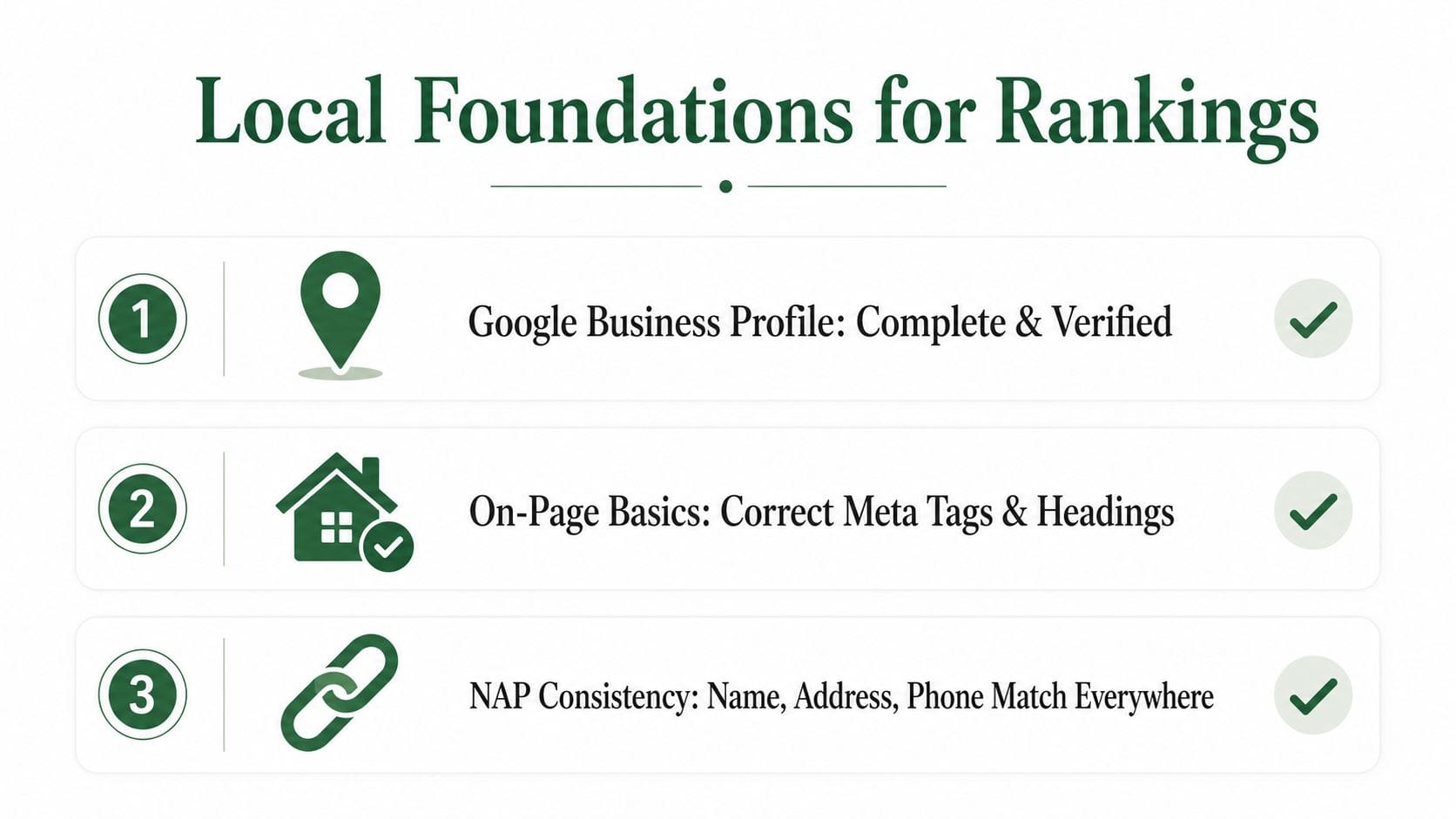
The local pack is won by businesses that make Google's job easy. That means the Google Business Profile is complete, the website says the same thing as the profile, and the business details match everywhere else online. These are not separate jobs. They're one trust system.
Start with the profile, then make the site agree
Claim and complete the Google Business Profile first. Choose the primary category carefully, add services in plain English, and set the service areas to the Brisbane suburbs served. A mobile physio should not pretend to have a shopfront if the business is service-area based. The profile should reflect how the business really operates.
Then line up the website. The title tag, H1, body copy, and footer should all reflect the same name, address, and phone number. For local SEO, NAP consistency means exactly that, Name, Address, Phone. If one directory says “St” and another says “Street”, or the footer has a tracking number that doesn't match the profile, that creates avoidable friction.
Use citations as a consistency check
Once the profile and site agree, build or audit the main Australian directory listings. Yellow Pages Australia, True Local, Hotfrog, and White Pages are common citation sources that reinforce local authority when the details are consistent. Keep the set focused and clean rather than spraying the business across every low-quality directory available.
A Brisbane plumbing business is a good example. The profile says emergency plumbing across North Brisbane, the website has a dedicated emergency plumbing page, the footer matches the profile, and the directory listings all show the same suburb, suite number, and phone format. That's the kind of boring consistency Google understands.
If the profile setup is still rough, how to add your business to Google will help with the mechanics. The principle stays the same, though, make the business obvious, consistent, and easy to trust.
The Technical Checklist That Actually Matters
Technical SEO gets overcomplicated because people try to fix everything at once. Small business sites do not need a giant audit full of obscure issues. They need a short list of fixes that make the site faster, easier to read, and easier for Google and AI systems to parse.
Fix speed before you touch anything clever
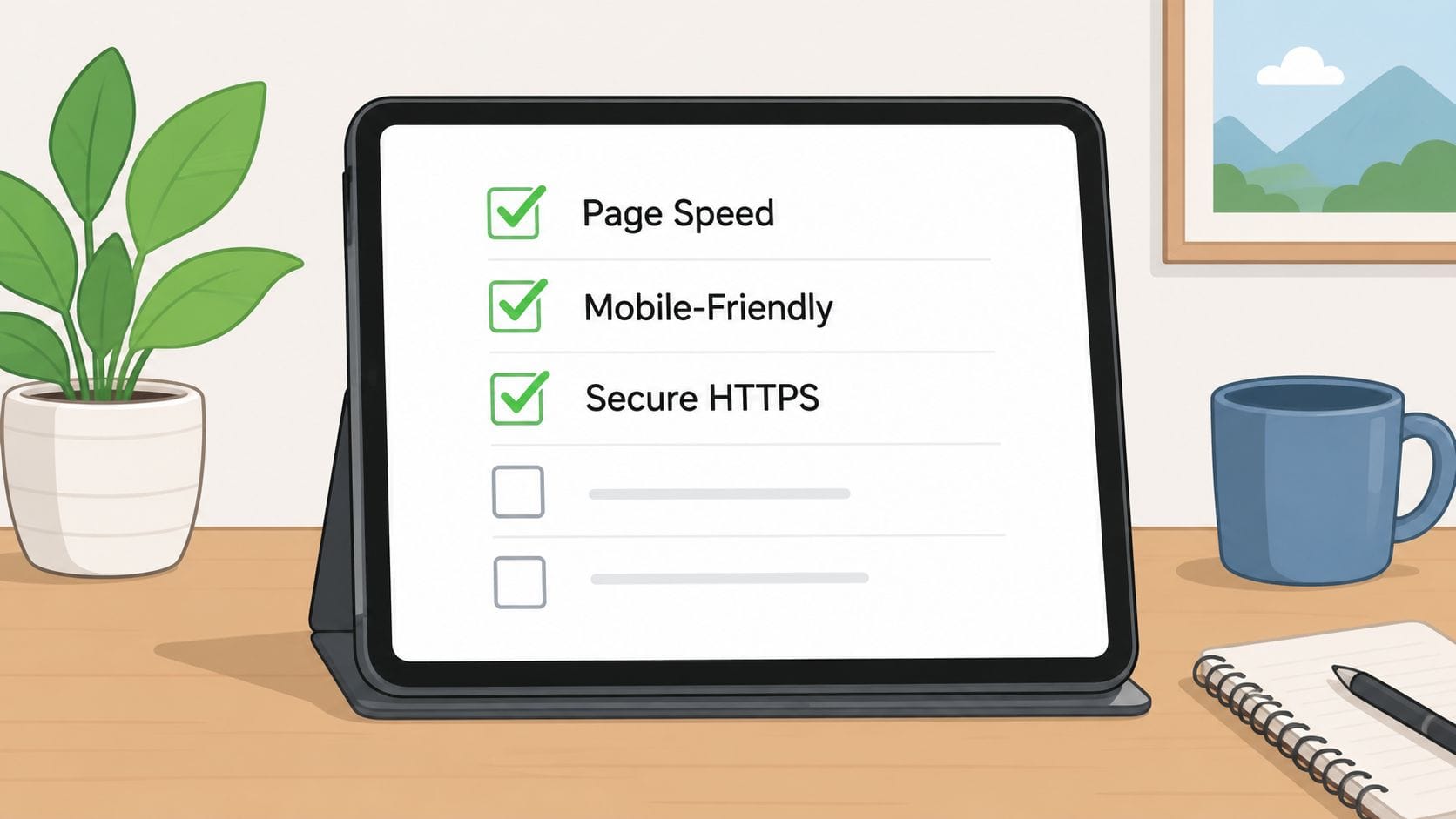
One Australian small-business guide says to fix anything with an LCP over 2.5 seconds Fokal. LCP, or Largest Contentful Paint, is the time it takes for the main visible content to appear. If the homepage loads slowly, many local visitors leave before they ever see the offer.
A sensible one-hour audit starts with the homepage and one top service page. Check the PageSpeed result, compress the hero image, enable caching, and make sure the page works properly on mobile. Australian hosting or nearby CDN nodes can help local load times as well, but the quick wins usually come from image and page-weight cleanup first.
Add structure that machines can read
AI search is changing what good SEO looks like. ANZ's Australia-focused guidance recommends schema markup, clear page structure, and FAQ-style content so AI models can understand what a page is about ANZ business search engine optimisation guidance. That's not a trendy add-on, it's the new baseline for businesses that want to be understood by search systems beyond the old ten blue links.
A local service page should answer the obvious questions directly. What does the business do, what suburb does it serve, how fast can someone book, and what problem does it solve? Clear headings, concise copy, and simple FAQ blocks do more for AI readability than stuffed keywords ever did.
Ask for three fixes first
For a non-technical owner, the priority order is easy.
- Do this first: compress the biggest images, fix the slowest service page, and tidy the title tags.
- Do this next: add schema, improve internal links, and make FAQ content clearer.
- Do this later: rebuild templates, rework the whole site structure, or chase edge-case technical issues that no customer will ever notice.
A good website planning and SEO tips resource is helpful here, but the practical rule is blunt. Speed and clarity beat complexity every time.
Content, Reviews, and Local Links That Compound
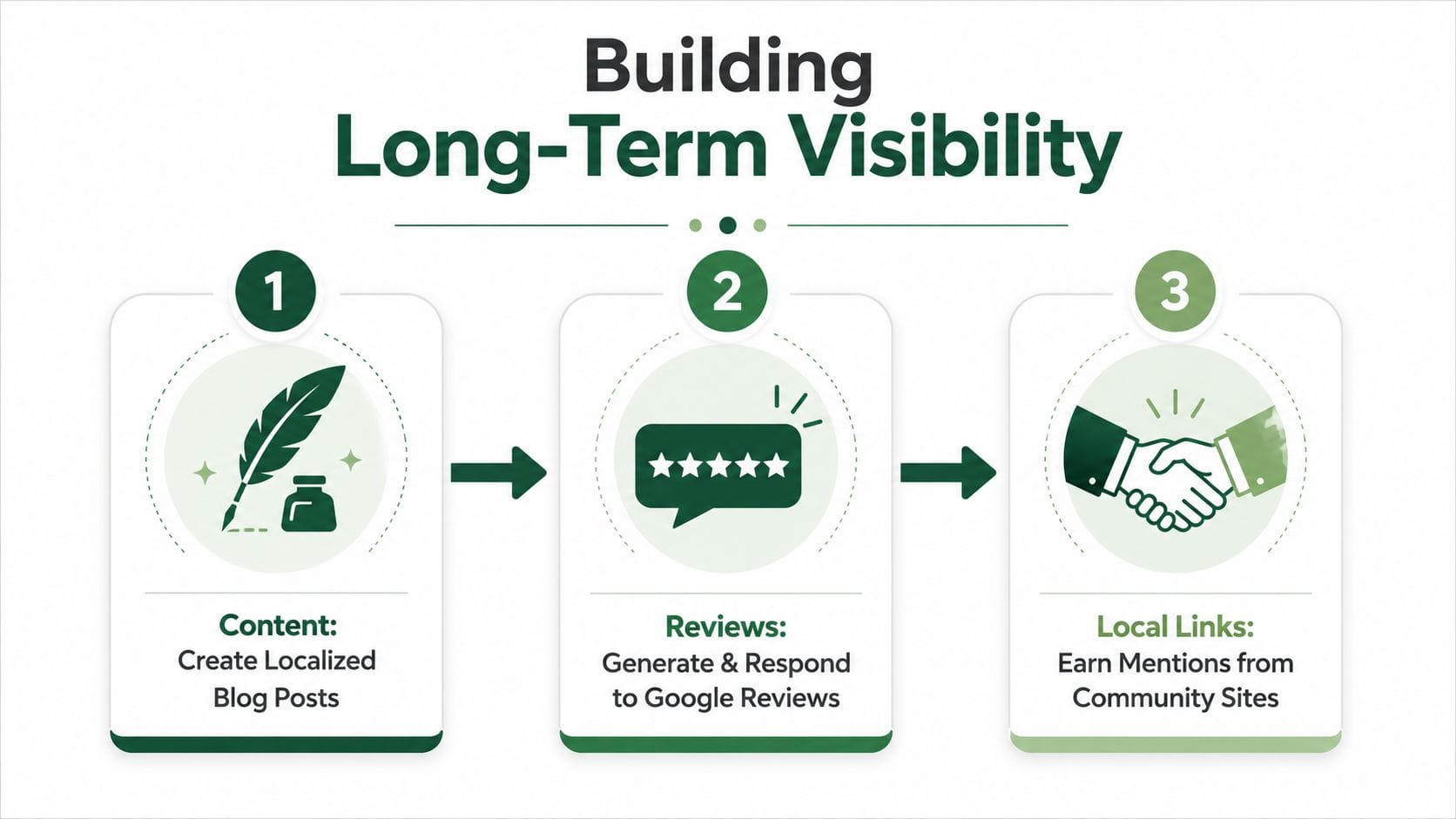
Once the site can be found and trusted, content and reviews start doing real work. Not because they're trendy, but because they keep signalling relevance after the setup phase is done. A small Brisbane business does not need to become a publishing house, it just needs a rhythm it can sustain.
Build content around real customer questions
A quarter of content should be planned around services, FAQs, and local topics. A Brisbane cabinetmaker might write about choosing joinery for small units, comparing materials for humid conditions, and common mistakes before a kitchen renovation. That content does not need to be long, it needs to match what buyers are already asking.
Blogging and SEO is useful when the site needs a repeatable publishing pattern, but the point is simpler. Every article should support a service page or answer a pre-sale question. If it doesn't, it's probably filler.
Treat reviews like a system, not a favour
Most owners ask for reviews only when they remember. That's too random. The better approach is to ask at the right moment, after a job finishes cleanly or after the customer says thanks, then make the request part of the normal workflow.
Responding matters too. Positive reviews should get a short reply, and negative reviews should get a calm, specific response that shows the business took the complaint seriously. Google's own local ranking guidance says relevance, distance, and prominence matter, and prominence is shaped partly by information found across the web, including links, articles, and review count Google local results and prominence. That means review generation and mention-building are not vanity tasks, they are ranking inputs.
Earn mentions the local way
A Brisbane business does not need spammy outreach. It needs credible local signals. Sponsoring a community group, joining a local business association, or contributing a useful tip to a local publisher can all create the kinds of mentions that reinforce prominence.
Local links are not about tricking Google. They're about proving the business exists in the community it wants to serve.
That is the sustainable model for a time-poor owner. A little content, a steady review habit, and a few local mentions each quarter can compound without taking over the week.
DIY, Freelancer, or a Local Agency Like Boocoo
Most owners need help, because the right answer depends on time, not just budget. DIY is cheapest, freelancers are flexible, and agencies are more accountable. The wrong choice is the one that leaves the work half-finished after three weeks.
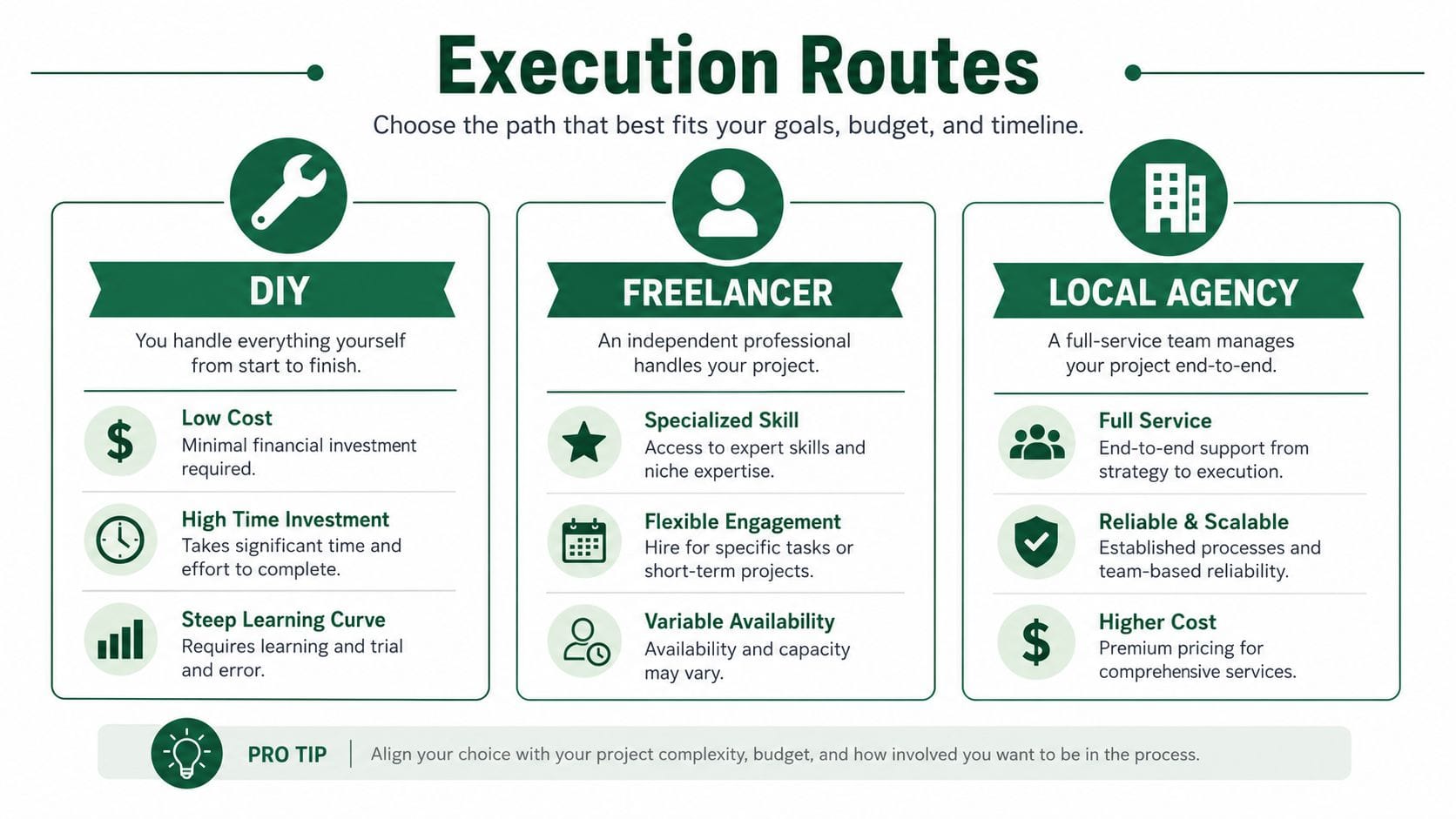
DIY suits owners who can stay consistent
DIY works when the owner has a decent website, a tight budget, and enough discipline to keep publishing and reviewing performance. It suits businesses that only need the basics cleaned up and don't mind learning as they go. The downside is obvious, it takes time, and it usually moves slower.
Freelancers fit specific tasks
A freelancer is useful when the business already knows what needs doing, like keyword mapping, page rewrites, or a site audit. The trade-off is availability and continuity. A solo specialist can be excellent for a defined project, but if the relationship is loose or the brief keeps changing, the work can stall.
Local agencies earn their keep on coordination
A local agency like Boocoo is usually the right fit when SEO, web updates, listings, and review support all need to move together. That matters more now that AI search rewards structured content, schema, and ongoing iteration, which are harder to maintain when marketing is handled in fragments. The value is not magic. It's coordination, accountability, and less admin for the owner.
Website planning and SEO tips are useful if the business is still deciding what a website needs to do, but the decision rule stays simple.
- Choose DIY if time is available and the business only needs foundational SEO work.
- Choose a freelancer if one specialist task needs focused attention.
- Choose a local agency if the business wants the whole stack handled without chasing separate people.
The cheapest path is rarely the fastest. The most expensive path is not always the best either, but it usually gives the owner back more time.
Your 90-Day SEO Plan and When to Call Boocoo
The first 30 days should be about audit and alignment. Clean up the Google Business Profile, confirm NAP consistency, choose five to ten money keywords, and fix the key homepage and service page basics. That gives the business a clear base before anything else gets added.
The next 30 days should focus on a simple content calendar, citation cleanup, and review workflow. One article, one FAQ update, and a steady review request process are enough to create momentum if the foundations are already solid. The final 30 days should cover technical fixes, local mentions, and a measurement review so the owner knows what changed.
A sensible scorecard is short. Track enquiries from organic traffic, calls from the Google Business Profile, rankings for the top money keywords, and review count plus average rating. If those numbers are moving in the right direction, the work is paying off.
If the site is still weak after the basics, if the business is missing time every week, or if the owner keeps stopping and starting, it makes sense to bring in a local partner. That's the point where a Brisbane agency can take the work off the desk and keep it moving. For a practical benchmark on setup and planning, website planning and SEO tips is a useful final check before the next step.