

The usual Brisbane small business SEO conversation goes like this. A business owner gets two or three quotes, opens the PDFs, sees terms like technical audit, backlinks, schema, authority building and local citations, then closes the tab and goes back to serving customers. That reaction makes sense. Most small business SEO packages are written for marketers, not for owners trying to protect time, cash flow and sanity.
The problem is that confusion has a cost. While one business delays the decision, a competitor keeps showing up in Google Maps, local search, and the searches that happen right before someone calls, books, or walks in. In Brisbane Digital Marketing, clarity matters more than clever wording. A package only has value if it turns line items into something tangible like more qualified phone calls, better suburb visibility, stronger local trust, and a website that pulls its weight.
Decoding the Jargon in Small Business SEO Packages
A Brisbane electrician compares three proposals. One offers a “light local package”. Another promises “rapid ranking acceleration”. A third is packed with audits, pages, fixes, content, citations and reporting. Only one of those is likely to help the business get found by people searching in the suburbs it services.
Cheap SEO often sounds simple because it leaves out the hard work. The expensive quote often sounds confusing because it bundles the right work under technical labels. That's why owners need a translation layer, not more jargon.
Here's the plain-English version of common package terms:
- Technical audit means someone checks whether Google can properly crawl, read and trust the website.
- On-page optimisation means the service pages, headings, titles and copy are aligned to what customers search.
- Local citations means business details are kept consistent across directories and platforms.
- Google Business Profile management means keeping the business visible in map-based searches and local intent searches.
- Link building means earning credibility from other websites, not buying dodgy links in bulk.
A good test is simple. If a line item can't be explained in terms of leads, bookings, enquiries or visibility in the right suburbs, it probably doesn't belong in the proposal.
Cheap SEO often sells activity. Good SEO sells progress that a business owner can recognise.
For any owner still fuzzy on the local side of the equation, this explanation of local SEO marketing is worth reading before signing anything. It helps decode why a package that ignores maps, reviews and directory consistency usually underperforms for Brisbane service businesses.
What Is Actually Inside an SEO Package
A proper SEO package works a bit like a car service plan. If the engine is misfiring, the paint job doesn't matter. If the tyres are flat, the vehicle won't perform. If nobody knows the business exists, it doesn't matter how nice the showroom looks online.
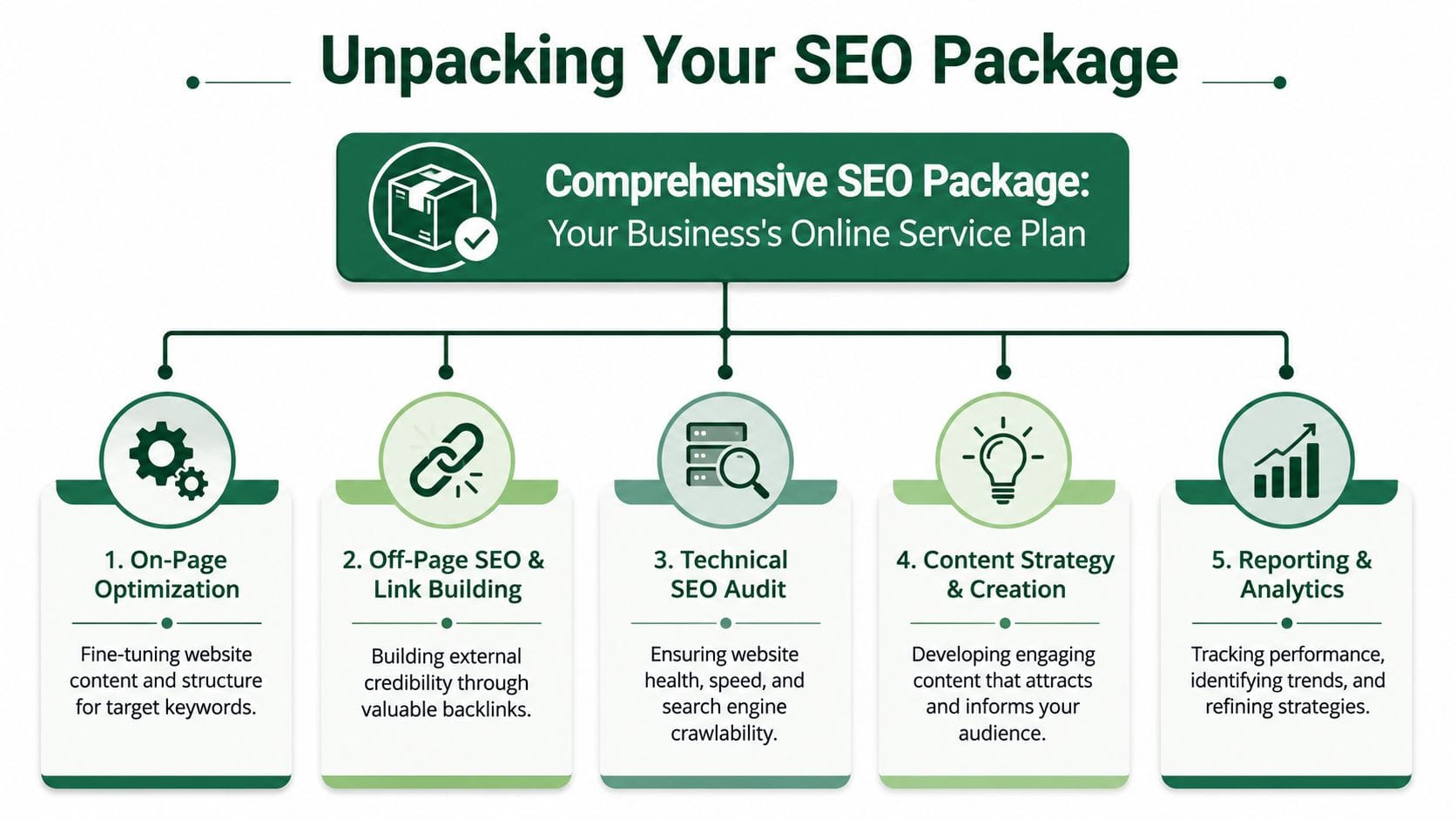
A strong package includes the pieces that move together. One part supports the next. When an agency skips one, the whole system becomes weaker.
The core pieces that actually matter
The clearest baseline comes from Business Medics' breakdown of small business SEO services, which states that effective SEO packages must include website audits, competitor analysis, keyword strategy, on-page optimisation, technical SEO fixes, local SEO setup (including Google Business Profile and directory listings), and monthly performance reporting to achieve measurable results.
That list sounds technical, but each item has a practical job:
- Website audits uncover the obvious blockers. Broken pages, thin copy, duplicate content, poor structure and slow-loading sections can all hold rankings back.
- Competitor analysis stops guesswork. A Brisbane plumber doesn't need a generic national strategy. That business needs to know who dominates local results in the service area and why.
- Keyword strategy decides what pages need to exist. If a law firm wants enquiries for a specific service, the website needs pages built around how potential clients search for that service.
- Technical SEO fixes improve the site's underlying health. This is the engine tune-up.
- Local SEO setup puts the business in front of nearby buyers, especially in maps and suburb-based searches.
- Monthly reporting shows whether the work is moving the needle.
How those line items turn into business outcomes
Many proposals often fail. They list tasks, not outcomes.
A better way to read the package is this:
| Package item | What it should help with |
|---|---|
| Technical fixes | Better crawlability, cleaner indexing, fewer hidden issues |
| Service page optimisation | More relevance for target searches |
| Google Business Profile work | Better local map visibility and stronger trust signals |
| Content planning | More chances to rank for customer questions and service intent |
| Reporting | Clearer decisions about what to keep, improve or stop |
Content deserves special attention because many Brisbane businesses either overdo it or ignore it. They publish random blog posts and hope for magic. That rarely works. A more useful approach is topic planning tied to real services and actual buyer intent. For owners wanting a practical outside perspective, Feather's guide on SEO content creation is a solid reference for how content should support visibility rather than just fill a blog.
The writing itself matters too. Good content isn't word count for the sake of it. It's structure, clarity and usefulness. That's why many businesses benefit from understanding what dedicated SEO content writing services do before they accept “2 blogs per month” as a meaningful deliverable.
A page shouldn't exist because the package says content is included. It should exist because that page can attract, reassure and convert the right customer.
How Much Should Brisbane SEO Packages Cost in 2026
Pricing gets messy because agencies often sell very different levels of work under the same label. One package may be little more than a basic checklist. Another may include serious local optimisation, content production, technical clean-up and proper reporting.
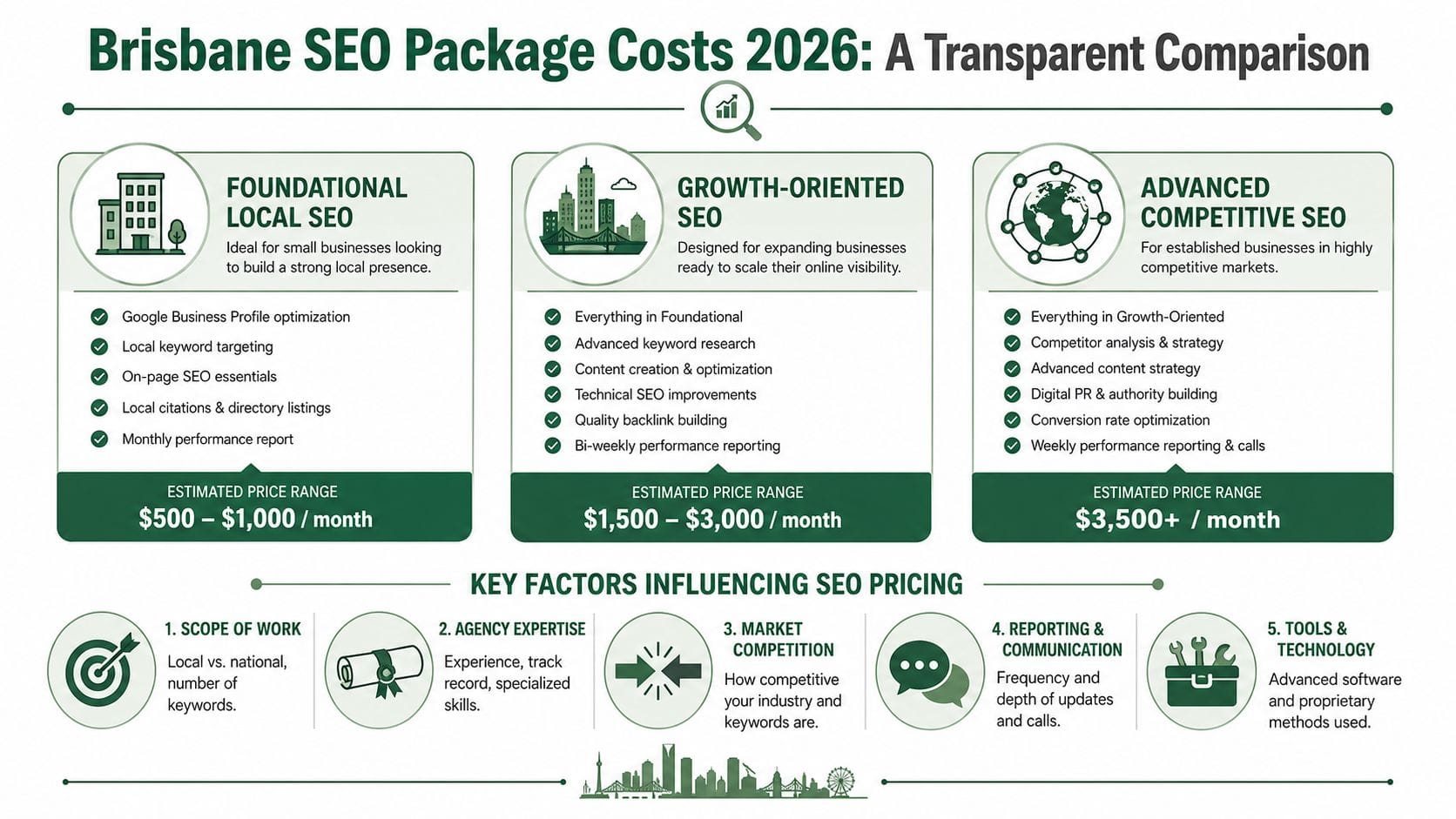
The Australian benchmark that matters most comes from Bekonstructive Marketing's SEO pricing guide, which states that professionally managed small business SEO packages typically start at $1,000–$1,500 per month and that most small and medium enterprises see measurable traction with packages in the $1,500–$3,000 per month range.
What the lower end usually means
There are cheaper offers in the market. Entry-level small business SEO packages in Australia can range from $500 to $1,000 per month according to Studiohawk's SEO pricing overview. That level can suit a very small local operator at the beginning, but it usually means light audit work, limited keyword targeting and minimal backlink activity.
That isn't automatically bad. It's only bad when it's sold as a complete growth solution.
A business can also buy flexibility instead of a monthly retainer. Hourly SEO consulting in Australia typically ranges from $150 to $300 per hour, while project-based work such as in-depth audits or optimisation plans sits between $2,000 and $6,000 according to this SEO cost breakdown on LinkedIn. That can work well when the owner needs a roadmap first and implementation later.
Where most Brisbane businesses should focus
For many Brisbane operators, the sweet spot sits in the middle. It's enough budget to fix technical problems, improve the service pages, handle local SEO properly and build content with intent behind it.
A simplified view:
- Foundational package. Best for a sole trader or very small operator needing local setup, core page optimisation and basic reporting.
- Growth package. Best for established businesses that want steady lead flow and suburb-level visibility.
- Competitive package. Best for crowded industries, broader service areas or businesses trying to outrank aggressive local competitors.
Owners comparing local listing work can also benefit from seeing manual submission service rates. Not because that service replaces SEO, but because it helps reveal how much time and labour sits behind directory and listing tasks that many cheap packages gloss over.
For businesses actively comparing offers, these affordable SEO services for small business examples can help separate realistic pricing from fantasy pricing.
How to Evaluate and Compare SEO Quotes
The cheapest quote usually wins only on paper. In practice, the cheapest quote often creates the most rework because it skips the parts that protect long-term visibility.
That matters even more for local businesses. According to Birdeye's article on SEO for small business in Australia, 2026 data shows that 68% of Australian small businesses lose local traffic due to unverified or inconsistent listings, and those hidden issues can erode up to 40% of potential ROI. That's the kind of problem a low-fee package often ignores while still claiming to “do local SEO”.
A simple framework for comparing quotes
A useful quote comparison doesn't start with price. It starts with four questions.
Is the strategy specific?
If the proposal could be sent to a plumber, dentist, accountant and cafe without changing much, it's too generic.Are the deliverables concrete?
“Ongoing optimisation” means nothing on its own. “Optimise five service pages, clean up duplicate titles, update Google Business Profile categories and resolve citation inconsistencies” means something.Does reporting connect to business outcomes?
Rankings matter, but they're not the end goal. Owners need to see movement tied to calls, forms, bookings, lead quality or relevant local visibility. For businesses selling online, even a broader guide to understanding ecommerce performance can sharpen the questions asked about reporting and commercial impact.Is communication realistic?
Time-poor owners don't need waffle. They need updates they can understand and decisions they can make quickly.
Red flags that should end the conversation
Some warning signs are immediate.
- Guaranteed rankings. No serious SEO provider controls Google.
- No mention of Google Business Profile. For many Brisbane local businesses, that omission is a deal-breaker.
- No reporting sample. If an agency can't show how it reports, the owner won't know what they're buying.
- No explanation of exclusions. Hidden costs often live here.
- One-size-fits-all packages. They're easy to sell and hard to justify.
If a proposal sounds smooth but leaves basic questions unanswered, the business owner should assume the missing detail is where the problems will appear later.
Owners who want a stronger benchmark for comparison can review how SEO companies for small business differ in process, reporting and transparency before making the final call.
Sample SEO Packages for Brisbane Businesses
The best package always reflects the business model. A cafe doesn't need the same setup as a tradie. A CBD professional firm doesn't need the same emphasis as a suburban service operator.
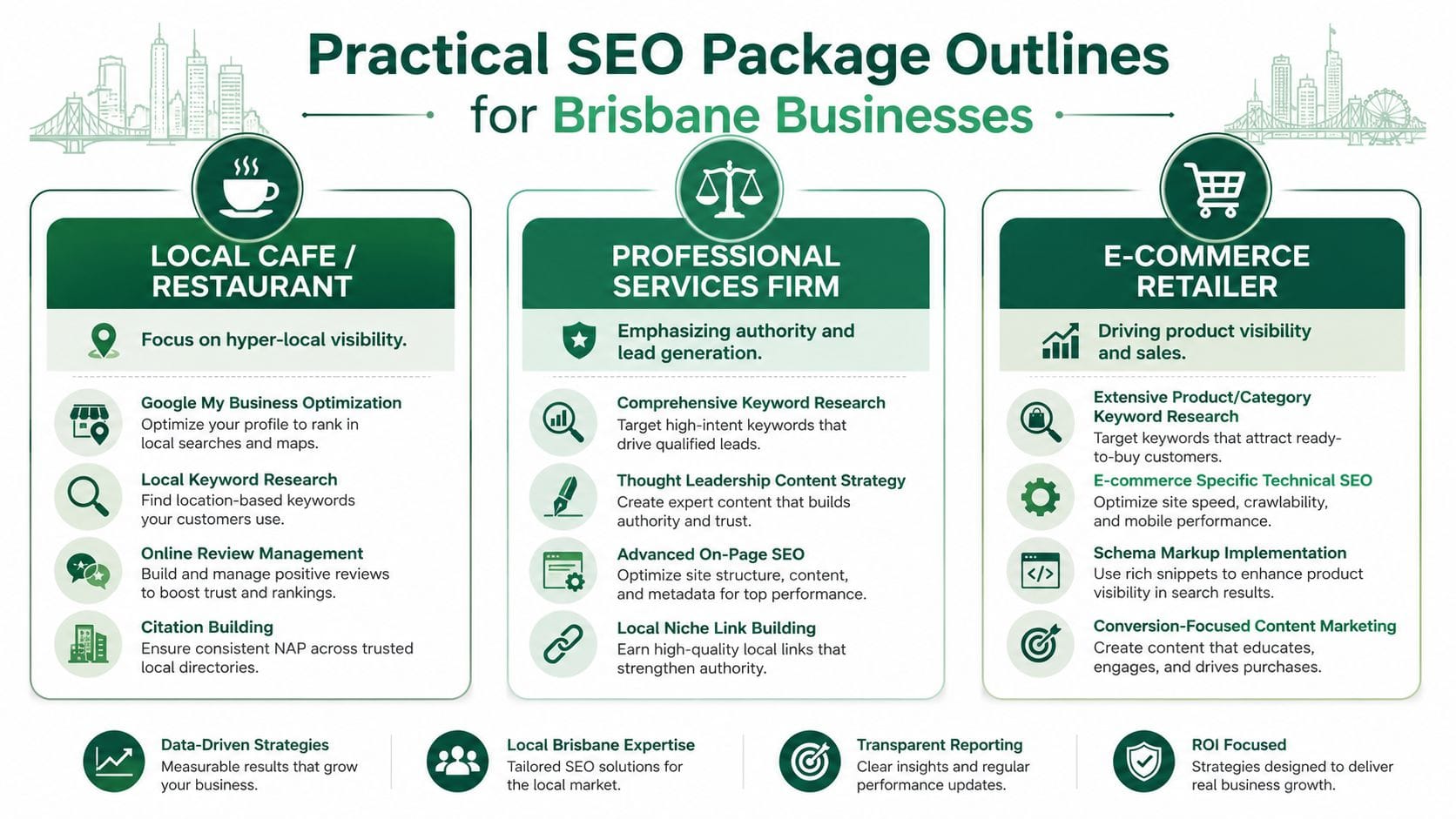
Local tradie in Aspley
An electrician or plumber in Aspley needs visibility where urgency lives. That usually means local map presence, suburb relevance and fast trust signals.
A sensible package for that business would include:
- Google Business Profile management with regular updates, service categories and photo improvements
- Suburb service pages for the areas the business services
- Review support so recent customer feedback is easier to collect and respond to
- Directory consistency work to keep name, address and phone details aligned
- Call-focused page improvements like clearer service areas, stronger headings and easier contact actions
The point isn't “doing SEO”. The point is helping a stressed customer find a trusted local tradie fast.
Professional services firm in the CBD
A law firm, accountant or consultancy in the CBD usually needs more authority content and more trust-building on the site itself. The searcher often does more comparison before enquiring.
A customized package would lean into:
| Priority | Practical work |
|---|---|
| Authority | Detailed service pages, strong FAQs, useful supporting articles |
| Trust | Team bios, credentials, case-relevant proof points, review visibility |
| Search intent | Pages aligned to real service queries, not broad vanity terms |
| Lead quality | Better internal linking and clearer conversion paths |
This type of business benefits from depth. Thin pages won't cut it when buyers are cautious and competitors already look polished.
Cafe in New Farm
A cafe wins differently. Discovery, reviews, location relevance and accurate information carry more weight than long-form content.
A practical package here would focus on:
- Map visibility so nearby searches surface the venue cleanly
- Menu and offering clarity across the website and profile listings
- Review management habits to keep fresh sentiment visible
- Local content touches such as event-related or neighbourhood-relevant updates
- Photo and listing freshness because stale visuals make a place feel closed, even when it isn't
Good local SEO for hospitality is less about publishing articles and more about making it easy for people to choose the venue with confidence.
Setting Realistic Timelines What to Expect and When
SEO takes longer than paid ads because trust has to build. That doesn't mean a business waits in the dark. It means the right signals appear in stages.
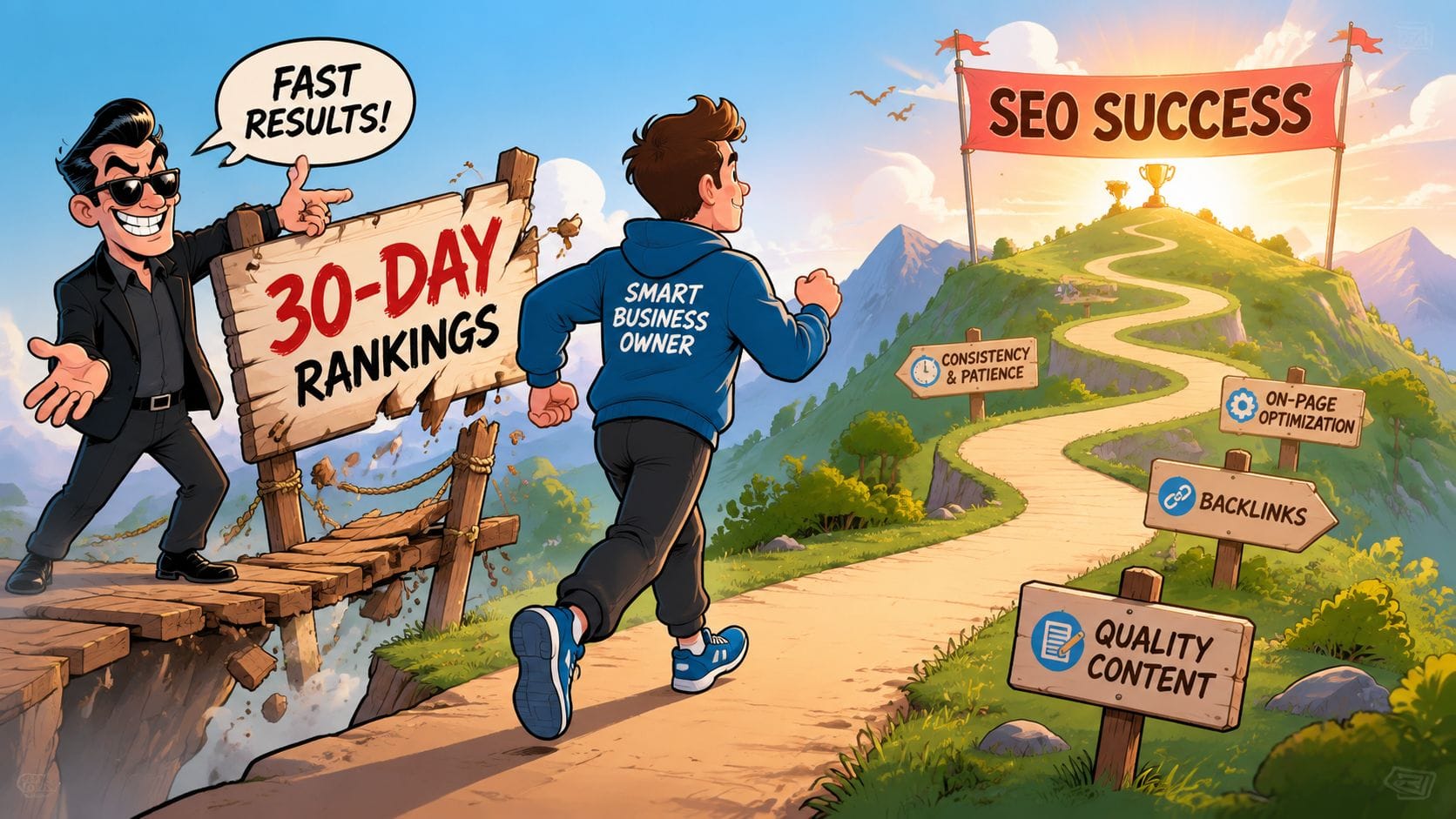
The clearest expectation comes from I4S's guide to SEO package prices in Australia, which states that early ranking signals can appear within 3 to 6 months, while strong, conversion-driving SEO results are statistically achieved only after a sustained 6 to 12 month engagement period.
The first phase
The first stretch is usually about fixing and preparing, not celebrating.
A business should expect work such as:
- Technical cleanup so the site is easier for Google to crawl and trust
- Keyword alignment so service pages match the way people search
- Local setup improvements including profile accuracy and listing consistency
- Content planning and page rewrites so weak pages stop dragging the site down
This phase can feel quiet from the outside. It isn't. It's the part where the groundwork gets laid.
What progress should look like later
Once the base is in better shape, the signals get easier to spot. Some pages start moving. More relevant searches begin surfacing the business. Local visibility becomes less patchy.
A realistic way to read the timeline:
- Early signs. Better page quality, cleaner local presence, some upward movement on relevant terms.
- Middle phase. More consistency, more pages earning visibility, stronger alignment between search intent and enquiries.
- Later phase. Better-quality leads and clearer commercial impact, especially when the package includes proper reporting and ongoing refinement.
The marathon analogy fits because SEO compounds. A single run doesn't change much. Repeated smart work does.
Key Questions to Ask an SEO Agency Like Boocoo
The agency conversation should feel less like a sales pitch and more like an interview. The business owner is hiring a partner, not buying a mystery box.
These questions usually reveal the truth quickly:
What will be worked on in the first month?
A clear answer shows there's a real process behind the proposal.How will success be measured for this business specifically?
The answer should mention enquiries, lead quality, local visibility or conversions. Not just rankings.Can a sample report be shown before signing?
If the report is unreadable, the service probably will be too.What is included with Google Business Profile and citation work?
Many cheap packages become vague concerning these elements.What isn't included in the monthly fee?
Owners need exclusions in writing.Who does the work and who explains the results?
Handballing work and communication between too many people often creates confusion.How are decisions made if a strategy isn't performing?
The right answer should involve review, adjustment and evidence.
A strong agency won't be threatened by informed questions. It will welcome them.
For businesses weighing whether to hand this over at all, this guide on when to outsource SEO services is a useful checkpoint before signing any agreement.
Frequently Asked Questions About SEO Packages
Is a one-off SEO audit enough?
Sometimes, but not usually. A one-off audit can show what's broken and what to prioritise. That's useful for a business with internal capacity to implement changes. It's not enough for owners who need ongoing content work, local listing maintenance, reporting and continuous improvement.
Are long-term contracts always a bad sign?
Not automatically. SEO takes time, so some minimum commitment is reasonable. The problem isn't the length. The problem is being locked into a vague service with weak deliverables and poor communication. A good contract should still make the work, reporting and responsibilities clear.
Can SEO still work on Wix or Squarespace?
Yes, if the fundamentals are handled properly. Those platforms can still support solid local optimisation, page improvements, content work and reporting. The platform matters less than most owners think. Weak strategy and weak execution cause more problems than the website builder itself.
Should every small business buy a monthly package?
No. Some businesses need a clean-up project first. Others need a monthly retainer because they operate in a competitive local market and want consistent growth. The right choice depends on whether the business needs setup, repair, momentum or market share.
What's the simplest sign that a package is worth considering?
It connects work to business outcomes in plain English. If the proposal shows what gets done, why it matters and how results will be tracked, it's probably worth serious attention.