
A Brisbane business owner can set a sensible Google Ads budget, choose a relevant keyword, and still pay more than a competitor for the same search. That's usually not because the competitor has a bigger wallet. The difference often sits inside Quality Score, Google's keyword-level diagnosis of how useful an ad and its landing page are for a searcher.
For small businesses investing in Brisbane Digital Marketing, Quality Score matters because it points to practical fixes. The score itself isn't the strategy. The useful work happens underneath it, in the ad message, the keyword structure, and the page a prospect reaches after clicking.
The Brisbane Plumber Who Pays Less Per Click
Two Brisbane plumbers target “emergency plumber Chermside” during the same week. Both set similar daily budgets, both want urgent local calls, and both appear in the same search auctions. One pays $14 per click, while the other pays $6.50 for the same keyword, suburb, and week.
The cheaper plumber hasn't chosen a lower price. The account has likely given Google a stronger relevance signal. Quality Score is Google's 1–10 diagnostic rating for a keyword, based on expected click-through rate, ad relevance, and landing page experience, as explained in Google Ads' Australian Quality Score documentation.
A useful way to understand those components is to think about a local shop:
- Expected click-through rate is the magnet. Does the ad attract the person searching for urgent plumbing help?
- Ad relevance is the offer on the sign. Does the wording clearly match the searcher's request?
- Landing page experience is the workshop behind the shop. Does the page deliver what the ad promised and make calling easy?
The first plumber might run a generic ad for “plumbing services” and send every visitor to a homepage. The second could use a Chermside-specific emergency message, mention fast phone assistance, and send clicks to a page built for urgent plumbing enquiries. That alignment gives Google a clearer reason to treat the second ad as useful.
Practical rule: A larger budget can buy exposure, but it can't buy relevance.
Quality Score isn't the only factor affecting auction performance, and it shouldn't replace conversion tracking or profit analysis. Still, it's the main built-in keyword benchmark available to search advertisers. Google also provides historical versions of the score and its components, so owners can examine patterns instead of judging an account from one moment.
Owners comparing paid search with broader local visibility can also use VisiLocali ranking insights to understand how local search presence fits alongside advertising. For a plain-language overview of how the paid channel works, the Google Ads guide for small businesses is a useful companion.
The Three Components Behind the Score
A small café provides a simple test. A customer searches for a specific breakfast option near Brisbane's inner north. The café's ad may receive a strong signal if the wording matches that request, the offer is clear, and the destination page makes the next action obvious.
Google assesses exactly three Quality Score components. Each is labelled Below average, Average, or Above average, according to its comparison with other advertisers showing for the same exact search over the relevant historical period, as set out in Google's explanation of the three components.
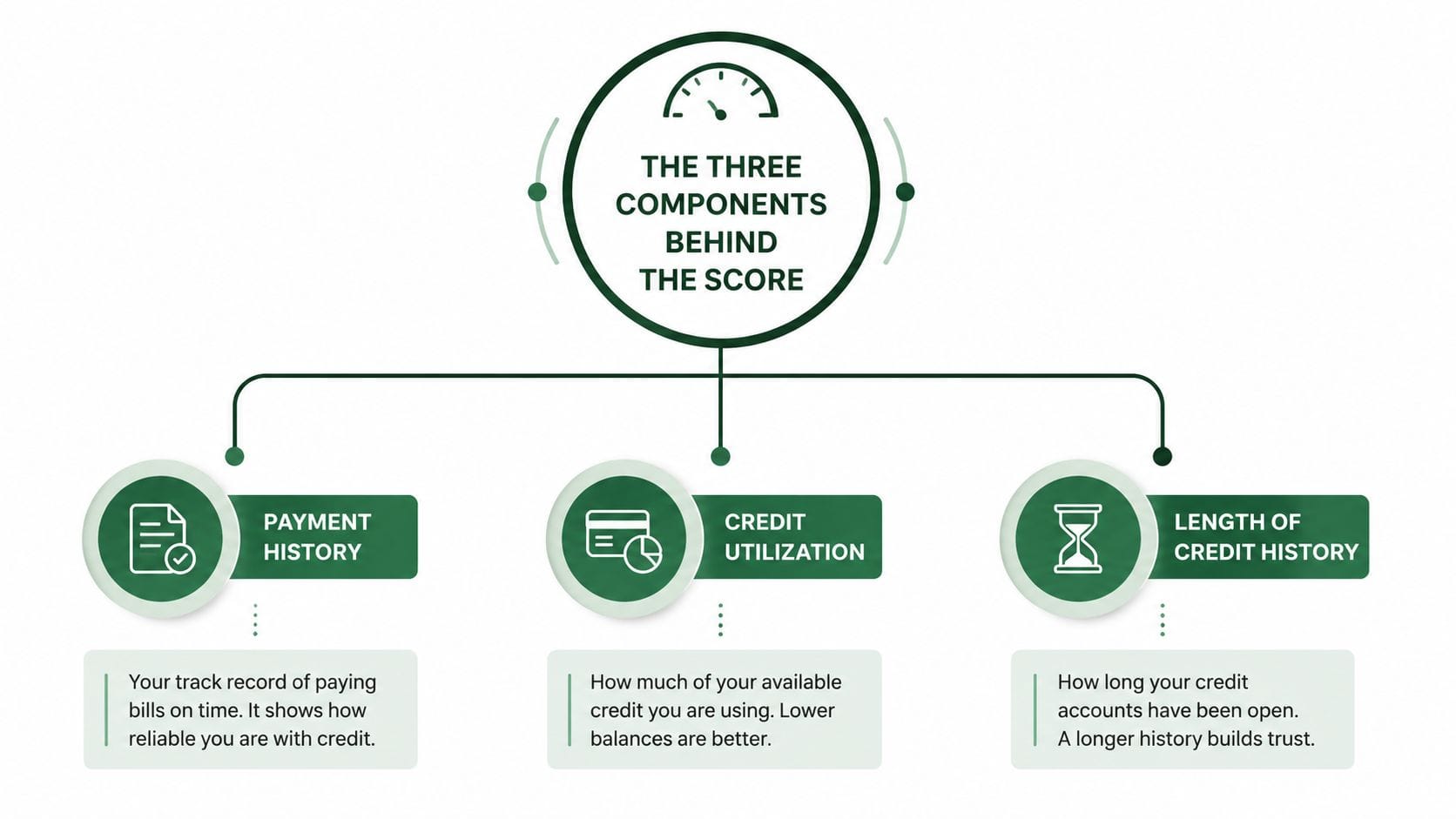
Expected click-through rate is the magnet
Expected CTR estimates how likely people are to click an ad for a keyword compared with competing ads. It reflects historical search behaviour rather than an advertiser's opinion about whether the copy sounds good. A keyword can have attractive wording and still receive a weak rating if searchers regularly choose other ads.
The practical response is to make the ad specific. A Brisbane electrician targeting a local fault-finding service should make the service and location clear, rather than using a broad statement such as “Quality Electrical Work”.
Owners wanting a deeper explanation of click-through rate can review this guide to what CTR means in Google Ads. The useful question isn't whether an ad sounds polished. It's whether the ad gives the right searcher a strong reason to choose it.
Ad relevance is the sign above the door
Ad relevance measures how closely the ad matches the keyword and the search intent. A tightly themed ad group makes this easier because the headline, description, and keyword share a clear subject.
An ad for “commercial air conditioning repairs” shouldn't rely on the same wording as an ad for residential installation. The two searches may come from different buyers with different expectations, even if one company offers both services.
Landing page experience is the workshop
The landing page needs to continue the conversation. A page for “emergency plumber Chermside” should make the service obvious, explain what happens next, show credible local details, and provide a clear action such as a tap-to-call button. It should also work properly on a mobile connection, because many urgent local searches happen away from a desktop.
Helpful background on campaign measurement and optimisation is available through this Google Ads marketing topics page. The central lesson remains simple: Google evaluates the complete journey from search, to ad, to page.
How the Score Affects Ad Rank and CPC
Quality Score influences the broader ad quality assessment used in the auction. Google describes it as an estimate of how an ad and landing page compare with other advertisers for the same search, while auction outcomes also involve the bid, ad formats, and signals available at auction time.
A simplified Brisbane café example makes the principle easier to follow. The figures below are an editorial illustration of the relationship, not a Google billing formula or a promise of a particular result.
| Bidder | Max CPC Bid | Quality Score | Effective Ad Rank | Approx. CPC Paid |
|---|---|---|---|---|
| Café A | $2 | 5/10 | 10 | $1.80 |
| Café B | $3 | 4/10 | 12 | $2.70 |
| Café C | $1 | 9/10 | 9 | $0.90 |
This simplified table shows why the highest bid doesn't automatically produce the strongest position. A lower bid paired with a more relevant ad and page can remain competitive. Actual Ad Rank and CPC calculations include more auction inputs, so owners shouldn't treat the arithmetic as an invoice forecast.
For a Brisbane business, the more useful target is not a perfect 10. It's moving weak components towards Above average, particularly on the keywords that generate meaningful enquiries. Australian guidance commonly treats 7–10 as strong, 5–6 as workable, and below 5 as a structural warning, as outlined in Australian guidance on Quality Score benchmarks.
A small advertiser usually can't outbid every competitor. It can make the ad more useful.
Searches in the CBD, Fortitude Valley, and Chermside can be difficult for a small account when an established competitor already has strong visibility and highly relevant advertising. The response shouldn't be to raise bids blindly. It should be to identify where the account is merely Average and improve the message or destination page.
Owners assessing the cost side of paid search can use this practical explanation of CPC in Google Ads. CPC is a financial outcome. Quality Score is a diagnostic clue that may explain why the account needs to bid harder than it should.
A Step by Step Plan to Lift Your Score
The fastest improvements usually come from fixing the components in order, rather than rewriting everything at once. A Brisbane plumber targeting “emergency plumber Chermside” provides a useful working example.

Start with the expected click-through rate
Read the ad as a customer would. If the search says “emergency plumber Chermside”, an ad that says “Brisbane Plumbing Services” is too broad. A sharper version might include the service, location, and action:
Emergency Plumber in Chermside
Call for urgent local plumbing assistance
Clear next steps for emergency enquiries
The exact wording should reflect what the business can provide. Keyword insertion isn't a substitute for useful copy, and exaggerated promises can attract the wrong clicks.
Use the account's search terms to find mismatches. If people search for training, jobs, supplies, or DIY advice while the business sells emergency call-outs, those searches need negative keywords. Review them regularly, because irrelevant clicks can weaken the relationship between the ad and the people who see it.
Tighten ad groups and keyword themes
Keep closely related terms together. A single ad group might cover emergency plumbing in Chermside, while another handles blocked drains across Brisbane. Mixing unrelated services makes it harder to write a message that feels specific.
The plan notes call for ad groups of five to ten keywords. That can be a practical starting structure for a small account, provided the terms share the same intent. Broad matches that consistently drift into unrelated searches should be narrowed or paused after the search-term evidence supports that decision.
A business researching competition and commercial intent can also consult this guide to profitable keywords. Keyword selection should serve the enquiry, not inflate the account with terms that look impressive but bring poor-fit visitors.
Match the landing page to the promise
Each important ad group should lead to a page built around one customer need. The emergency plumbing page should repeat the service context naturally, show Chermside or the relevant service area where appropriate, explain the next step, and place a phone button where mobile users can see it quickly.
The page must also be fast and usable on a Brisbane mobile connection. A page that takes too long to appear, hides the phone number, or sends the visitor to a generic homepage creates friction before the enquiry begins.
Guidance on building a page that supports paid traffic is available in this resource about landing pages for Google Ads. The page doesn't need elaborate design. It needs a close match between the search, the ad, and the action the customer wants to take.
Test deliberately
Don't change headlines, targeting, bids, and landing pages every day. Make a clear rewrite, allow enough search activity for the account to learn, and compare the component ratings with business outcomes.
A two-week test can be a practical operating rhythm for a small account when there is enough activity to produce a useful comparison. Low-volume local keywords may need longer, so the decision should follow the data rather than an arbitrary calendar.
Measuring and Troubleshooting Over Time
Quality Score is a historical diagnostic, not a live meter that changes with every click. Google says the score draws on accumulated impressions for exact searches, and the interface can show historical Quality Score, historical landing page experience, historical ad relevance, and historical expected CTR metrics through keyword reporting, as described in Google's Australian help material.
That lag changes how an owner should manage the account. Daily checking encourages nervous edits. A weekly review helps identify movement, while monthly reporting gives the business enough context to judge whether the changes improved qualified enquiries and cost control.
Find the useful columns
In Google Ads, open the keyword table and modify the columns. Add:
- Quality Score: The current keyword-level diagnosis.
- Expected CTR: The click expectation compared with competing ads.
- Ad relevance: The strength of the keyword-to-ad relationship.
- Landing page experience: The assessment of the destination page.
Sort by impressions first. A low score on a keyword with little activity may matter less than an Average score on a term that drives regular spend. This approach keeps limited Brisbane business time focused on the queries capable of affecting results.

Troubleshoot one cause at a time
If expected CTR is Below average, rewrite the ad first. Strengthen the match between the search and the offer before changing the bid.
If ad relevance is Below average, tighten the keyword grouping. Separate services, locations, and buyer intents so each ad can speak directly to the search.
If landing page experience is Below average, inspect the page on a real phone. Check the headline, service match, local trust details, page speed, navigation, and call action.
For owners who need campaign structure, tracking, and ongoing optimisation managed externally, Google Ads consulting support can help turn these checks into a repeatable process. A keyword that remains below 5 for thirty days deserves escalation, but the remedy should target the failing component rather than deleting the keyword.
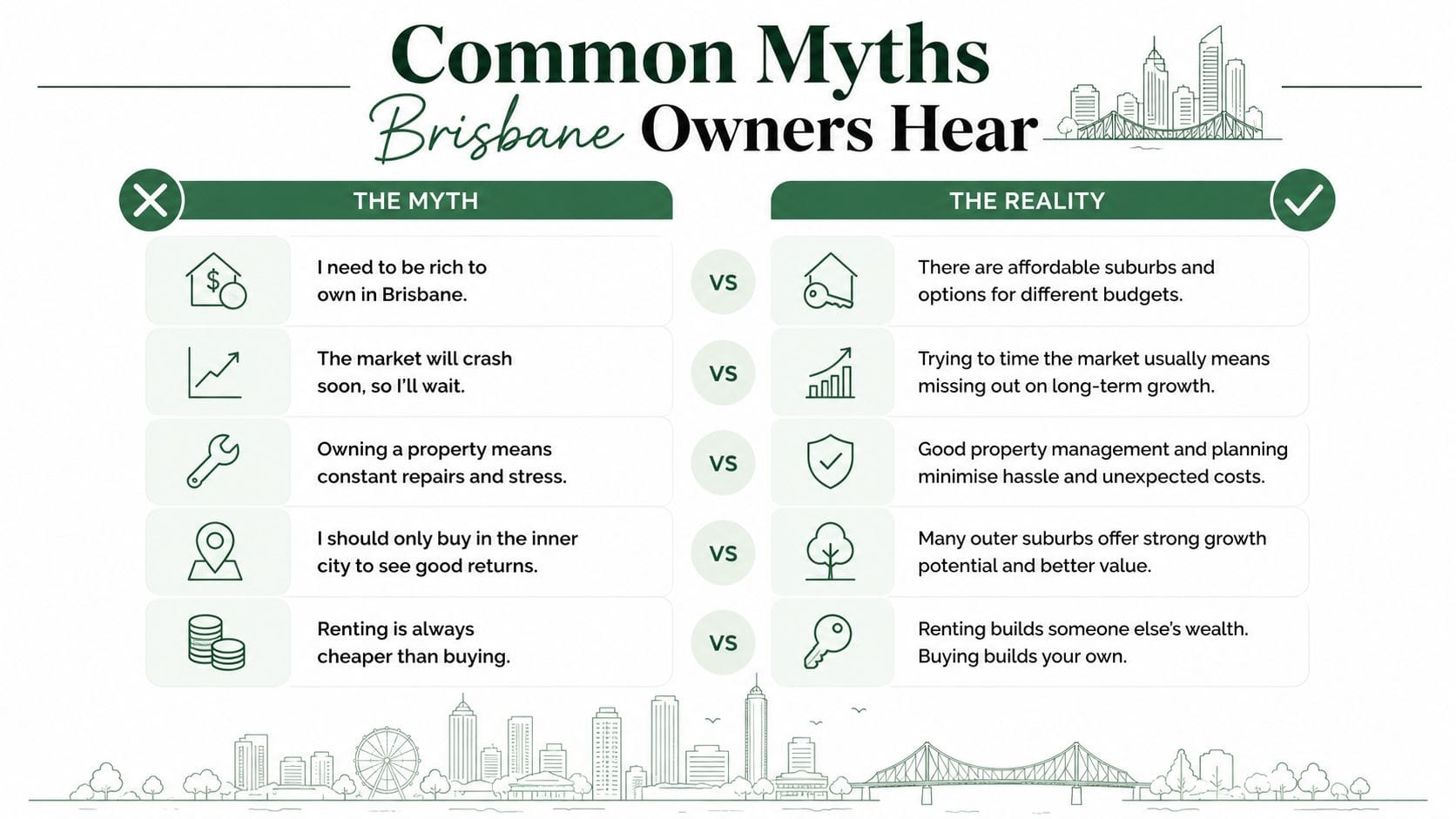
Common Myths Brisbane Owners Hear
Quality Score myths survive because they sound convenient. They also lead small businesses towards unnecessary bid changes, account resets, and cosmetic reporting.
Myth one, the score updates in real time
It doesn't. Google uses historical information, so a new headline won't necessarily produce an immediate score change. The account should be reviewed over time, with attention paid to component movement and commercial results.
Myth two, 10 is the only acceptable score
Chasing a perfect score is a poor use of a small business owner's time. Australian-facing guidance commonly treats 7–10 as strong, while 5–6 is workable and scores below 5 signal a deeper issue, according to the Australian Quality Score benchmark guidance.
A score of 7 on a profitable keyword can be more valuable than a 10 on a term that rarely produces a qualified lead. The commercial objective is efficient, relevant enquiries, not a tidy screenshot.
Myth three, pausing and reactivating resets history
Pausing a keyword doesn't erase its accumulated history. Reactivating it won't give the account a clean slate. If the underlying ad, keyword grouping, or page remains weak, the same problem can return.
Myth four, higher spend raises Quality Score
Spend creates more opportunities to collect data, but it cannot purchase relevance. A larger budget can expose a poor message to more people, which is why the account should fix the customer journey before scaling spend.
Myth five, an agency can improve the score without changing anything
A report that quotes Quality Score while leaving the ads and landing pages untouched isn't an optimisation plan. The agency should identify the weak component, make a controlled change, and connect the result to qualified leads or sales.
Putting It Together for a Local Small Business
A practical Brisbane workflow is simple enough for a sole trader to follow and disciplined enough for a growing account. Review the three components weekly, choose one meaningful ad group for improvement, and make one controlled change rather than scattering effort across every campaign.
A useful operating rhythm looks like this:
- Review keyword-level components weekly. Start with keywords generating meaningful impressions or spend.
- Rewrite one ad group at a time. Match the wording to the service, suburb, and customer intent.
- Check the destination page on mobile. Confirm that the promise, proof, and next action are visible.
- Review historical columns monthly. Look for sustained direction, not a single score.
- Pause underperformers after a learning cycle. First confirm that the issue isn't poor targeting or an irrelevant search term.
DIY can work while the account has a narrow service range and a manageable set of locations. It becomes harder when monthly spend exceeds roughly $2,000, campaigns fragment across multiple postcodes, or mobile landing pages lag behind competitors. Those conditions don't automatically require an agency, but they do justify a proper audit of search terms, ad groups, bids, conversion tracking, and page performance.
Boocoo is one Brisbane-based option for businesses that need help with Google Ads management, landing-page work, tracking, and reporting. Other local specialists can provide similar support, so the selection should depend on transparent communication, practical account changes, and a clear connection between advertising activity and enquiries.
Questions Brisbane owners usually ask
How long do improvements take to show? Quality Score uses historical data, so changes need time to accumulate evidence. Component movement may appear before the business sees a reliable commercial pattern, particularly on low-volume suburb terms.
Does changing the budget alter the score? Budget doesn't directly make an ad more relevant. It can change how often the ad enters auctions and how much data becomes available, but the three components still need attention.
What benchmark should a local business use? Treat 7 or higher as a strong working target where possible, monitor keywords around 5–6, and investigate anything below 5. Trades, cafés, and professional services can have different auction conditions, so the final test is qualified leads at an acceptable cost, not the number alone.
Start with the five keywords consuming the most budget, check each component, and fix the weakest one first. Brisbane owners who want a practical review can contact Boocoo on 1300 093 797 or email hello@boocoo.au with the key services, suburbs, and current Google Ads concerns, then request a clear action plan before committing to ongoing work.